Short answer: The animal products most likely to sneak into "vegetable" dishes in Vietnam are fish sauce (nước mắm), shrimp paste (mắm tôm, mắm ruốc), dried shrimp, egg-based mayonnaise, lard-based scallion oil and meat-based seasoning powder (hạt nêm). They show up mostly in dipping sauces, dressings, broths and stir-fries. The fix is to eat at dedicated chay kitchens where possible, and elsewhere to ask about the sauce and the broth, not just the main ingredients.
Why "no meat" is not enough
Vietnamese cooks think of fish sauce the way European cooks think of salt: it is the seasoning that makes food taste finished. Asking for a dish "without meat" (không thịt) therefore removes the pork or chicken, but it does not tell the cook to change the seasoning. The same goes for shrimp paste, which is a defining flavor in some northern and central dishes, and for seasoning powder, which many home and street cooks add to vegetable stir-fries and soups by default.
None of this is careless or deceptive. It is simply how the cuisine is built. Once you understand which components carry animal products, you can ask targeted questions, and you will find that most cooks are happy to help. Travel allergy guides make the same point for people with fish or shellfish allergies: ask about sauces and marinades specifically, because the main ingredients rarely tell the whole story.
The usual suspects, at a glance
| Ingredient | What it is | Where it hides | What to ask or say |
|---|---|---|---|
| nước mắm | Fermented anchovy fish sauce | Dipping sauce nước chấm, salad dressings, stir-fries, marinades, some broths | "Không nước mắm" (no fish sauce); ask for nước tương (soy sauce) |
| mắm tôm / mắm ruốc | Fermented shrimp or krill paste | Noodle soups such as bún riêu and bún bò Huế, some dips and stir-fries | "Có mắm tôm không?" (Is there shrimp paste?) |
| tôm khô | Dried shrimp | Green papaya and banana-blossom salads, sticky rice toppings, some chili sauces | "Không tôm khô" (no dried shrimp) |
| hạt nêm | Seasoning powder, often with meat or chicken extract | Vegetable stir-fries, soups, fried rice at general stalls | Ask whether it is hạt nêm chay (vegetarian seasoning) |
| Mayonnaise / bơ | Egg-based spread, butter or margarine | Banh mi, sandwiches, some bakery items | "Không bơ, không mayonnaise" |
| mỡ hành | Scallion oil, traditionally sometimes made with pork fat | Drizzled on rice dishes, broken rice, grilled items, sticky rice | "Mỡ hành dùng dầu hay mỡ?" (oil or pork fat?) |
| Egg | Fresh egg | Fried rice, noodle stir-fries, savory pancakes, some batters | "Không trứng" (no egg) |
Dipping sauces: the most common trap
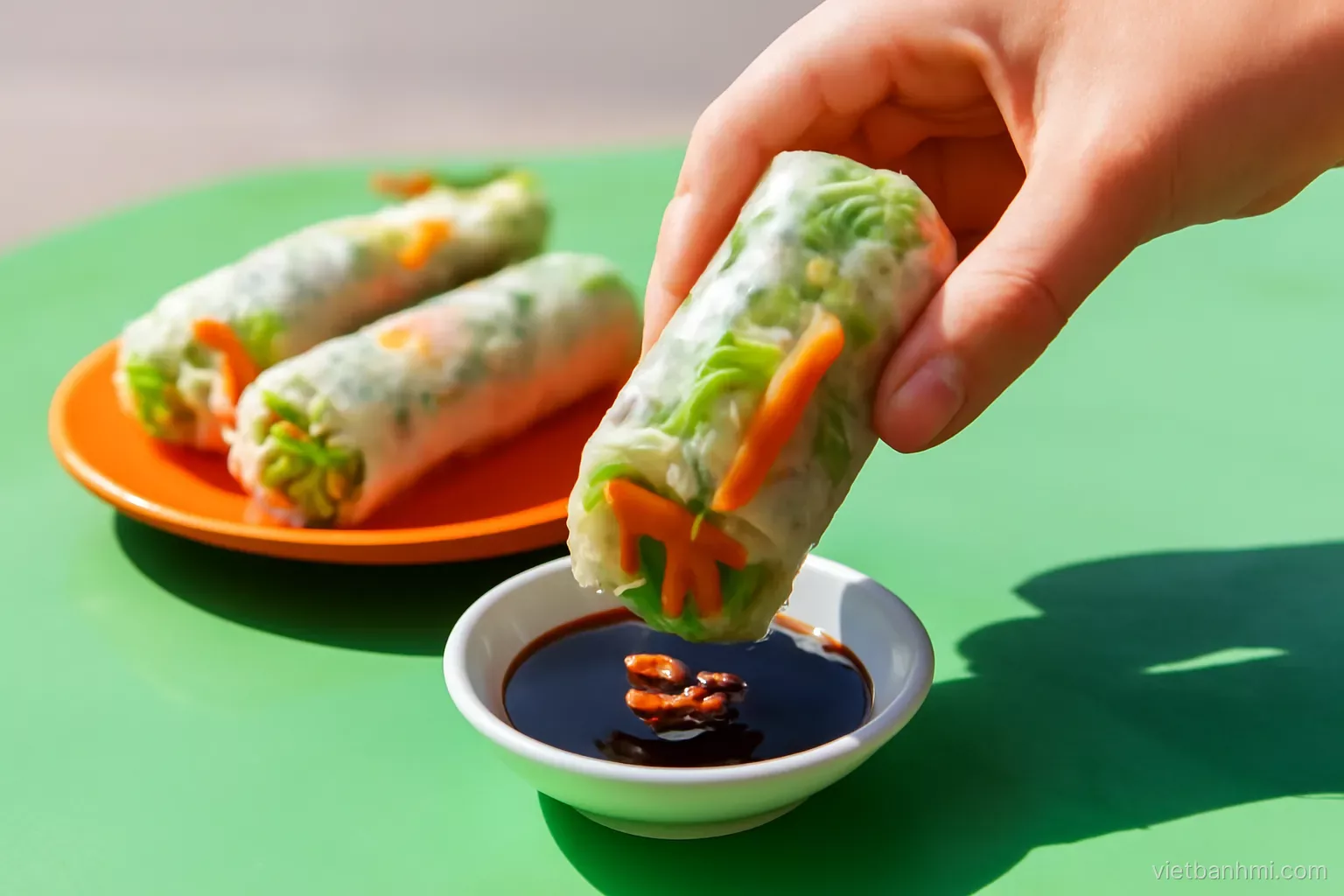
Fresh spring rolls (gỏi cuốn), crispy rolls, rice-paper dishes and many noodle salads come with a dipping sauce, and that sauce is where vegans most often get caught. The default nước chấm is a mix of fish sauce, water, sugar, lime and chili. In the south, fresh rolls are often served with a peanut-hoisin dip instead, which may or may not contain fish sauce or liver depending on the recipe.
In vegetarian restaurants, the dip is usually nước tương (soy sauce) with chili, or a vegetarian "fish sauce" called nước mắm chay, made from soy sauce, sugar, lime or pineapple and seasonings. At a general stall, ask for soy sauce on the side. Even when the rolls themselves are filled only with tofu, herbs and noodles, the dip determines whether the dish is vegan.
Broths and noodle soups
Noodle soups are the heart of Vietnamese street food, and their broths are usually long-simmered with bones. A stall that removes the meat from a bowl of phở or bún still serves it in beef or pork stock. That is why the vegetarian versions you find in chay restaurants (phở chay, bún chay, hủ tiếu chay) are made with a separate broth, typically from daikon, carrot, corn, cabbage, mushrooms and sometimes apple or pear for sweetness.
Two soups deserve a special warning. Bún riêu is defined by crab and often seasoned with shrimp paste, and bún bò Huế traditionally uses fermented shrimp paste in the broth. Vegetarian versions of both exist and can be excellent, but only in places that make them as vegetarian dishes from the start.
Stir-fries have their own quiet additions. Oyster sauce (dầu hào) is common in vegetable stir-fries such as morning glory or bok choy, and crispy fried shallots (hành phi) sprinkled on top are sometimes fried in pork fat at older stalls. Vegetarian kitchens use a mushroom-based "oyster" sauce (dầu hào chay) instead, which tastes close to the original. If you order rau muống xào tỏi (morning glory stir-fried with garlic) at a general restaurant, asking for "chỉ dầu ăn và nước tương" (only cooking oil and soy sauce) is a simple way to keep it plant-based.
Banh mi and bakery items
A standard Saigon bánh mì cart spreads two things inside the bread before the fillings go in: pâté, which is meat-based, and a pale-yellow spread usually called "bơ", which is most often a homemade egg-and-oil mayonnaise. A splash of seasoning sauce or a fish-sauce-based dressing finishes the sandwich. Ordering "bánh mì chay" at a meat cart may get you tofu or egg in place of meat, but the spreads and sauces can stay unless you say otherwise.
The simple version of the request is: "Bánh mì chay, không bơ, không pa-tê, không nước mắm, không trứng" (vegetarian banh mi, no butter or mayonnaise, no pâté, no fish sauce, no egg). Fully vegan banh mi shops make this unnecessary. In Saigon, Bánh Mì XANH is entirely vegan, so every item on its menu, from the spicy tofu banh mi to the sweet butter-sugar bơ đường version, is made without animal products. Bakery items elsewhere, including sponge cakes, flaky pastries and many sweet breads, commonly contain egg, butter or milk; assume they do unless the shop says otherwise.
Drinks: milk, egg and honey
Vietnam's drinks are a smaller risk but worth a glance. The classic cà phê sữa đá (iced coffee with milk) uses sweetened condensed milk. Egg coffee (cà phê trứng) is whipped egg yolk. Smoothies (sinh tố) often include condensed milk unless you ask for none, and some herbal teas are sweetened with honey. Ask for "không sữa" (no milk) or choose a nut-milk or coconut option; our Coffee & Drinks section covers vegan coffee orders in detail.
A short checklist before you eat
- Prefer dedicated kitchens. A restaurant with "chay" in its name avoids fish sauce, shrimp paste and meat stock by default, which removes most of the risk.
- Name the ingredients, not the category. "No fish sauce, no egg, no shrimp paste" works better than "vegan", which some vendors may not know.
- Ask about sauces and broths first. These are where hidden ingredients live.
- Watch the toppings. Dried shrimp, fried shallots in pork fat and scallion oil are often added at the last second.
- Use a written card. A phone note in Vietnamese shown to the cook avoids pronunciation problems in a noisy street.
- Accept imperfection gracefully. Shared woks and ladles are common at small stalls; if that matters to you, choose fully vegetarian places.
For the full phrase list with pronunciation hints, see our guide to Vietnamese phrases for vegans, and for the science of how chay cooks build savory flavor without fish sauce, see the Flavors & Ingredients section.
Sources
- Local Vietnam, "Traveling with food allergies in Vietnam" and "Mắm tôm (shrimp paste)" – localvietnam.com
- Vietnam National Authority of Tourism – vietnam.travel
- U.S. Centers for Disease Control and Prevention, Yellow Book: Vietnam – cdc.gov
Frequently asked questions
Is fish sauce in almost every Vietnamese dish?
It is in a very large share of everyday savory dishes, especially dipping sauces, dressings, marinades and stir-fries. Dedicated vegetarian restaurants replace it with soy sauce or a vegetarian fish sauce made from soy and fruit.
What is nước mắm chay?
It is a vegetarian substitute for fish sauce, usually made from soy sauce, sugar, lime or pineapple, water and seasonings. It is common in chay restaurants and is also sold bottled in supermarkets.
Does a vegetable stir-fry at a normal stall contain animal products?
It may. General stalls often add fish sauce, oyster sauce or meat-based seasoning powder to vegetable dishes. Ask for soy sauce only, or order from a vegetarian kitchen.
Is the yellow spread in banh mi butter?
Usually it is a homemade egg-and-oil mayonnaise, though some carts use butter or margarine. Either way it is not vegan, so ask for none or choose a fully vegan banh mi shop.
Are rice noodles and rice paper vegan?
Plain rice noodles and rice paper are typically made from rice, water and salt, sometimes with tapioca starch. The concern is what they are served with, especially sauces and broths.
Skip the sauce questions entirely
If a long list of "không nước mắm, không trứng" sounds tiring after a day of sightseeing, Bánh Mì XANH in Saigon takes the guesswork out: every banh mi and drink is made fully vegan. With five central shops open 24/7, you can also order online and have it delivered to your door.
Order Bánh Mì XANH for delivery · 24/7 hotline / Zalo +84 923 183 183