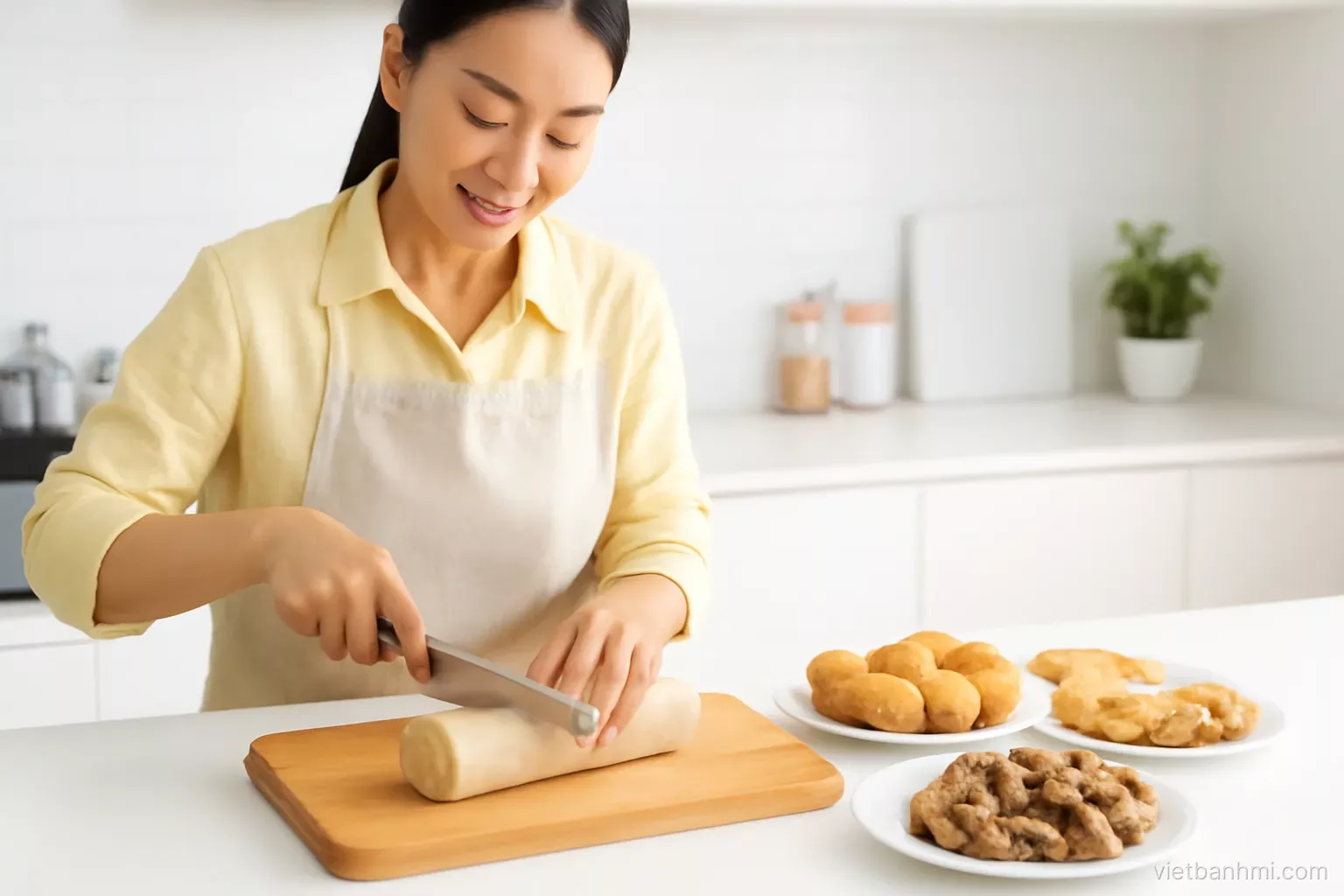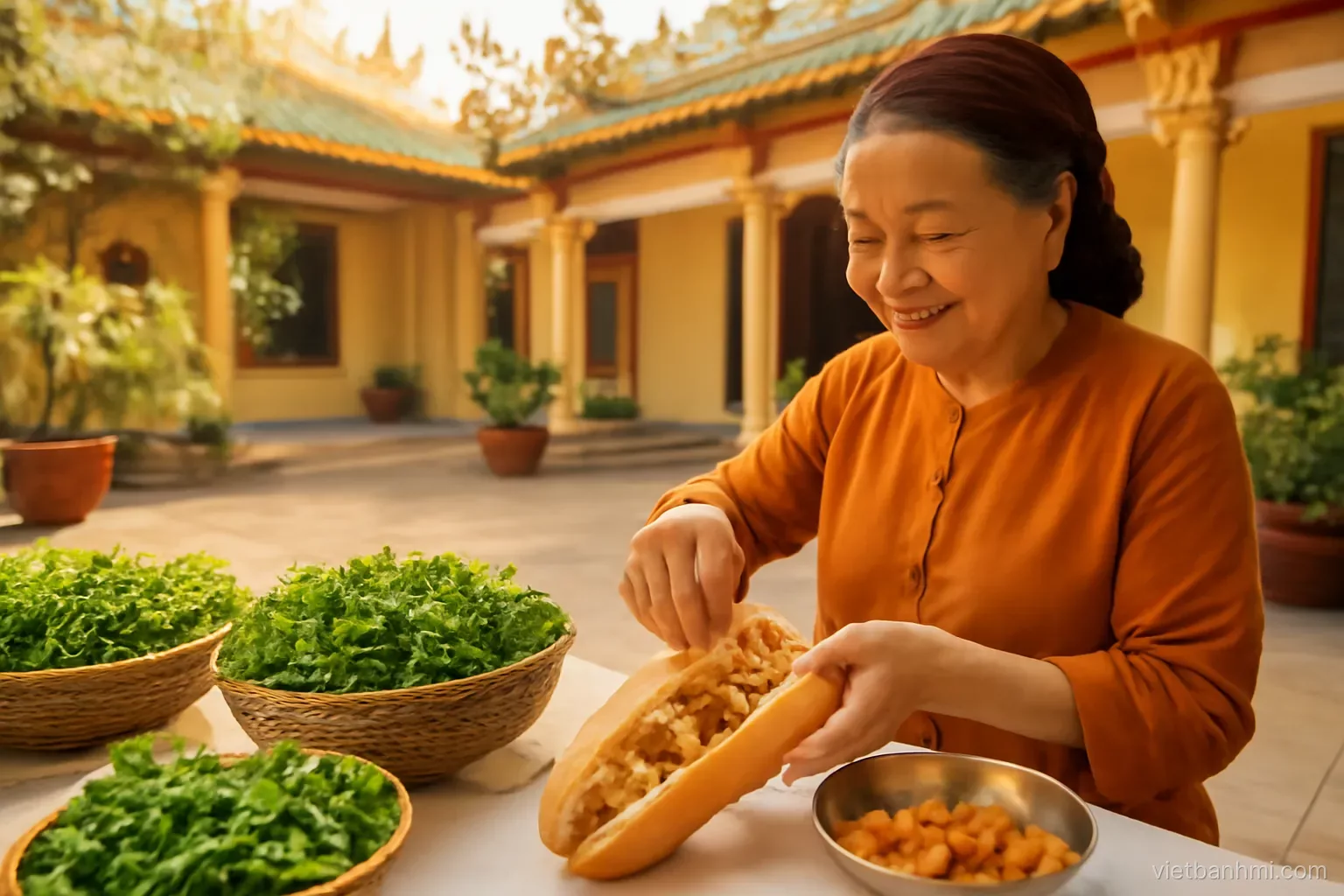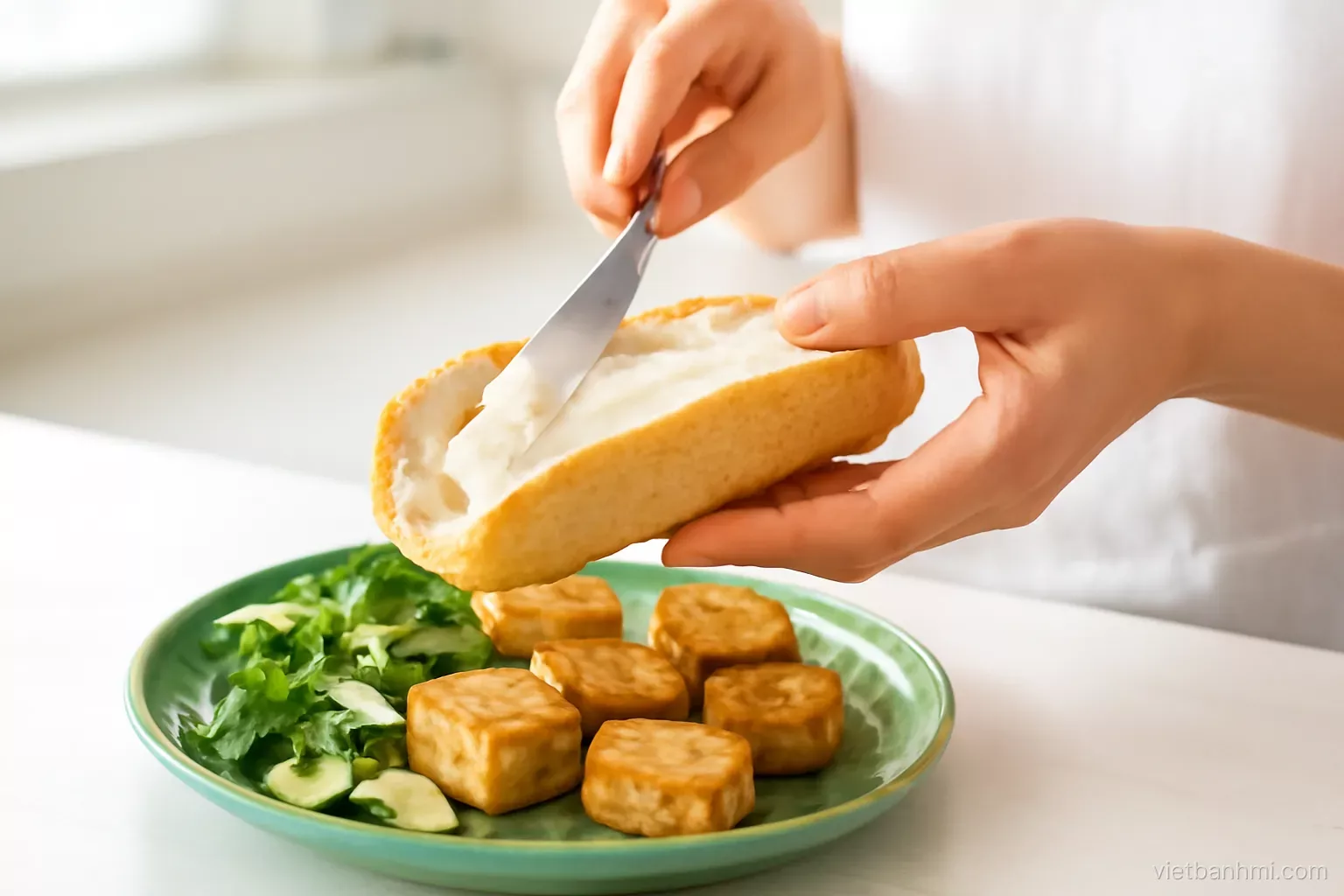
Short answer: A vegan banh mi is the same crackly Vietnamese baguette you know, filled with plant-based proteins (tofu, mushrooms, or a grain- or soy-based vegan "cold cut") instead of pork, then layered with pickled carrot and daikon, cucumber, cilantro, chili and a sauce that contains no egg, dairy or fish sauce. The structure is identical to the classic; only the protein and the spreads change. The hard part is not the recipe but making sure the spreads and seasonings are truly free of animal products.
The sandwich is a system of layers
The easiest way to understand any banh mi is to stop thinking of it as "a sandwich with stuff in it" and start seeing it as a stack of jobs. The bread provides crunch and a neutral, slightly sweet base. A spread adds fat and richness so the bread does not taste dry. The protein brings savoury depth. Pickles cut through the fat with acid and a little sugar. Fresh vegetables and herbs add cold crunch and perfume. Chili and a final drizzle of sauce tie it together with heat and salt. A good vegan version fills every one of those jobs with plant ingredients, so the result tastes complete rather than like a pork banh mi with the pork removed.
In Vietnamese, the vegetarian version is called bánh mì chay (vegetarian banh mi). The word chay covers both vegetarian and vegan in everyday speech, because traditional Buddhist vegetarian food in Vietnam already avoids meat, fish and usually eggs. The more precise term for vegan is thuần chay (strictly plant-based), which is worth knowing when you need to be exact. If you want the background on how the sandwich itself evolved, our Banh Mi 101 section covers the French-to-Vietnamese story.
Layer 1: the bread
The Vietnamese baguette is shorter than a Parisian one, usually 20 to 30 cm long, with a thin, glassy crust and a very light, airy crumb. Many bakers include some rice flour or use softer wheat flour, which is one reason the crumb feels so open, though recipes vary from bakery to bakery and you should not assume rice flour is always present. Plain baguettes in Vietnam are typically made from flour, water, yeast, salt and sometimes a little sugar, which makes them vegan by default. The exceptions are enriched breads (some buns use milk or butter) and baguettes brushed with butter or egg before baking, which is uncommon for standard street bread but not impossible.
Before filling, most vendors warm the bread on a charcoal grill, a toaster oven or a hot flat-top for 30 to 60 seconds. This step matters more than any filling: a cold baguette tastes leathery, while a warm one shatters when you bite it. At home, 3 to 5 minutes at around 200°C (about 390°F) revives day-old bread.
Layer 2: the protein
This is where vegan banh mi shows real variety. The most common fillings you will see in Vietnam fall into a few families.
- Tofu (đậu hũ): pan-fried or deep-fried until the outside is golden, sometimes then simmered in a soy-based sauce with lemongrass and chili. Spicy tofu is a popular style because the heat replaces the fatty punch of pork.
- Mushrooms (nấm): oyster or king oyster mushrooms sautéed or shredded and stir-fried until chewy. Shredded mushrooms can mimic the texture of pulled meat surprisingly well.
- Vegan cold cuts (chả lụa chay): sliced "sausage" made from wheat gluten, soy protein or other grains, seasoned to echo the Vietnamese pork roll. This is what gives a vegan banh mi its deli-counter feeling.
- Vegan "floss" and "meatballs": some shops offer mushroom or soy floss (a plant version of chà bông, pork floss) and soy-based meatballs in tomato sauce, a meat-free take on bánh mì xíu mại.
- Mixed fillings: a combination plate in sandwich form, for example tofu plus mushrooms plus cold cuts, often sold as thập cẩm (mixed).
Texture is the goal. A vegan banh mi with only soft tofu tastes mushy; the best versions combine one crisp or chewy element with one soft or saucy element. We go deeper on the meat analogues in our explainer on vegan cold cuts in the same Vegan Banh Mi section.
Layer 3: spreads and sauces, where most mistakes happen
In a classic banh mi, the bread is swiped with two things: pa tê (pork or chicken liver pâté) and bơ, a homemade emulsion that Vietnamese vendors call "butter" but which is usually closer to mayonnaise, made from egg yolk and oil. Neither is vegan. A vegan banh mi replaces them with an eggless mayonnaise (often soy-milk based), a mushroom or soybean pâté, a nut-based spread, or simply a generous drizzle of soy sauce and chili sauce.
Then comes the final seasoning, and this is the most overlooked trap. Many vendors finish every sandwich with a splash of nước mắm (fish sauce) or a seasoning sauce, and sometimes with mỡ hành (scallion oil), which may be made with pork fat. In a dedicated vegetarian kitchen these are swapped for soy sauce (xì dầu or nước tương) and plain oil with scallions. At a regular stall that happens to sell a "chay" option, you should ask.
| Layer | Classic pork banh mi | Typical vegan swap | What to watch |
|---|---|---|---|
| Bread | Vietnamese baguette | Same baguette | Rare butter/egg glaze or milk bread |
| Rich spread | Liver pâté (pa tê) | Mushroom or soybean pâté | Shared knife with real pâté |
| Creamy spread | Egg-yolk "butter" (bơ) | Eggless mayo | Most street bơ contains egg |
| Protein | Pork roll, roast pork, char siu | Tofu, mushrooms, vegan cold cuts | Some mock meats contain egg white |
| Pickles | Carrot and daikon (đồ chua) | Same | Usually vegan already |
| Finishing sauce | Fish sauce or seasoning, scallion oil | Soy sauce, chili sauce, plain scallion oil | Fish sauce splash at the end |
| Crunch topping | Pork floss, crackling | Mushroom floss, fried shallots | Floss is pork unless stated |
Layer 4: pickles, vegetables and herbs
The bright, acidic heart of a banh mi is đồ chua (sweet-sour pickles), usually julienned carrot and daikon soaked in a brine of vinegar, sugar, salt and water. A common home ratio is roughly 250 ml warm water, 60 ml rice vinegar, 2 tablespoons sugar and 1 teaspoon salt for about 300 g of shredded vegetables, left for at least an hour, though every vendor has a personal balance. These pickles are almost always vegan, and they do far more work in a meat-free sandwich than in a pork one, because acid is what keeps a tofu filling from tasting flat.
Fresh additions follow: long spears of cucumber (dưa leo) for cool crunch, sprigs of ngò (cilantro), sometimes spring onion, and slices of fresh red or green chili (ớt). Some vendors in the south add a few leaves of Vietnamese mint or basil. If you dislike cilantro, say không ngò (no cilantro); if you dislike heat, say không ớt (no chili). Vendors hear both requests every day.
How to order and check it is really vegan
In a fully vegetarian or vegan shop, you can relax and simply point. At a mixed stall, a short script makes the difference. Here is a practical order for a traveller with little Vietnamese:
- Say bánh mì chay and, if you are strict, add thuần chay.
- Add không trứng, không bơ (no egg, no "butter"/mayo) unless the shop confirms its mayo is eggless.
- Add không nước mắm (no fish sauce) and không pa tê (no pâté).
- Watch the vendor assemble it: a shared knife or board is the most common cross-contact point.
- Pay and eat while the bread is still warm; a banh mi loses its crunch within about 15 minutes.
Even with a good script, a stall built around pork cannot promise a strictly vegan sandwich. If that matters to you, the simplest solution is to buy from a kitchen where nothing animal-based is on the premises at all. In Saigon, fully vegan banh mi shops such as Bánh Mì XANH exist precisely for this reason, so visitors do not have to negotiate every ingredient.
What a vegan banh mi costs in Vietnam
Prices depend on the setting. A vegetarian banh mi from a street cart or a pagoda-adjacent stall commonly sits somewhere around 15,000 to 30,000 VND (roughly 0.60 to 1.20 USD at around 26,000 VND per USD; check current rate). Sit-down cafés and branded shops in central Saigon charge more, typically 40,000 to 80,000 VND, in exchange for consistent recipes, air-conditioning or longer hours. As one reference point, Bánh Mì XANH's menu lists its Thập Cẩm (mixed tofu, mushroom and vegetables) at 59,000đ, its Đậu Hũ Cay (spicy tofu) at 56,000đ, its grain-based Chả Lát Chay cold cut at 53,000đ and the large Thượng Hạng Premium at 75,000đ, with a sweet Bơ Đường (butter-sugar) version at 28,000đ.
A fair way to judge value is not the price but the ratio of filling to bread and the warmth of the baguette. A cheap sandwich that is mostly cold bread is worse value than a pricier one that is generously stacked and freshly toasted.
Common mistakes when making one at home
If you want to recreate a vegan banh mi after your trip, a few errors account for most disappointing results. Using a dense supermarket baguette gives you a chewy, jaw-tiring sandwich; look for the lightest, crispest bread you can find, or a Vietnamese bakery if your city has one. Skipping the pickles is the second mistake: without acid, tofu and mushrooms taste heavy. Under-seasoning the protein is the third, because the bread and vegetables are mild and the filling must carry the salt. Marinate tofu for at least 30 minutes in soy sauce, a little sugar, garlic or lemongrass, then fry it hot so the edges crisp. Finally, do not over-sauce: two or three teaspoons of mayo and a few drops of soy sauce are enough, otherwise the bread goes soggy before you finish. For tested home recipes, our sister site vegetarianbanhmi.com has step-by-step versions.
Sources
- Oxford English Dictionary – oed.com (entry for "banh mi", added 2011)
- USDA FoodData Central – fdc.nal.usda.gov (tofu and bread nutrient data)
- Vietnam National Authority of Tourism – vietnam.travel
Frequently asked questions
Is the bread in a banh mi vegan?
Standard Vietnamese baguettes are usually made from flour, water, yeast and salt, so they are normally vegan. Exceptions are enriched buns made with milk or butter and the occasional bread brushed with butter. If you are strict, ask the vendor or buy from a fully vegan shop.
What does "chay" mean on a menu in Vietnam?
Chay means vegetarian in the Buddhist sense, which traditionally excludes meat and fish and often eggs. Because usage varies, add thuần chay when you need strictly plant-based food. In a dedicated vegetarian restaurant, "chay" dishes are generally free of animal products.
Is the mayonnaise in banh mi vegan?
Usually not at regular stalls: the creamy spread called bơ is typically made with egg yolk and oil. Vegan shops use eggless mayo instead. At a mixed stall, say không bơ unless the vendor confirms an egg-free version.
What is the most filling vegan banh mi option?
A mixed filling with tofu, mushrooms and a vegan cold cut gives you the most protein and texture. Large-format sandwiches are also available at some branded shops. Pairing it with a nut-milk drink makes it a full meal.
Can I ask for no cilantro or no chili?
Yes, and vendors are used to it. Say không ngò for no cilantro and không ớt for no chili. You can also ask for ít ớt, meaning a little chili.
Taste every layer done right in Saigon
Now that you know what each layer should do, try one built entirely without animal products. Bánh Mì XANH is a fully vegan banh mi chain with five central Saigon shops open 24/7, from spicy tofu to the mixed Thập Cẩm, and you can order delivery online if you would rather eat at your hotel.
See the Bánh Mì XANH menu · 24/7 hotline / Zalo +84 923 183 183