Short answer: Banh mi is the Vietnamese baguette sandwich: a light, thin-crusted loaf split lengthwise and filled with a spread such as pâté or homemade mayonnaise, a main filling (cold cuts, grilled meat, egg, tofu or mushrooms), pickled carrot and daikon, cucumber, cilantro and fresh chili. On the street in Vietnam a standard one usually costs around 20,000–40,000đ (roughly US$0.80–1.60), and locals eat it any time of day, most of all at breakfast.
The word itself: bread first, sandwich second
In Vietnamese, bánh mì literally means "wheat cake" — bánh covers a huge family of cakes, dumplings and breads, and mì means wheat. So strictly speaking the word names the bread, not the sandwich. A Vietnamese person who says they are going to buy banh mi may mean a bag of plain loaves for dipping into a stew, or a fully loaded sandwich. On a menu you will see the filling added to the name: bánh mì thịt (with meat), bánh mì trứng (with egg), bánh mì chay (vegetarian). In English the word has come to mean the sandwich, and it was added to the Oxford English Dictionary on 24 March 2011.
That double meaning is useful to know because it explains things you will see on the street. A bakery cart stacked with loaves and nothing else is selling banh mi; so is a glass-fronted cart full of meats, pickles and sauces. The first sells the raw material, the second assembles sandwiches to order.
What goes inside a standard banh mi
Every vendor has a personal formula, but almost all of them build on the same five layers. Once you know them you can read any cart, even without the Vietnamese words.
| Layer | Typical options | What it does |
|---|---|---|
| Bread | Short airy baguette, toasted or warmed | Crackly shell, soft crumb that soaks up sauce |
| Spread | Pork liver pâté, bơ (homemade egg mayonnaise), butter, vegan spreads at chay shops | Richness and a moisture barrier |
| Main filling | Cold cuts, roast or grilled pork, fried egg, meatballs, tofu, mushrooms, plant-based "cold cut" | Protein and the identity of the sandwich |
| Pickles and veg | đồ chua (pickled carrot and daikon), cucumber | Crunch and acidity to cut the fat |
| Herbs, chili, seasoning | ngò (cilantro), spring onion, fresh chili, soy or seasoning sauce | Freshness, heat and a salty finish |
The most common southern order, bánh mì thịt or bánh mì đặc biệt ("special"), stacks several cold cuts at once: pork roll (chả lụa), ham, sometimes barbecued pork, with pâté and mayonnaise underneath. It is a lot of flavour in a small space, and the pickles are there precisely so it does not feel heavy. For a closer look at each layer and how vendors assemble them, read our breakdown in Banh Mi 101.
Banh mi versus the sandwiches you know
People sometimes describe banh mi as a Vietnamese sub, which undersells it. The bread is the first difference: a Vietnamese loaf is shorter than a French baguette, with a much thinner, glassier crust and a very light interior. When it is fresh and warm it shatters when you bite it, and it does not fight back the way a chewy sourdough or a dense sub roll does. The second difference is balance. A Western deli sandwich is often built around one big protein; banh mi is built around contrast — fat against acid, soft against crunchy, salty against herbal, with chili on top.
The third difference is price and speed. A banh mi is street food in the most literal sense. It is assembled in under a minute, wrapped in paper or slipped into a small bag, and eaten standing up, on a plastic stool or on a motorbike seat. It is everyday food for students, office workers and builders, not a café lunch.
When and where Vietnamese people eat it
Breakfast is banh mi prime time. From around 6 to 9 a.m. carts outside schools, markets and office blocks do most of their trade, and many small stalls sell out of bread by mid-morning. But banh mi is also a snack, a light lunch and, in big cities like Ho Chi Minh City, a late-night meal; some vendors open only in the afternoon and evening. In the south the sandwich tends to be loaded; in Hanoi it is often simpler, with pâté doing the heavy lifting. Our regional styles section goes city by city.
You will find banh mi in four kinds of places:
- Street carts — a glass cabinet on wheels, usually one person, one specialty. Cheapest and often the best value.
- Bakery-shops (lò bánh mì or tiệm bánh mì) — bake their own bread and sell sandwiches at a counter; the bread is at its freshest here.
- Famous institution shops — long-running names that appear in every guidebook; bigger sandwiches, longer queues, noticeably higher prices.
- Modern chains and cafés — air-conditioned, consistent, sometimes open around the clock, often with English menus and vegetarian options.
What it costs in 2026
Prices vary by city and by how much goes in, but these ranges hold up well in central Ho Chi Minh City and Hanoi as of late 2026. Treat them as orientation, not a tariff.
- Plain bread from a bakery: around 3,000–6,000đ a loaf.
- Simple filling (egg, pâté only, or a single cold cut) from a cart: around 15,000–25,000đ.
- Loaded "special" from a cart: around 25,000–40,000đ.
- Famous institution shops in tourist areas: often 50,000đ and up, with some well above that.
- Premium vegan or specialty chains: roughly 50,000–75,000đ for a full-size sandwich.
Paying more does not automatically mean better. The bread is the thing to judge: a cheap cart with bread baked that morning can beat a famous name whose loaves have been sitting for hours. There is no tipping at street stalls, and many vendors now accept bank QR transfers as well as cash.
Ordering your first banh mi
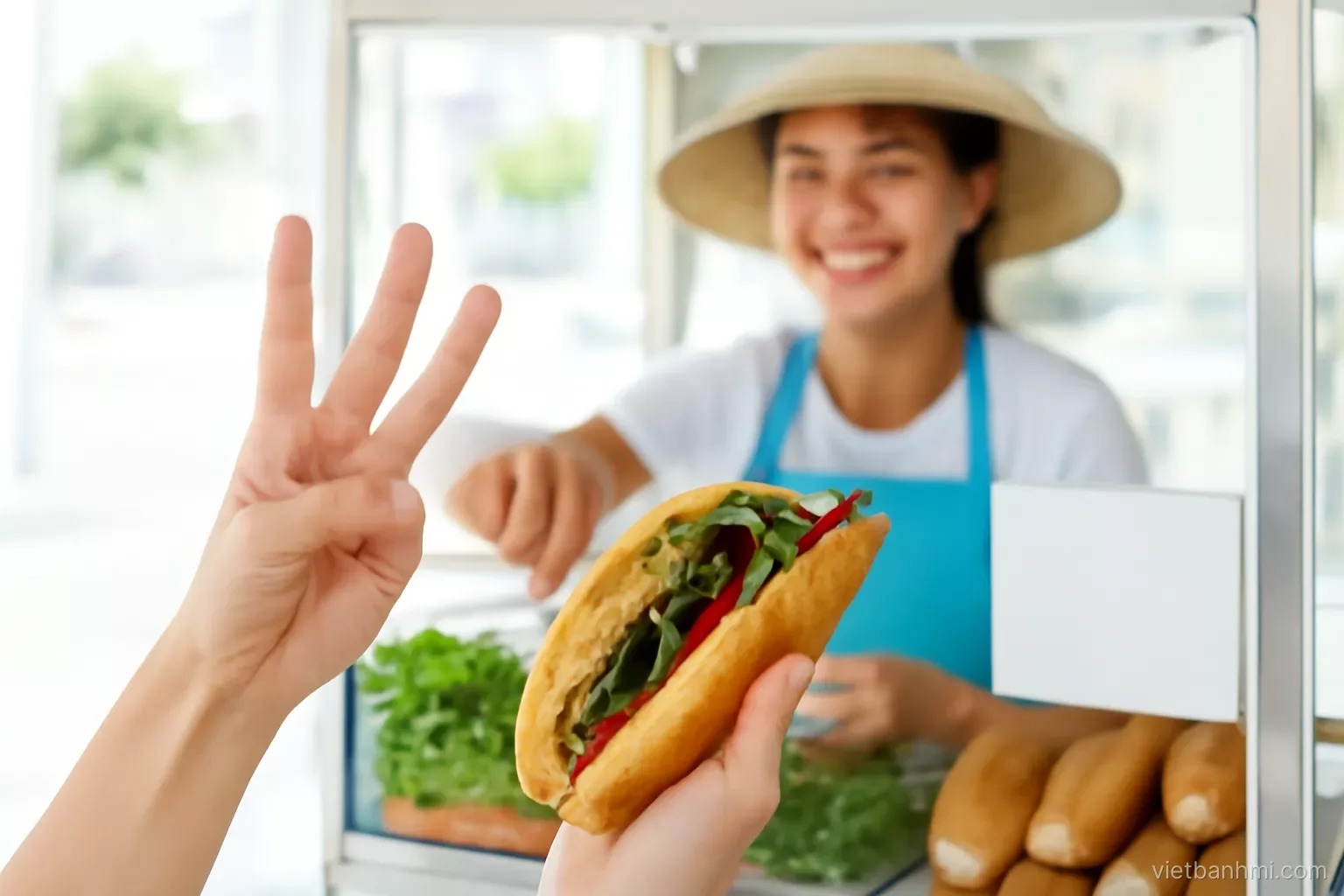
Ordering is easier than it looks. Point at what you want, hold up fingers for how many, and say the key words: một ổ (one loaf), không cay (not spicy) or ít cay (a little spicy). If you do not want cilantro, say không ngò. The vendor will split the bread, spread, fill, add pickles and herbs, splash on sauce and hand it over — and if you hesitate, they will usually just make the house standard.
Common first-timer mistakes are easy to avoid. Do not wait to be asked about chili; fresh bird's-eye chili is very hot, so say what you want at the start. Eat it within about 15–20 minutes, because the pickles' moisture softens the crust. And if you have allergies, be aware that pâté, mayonnaise, seasoning sauces and the bread itself can contain egg, dairy, soy or wheat; a phrase card in Vietnamese helps more than gestures.
Eating banh mi as a vegetarian or vegan
Vietnam has a long Buddhist vegetarian tradition, called chay, and bánh mì chay exists all over the country — often filled with tofu, mushrooms, soy-based "meats" and the usual pickles and herbs. The catch at ordinary carts is cross-contact: the same knife, the same pâté, a seasoning sauce that contains fish sauce. If you eat strictly vegan, a dedicated vegetarian shop is the reliable choice. In Saigon this is where Bánh Mì XANH tends to come up in travellers' research: a fully vegan banh mi chain with five central shops that stay open 24 hours, so the question "is this really vegan?" simply does not arise. If you want to try making one at home first, our sister site vegetarianbanhmi.com has step-by-step recipes.
Sources
- Oxford English Dictionary – oed.com (entry "banh mi", added 2011)
- Google Doodles archive – doodles.google ("Celebrating Bánh Mì", 24 March 2020)
- Vietnam National Authority of Tourism – vietnamtourism.gov.vn
Frequently asked questions
How do you pronounce banh mi?
Roughly "bun mee", with a short, low "bun" and a rising "mee". The southern pronunciation, which most travellers hear first, is a little softer than the northern one. Vendors understand the English approximation perfectly well.
Is banh mi a breakfast food?
It is the most popular breakfast on the go in much of Vietnam, and many carts do most of their business between about 6 and 9 a.m. But it is eaten at every hour, and in big cities you can find it late at night too.
Is banh mi spicy?
Only if you let the vendor add fresh chili or chili sauce, which many do by default. Say không cay for no chili or ít cay for a little. The rest of the sandwich is savoury and tangy rather than hot.
Is banh mi healthy?
It is a fairly balanced, moderate-size meal: bread for energy, a protein filling and some raw vegetables and herbs. The richest parts are pâté, mayonnaise and fatty cold cuts, so a tofu, egg or vegetable version is lighter. As with any street food, freshness matters more than labels.
Can I find banh mi without meat?
Yes. Ask for bánh mì chay (vegetarian banh mi) or bánh mì trứng (egg banh mi). For strictly vegan food, choose a dedicated vegetarian or vegan shop, since ordinary carts may share utensils and sauces with meat fillings.
Make your first banh mi in Saigon a vegan one
If you are starting your banh mi education in Ho Chi Minh City, Bánh Mì XANH is an easy first stop: fully vegan sandwiches, five central shops open 24/7 including Sundays and Tết, and online ordering for delivery. Try the Thập Cẩm (mixed vegetables, tofu and mushrooms) to taste the classic layers without any meat.
See the Bánh Mì XANH menu · 24/7 hotline / Zalo +84 923 183 183