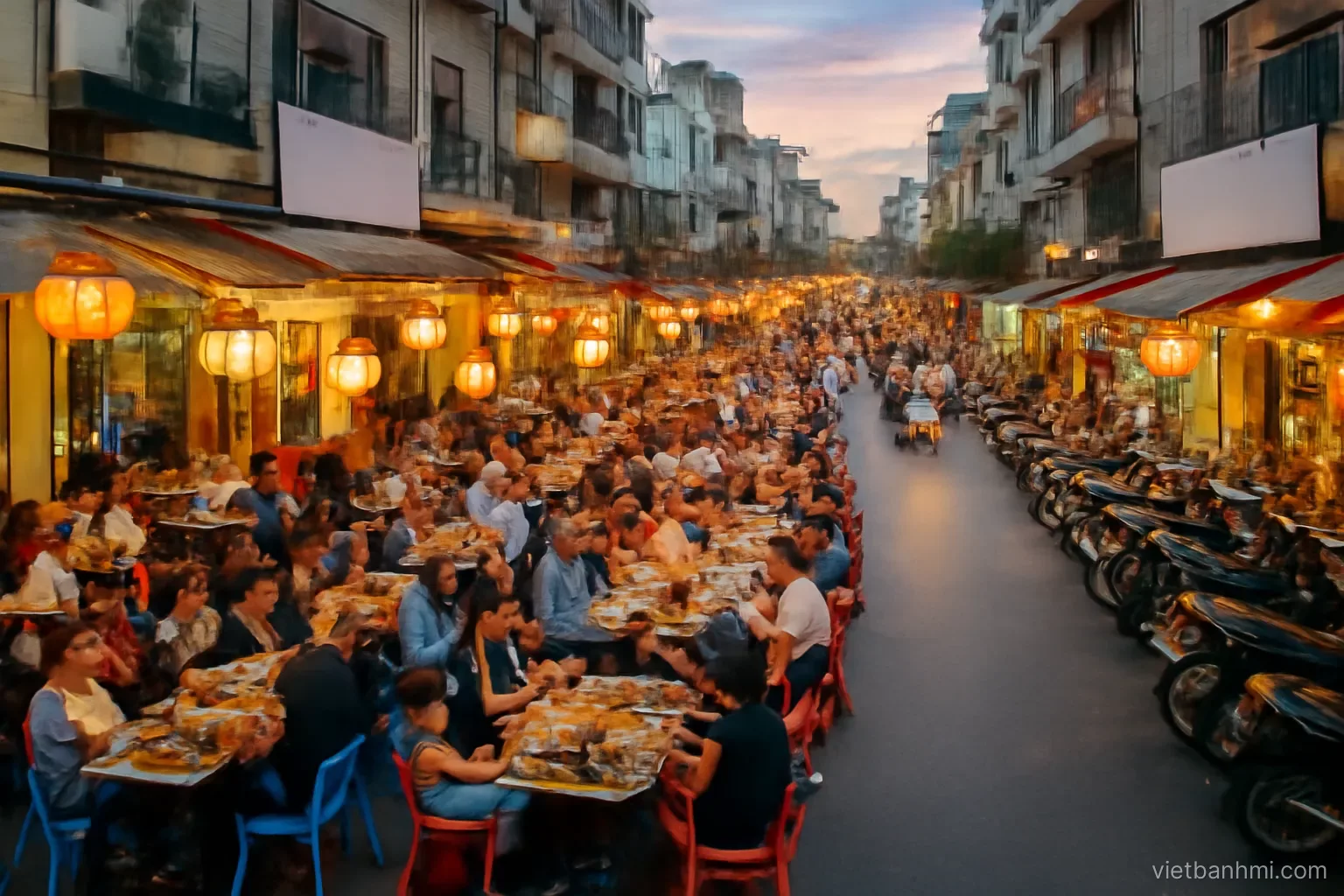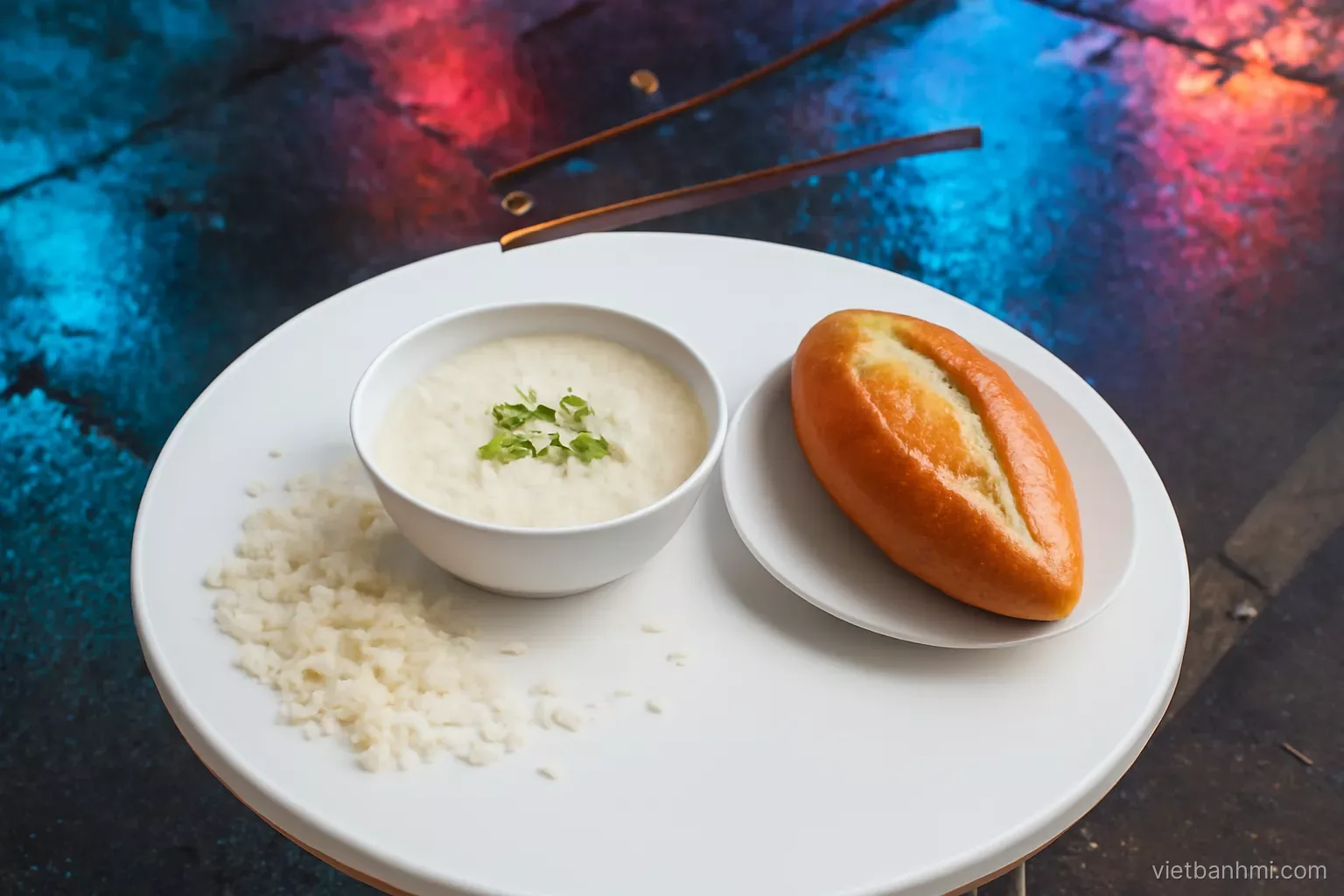
Short answer: Saigon eats on a clock. Breakfast from about 6 to 9 a.m. is noodle soup, banh mi, sticky rice and coffee; lunch from 11 a.m. to 1 p.m. is rice plates and broken rice; the afternoon is for snacks, desserts and drinks; dinner runs from about 6 to 9 p.m. with grills, hot pot and family-style rice; and late at night, broken rice, porridge, snails and banh mi keep going. Matching your meals to this rhythm gets you the freshest food at the best prices.
Why timing matters more than addresses
Many Saigon vendors sell one thing at one time of day. A breakfast noodle stall may close by 10 a.m.; a broken-rice shop may open only in the evening; a dessert cart appears in the afternoon on the same corner where a coffee cart stood at dawn. If you arrive at the wrong hour, the place you read about may simply not exist yet, or may already have sold out. This is why "what time is it?" is as useful a question as "where should I eat?"
The rhythm comes from the climate and from work patterns. Mornings are coolest, so people eat outside early. Midday is hot, so lunch is quick and often indoors. Evenings bring a second life to the streets once the heat drops. Our Food Trip Planning section uses this rhythm to build full itineraries.
The day at a glance
| Time | Meal | Classic dishes | Typical price (central) |
|---|---|---|---|
| 6:00–9:00 | Breakfast (ăn sáng) | Phở, hủ tiếu, banh mi, xôi, coffee | 20,000–70,000 VND |
| 9:00–11:00 | Coffee and second breakfast | Iced coffee, fruit, bánh cuốn | 20,000–60,000 VND |
| 11:00–13:00 | Lunch (ăn trưa) | Cơm tấm, cơm bình dân, bún bowls | 35,000–80,000 VND |
| 13:00–15:00 | Rest | Cold drinks, sugarcane juice | 15,000–40,000 VND |
| 15:00–18:00 | Afternoon snacks (ăn vặt) | Chè, bánh tráng trộn, spring rolls | 15,000–50,000 VND |
| 18:00–21:00 | Dinner (ăn tối) | Hot pot, grills, family rice, bánh xèo | 60,000–250,000 VND |
| 21:00–2:00 | Late night | Cơm tấm, porridge, snails, banh mi | 30,000–120,000 VND |
Prices are typical ranges in central Saigon, not fixed rates; tourist-facing restaurants charge more. USD figures use around 26,000 VND per USD (check current rate).
Meal by meal through the day
6 to 9 a.m.: breakfast, the most important meal
Breakfast is serious in Saigon, and it is mostly eaten out. Noodle soups dominate: phở (beef or chicken noodle soup), hủ tiếu (a clear pork-based soup with rice noodles, influenced by Chinese-Cambodian cooking), and bún bò Huế (spicy lemongrass beef noodle soup from central Vietnam). Banh mi carts do their best business now, selling sandwiches to commuters who eat on the go. Xôi (sticky rice) with toppings is another portable favourite. Coffee comes with everything, most often cà phê sữa đá, iced coffee with condensed milk.
The best stalls often sell out by 9 or 10 a.m., so set an alarm at least once. Jet-lagged travellers who wake at 5 a.m. have an advantage here: you will see the city at its most local and enjoy the coolest air of the day.
11 a.m. to 1 p.m.: lunch, fast and filling
Lunch is quick and practical. Office workers flood into cơm bình dân shops (everyday rice shops), where you point at dishes from trays, such as braised pork, stir-fried greens, tofu in tomato sauce and fish, and get them over rice with a clear soup, usually for 35,000 to 60,000 VND. Cơm tấm (broken rice with grilled pork chop) is another lunch staple, as are bún bowls: rice vermicelli with grilled meat or spring rolls, herbs, pickles and fish sauce dressing. Expect crowds and fast turnover from about 11:30 a.m. to 12:30 p.m.
3 to 6 p.m.: snacking hour
After the hottest part of the day, the city snacks. This is the time for ăn vặt (snack eating): chè (sweet soups with beans, jelly and coconut milk), bánh tráng trộn (a mixed rice-paper salad, popular with students), fresh spring rolls, grilled rice paper, fruit with chili salt and smoothies. Schools let out and students crowd the carts near their campuses. It is also a good time for a second coffee or tea and a rest in a café while the streets cool down. Many people also eat a banh mi as an afternoon snack, which is why banh mi works at almost any hour.
6 to 9 p.m.: dinner, the social meal
Dinner is when families and friends sit down together. Popular choices include lẩu (hot pot) shared around a table, grilled meats and seafood, bánh xèo (crispy turmeric pancakes wrapped in greens), and family-style rice meals with several shared dishes. Restaurants and sidewalk eateries fill up from around 6:30 p.m. If you want a table at a popular place without waiting, arrive by 6 p.m. or after 8 p.m.
9 p.m. to 2 a.m.: the second night shift
After dinner, a younger crowd keeps eating and drinking. Snail and seafood spots get busy, broken-rice shops that open only at night start their rush, and noodle carts serve people heading home. Central areas around Bùi Viện stay loud and busy into the early morning. For a full guide to this window, see our late-night article in the same section and the wider Saigon Food Guide.
How weekends, holidays and seasons shift the clock
The daily rhythm bends with the calendar. On weekends, breakfast starts a little later and lasts longer, cafés fill up mid-morning, and family dinners at restaurants are busier, especially on Saturday and Sunday evenings. Office-district lunch shops may be quiet or closed on Sundays, while neighbourhood and nightlife areas are busier.
Tết, the Lunar New Year, is the biggest disruption. Many family-run stalls close for several days, sometimes a week or more, as owners return to their home provinces, and the city feels unusually quiet in the first days of the new year. Larger restaurants, hotels, convenience stores and some chains stay open, often with holiday surcharges. In 2027, the first day of Tết falls on 6 February. If you visit around then, plan meals in advance and favour places that explicitly stay open.
The lunar calendar also matters every month. On the 1st and 15th lunar days, many Buddhists eat vegetarian, vegetarian restaurants get busier and some ordinary vendors switch to vegetarian dishes for the day. Finally, the seasons shape the afternoon. In the rainy season, roughly May to November, heavy showers often arrive in the afternoon or early evening; street vendors pause, people shelter in cafés, and the streets refill once the rain passes. In the dry season, roughly December to April, evenings are drier and more pleasant for outdoor dining.
Plant-based eating around the clock
Vegetarians and vegans face a timing problem: many vegetarian restaurants serve breakfast and lunch but close by mid-evening, and late-night staples are mostly meat or seafood. A practical plan:
- Morning: vegetarian restaurants and pagoda-area stalls are at their best; look for chay noodle soups, sticky rice and banh mi.
- Lunch: vegetarian everyday rice shops offer many tofu, mushroom and vegetable dishes at low prices.
- Afternoon: fruit, smoothies and many chè desserts are plant-based, though some use condensed milk; ask.
- Evening and night: rely on 24/7 fully vegan shops or delivery apps filtered for vegetarian restaurants.
Bánh Mì XANH is useful here because all five of its fully vegan banh mi shops in central Saigon are open 24/7, so a plant-based option exists at 3 p.m. and at 3 a.m. alike. Our Eating Vegan in Vietnam section has more tips.
Sources
- Vietnam National Authority of Tourism – vietnam.travel
- Vietnam National Center for Hydro-Meteorological Forecasting – nchmf.gov.vn (seasonal weather)
- Vietcetera – vietcetera.com (food culture features)
Frequently asked questions
What time do Vietnamese people eat breakfast?
Usually between about 6 and 9 a.m., often at street stalls on the way to work or school. Popular breakfast stalls may sell out by 9 or 10 a.m.
When is dinner in Saigon?
Most people eat dinner between about 6 and 9 p.m. Restaurants are busiest from around 6:30 to 8 p.m.
Is banh mi a breakfast food?
It is a classic breakfast, but Saigon eats banh mi at any time: as a lunch, an afternoon snack or a late-night bite. Some shops sell it 24 hours a day.
What is a good afternoon snack in Saigon?
Try chè (sweet dessert soup), bánh tráng trộn (mixed rice-paper salad), fresh spring rolls or cut fruit. A smoothie or sugarcane juice helps in the heat.
Can I find vegetarian food late at night in Saigon?
It is harder than during the day, since many vegetarian restaurants close in the evening. 24/7 fully vegan shops and delivery apps are the most reliable options.
A vegan banh mi fits every hour
Breakfast, afternoon snack or 3 a.m. craving, Bánh Mì XANH keeps all five central Saigon shops open 24/7, serving fully vegan banh mi and nut-milk coffee, with online delivery when you would rather stay in.
See the Bánh Mì XANH menu · 24/7 hotline / Zalo +84 923 183 183