Short answer: Classic Vietnamese milk coffee is not dairy-free, because it is built on sweetened condensed milk. To skip dairy, order cà phê đen (black coffee), or look for modern cafés that make nut-milk coffee from cashew, almond or mixed nuts. Coconut coffee is a good option only when the café confirms it contains no condensed milk. The key phrase is "không sữa" (no milk).
Vietnam is an easy country for coffee lovers and, increasingly, an easy one for people who avoid dairy. The traditional drinks lean heavily on condensed milk, yet black coffee is everywhere, and plant milks have moved from health-food shops into mainstream cafés. Here is how to navigate it, whether you are vegan, lactose intolerant or simply tired of the sweetness.
Why condensed milk dominates Vietnamese coffee
Sweetened condensed milk (sữa đặc) keeps for months without refrigeration, which made it practical in a hot climate long before fridges were common. It also balances the bitterness of dark-roasted robusta. That is why cà phê sữa đá (iced coffee with condensed milk) became the default order across southern Vietnam, and why many vendors assume a visitor who says "coffee" wants milk.
Condensed milk is also hidden in places you might not expect: bạc xỉu (milky coffee), many coconut coffees, egg coffee, salt coffee, yogurt coffee, many smoothies (sinh tố) and plenty of milk teas. If you are avoiding dairy, assume any creamy-looking drink contains it until you are told otherwise.
Your dairy-free options, ranked by ease
| Drink | How to order | Dairy risk | Typical price |
|---|---|---|---|
| Iced black coffee | Cà phê đen đá | None, but often pre-sweetened with sugar | Around 12,000–30,000đ |
| Hot black coffee | Cà phê đen nóng | None | Around 12,000–30,000đ |
| Nut-milk coffee | "Cà phê sữa hạt" or point to the menu | Low at specialised cafés; ask about condensed milk | Around 35,000–65,000đ |
| Coconut coffee | Cà phê dừa, ask "không sữa đặc" | High: many recipes add condensed milk | Around 35,000–60,000đ |
| Soy milk | Sữa đậu nành | None, often sweetened | Around 10,000–20,000đ |
| Iced tea | Trà đá | None | Free to around 5,000đ |
Prices are rough ranges in central Saigon in 2026 and vary by venue. A street stall and an air-conditioned café on the same block can differ by a factor of two or three.
Black coffee done right
Iced black coffee is the simplest dairy-free choice and, for many coffee lovers, the best way to taste Vietnamese beans. The catch is sugar. Many stalls add sugar to the glass before pouring, so say "không đường" (no sugar) or "ít đường" (a little sugar) as you order. A dark robusta blend without milk or sugar is bitter and intense; if it is too much, ask for "thêm đá" (more ice) to dilute it a little.
Nut-milk coffee: the modern Saigon option
Nut milk (sữa hạt, literally "seed milk") has become a regular feature of modern cafés in Vietnamese cities. Cafés blend cashews, almonds, macadamias, peanuts or mixed nuts with water, sometimes with a little sugar or salt, and pour it over coffee instead of condensed milk. The result is lighter and less cloying than cà phê sữa, with a gentle nutty sweetness.
Two cautions. First, nut milk is a serious issue if you have a nut allergy; ask which nuts are used. Second, some cafés sweeten nut-milk drinks with condensed milk to make them taste familiar. In a fully vegan venue this is not a concern, but in a mainstream café it is worth asking: "Có sữa đặc không?" (Is there condensed milk?).
Coconut coffee: ask first
Coconut coffee (cà phê dừa) is a blended drink of coffee, coconut milk or cream, and ice. It is delicious and looks naturally dairy-free, but many cafés add condensed milk to the blend for sweetness and body. Ask for "không sữa đặc"; if the staff say the mix is pre-made, choose another drink.
Useful phrases
- Không sữa – no milk.
- Không sữa đặc – no condensed milk.
- Tôi không uống sữa bò – I do not drink cow's milk.
- Tôi ăn chay – I eat vegetarian; chay covers vegetarian and, in Buddhist practice, often vegan food, but always confirm for dairy and egg.
- Có sữa đặc không? – Is there condensed milk in it?
- Không đường / ít ngọt – no sugar / less sweet.
Write these on your phone so you can show them if your pronunciation is not understood. Tones change meaning in Vietnamese, and showing the words avoids confusion. For a fuller list, see our eating vegan in Vietnam section.
Bubble tea and other dairy traps
Milk tea and bubble tea (trà sữa) are hugely popular with young Vietnamese. Most use non-dairy creamer powder, fresh milk or condensed milk, and non-dairy creamer can contain milk-derived ingredients such as caseinate even when it is called "non-dairy". If you avoid dairy strictly, choose fruit teas without milk, or look for shops that make milk tea with nut milk or soy milk and confirm the creamer.
Smoothies are another trap: the classic avocado smoothie (sinh tố bơ) is usually blended with condensed milk. Fresh juice (nước ép), coconut water (nước dừa) and sugarcane juice (nước mía) are reliably dairy-free, although sugarcane juice is often served with a squeeze of kumquat and nothing else.
Where dairy-free drinkers do well in Saigon
Modern cafés in the central wards, around the old District 1 and Đa Kao, tend to have English menus and plant-milk options. Fully vegetarian and vegan restaurants, part of a long Buddhist chay tradition, are another safe bet; many have drinks menus with soy milk and herbal teas. A fully vegan venue removes the guesswork completely, which matters if you are tired or arriving late.
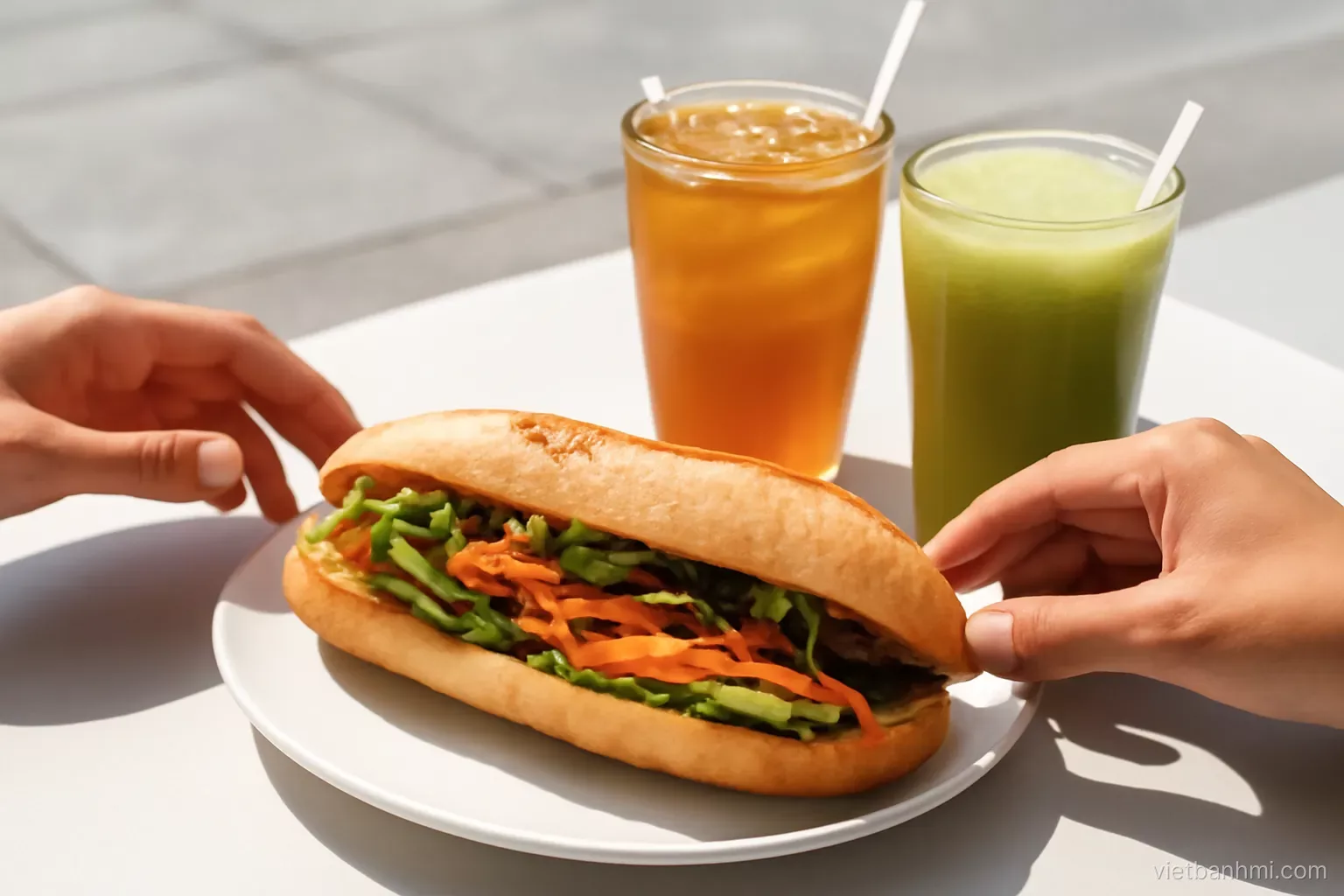
Fully vegan banh mi shops are part of this shift. Bánh Mì XANH, a fully vegan banh mi chain in Saigon, runs a drinks menu called Cà Phê XANH with black coffee at 35,000đ, nut-milk coffee at 45,000đ, jasmine lime tea at 36,000đ and nut-milk bubble tea at 45,000đ or 48,000đ with brown sugar. Because the whole chain is vegan, the condensed milk question simply does not come up, which is part of why visitors avoiding dairy keep finding it.
Lactose intolerance vs vegan: what to ask
If you are lactose intolerant rather than vegan, your risk profile is different. Sweetened condensed milk still contains lactose, so it is not a safe substitute. Small amounts may be tolerable for some people; that is a personal judgement. If you are vegan for ethical reasons, the bigger issue is hidden ingredients: creamers, butter in pastries and egg in drinks. Either way, the safest strategy in mainstream venues is black coffee, tea, juice, soy milk, or a café that names its plant milk on the menu.
For more about pairing your coffee with plant-based food, our vegan banh mi guides explain what goes into a vegan sandwich and how to confirm it is genuinely vegan.
Making dairy-free Vietnamese coffee at home
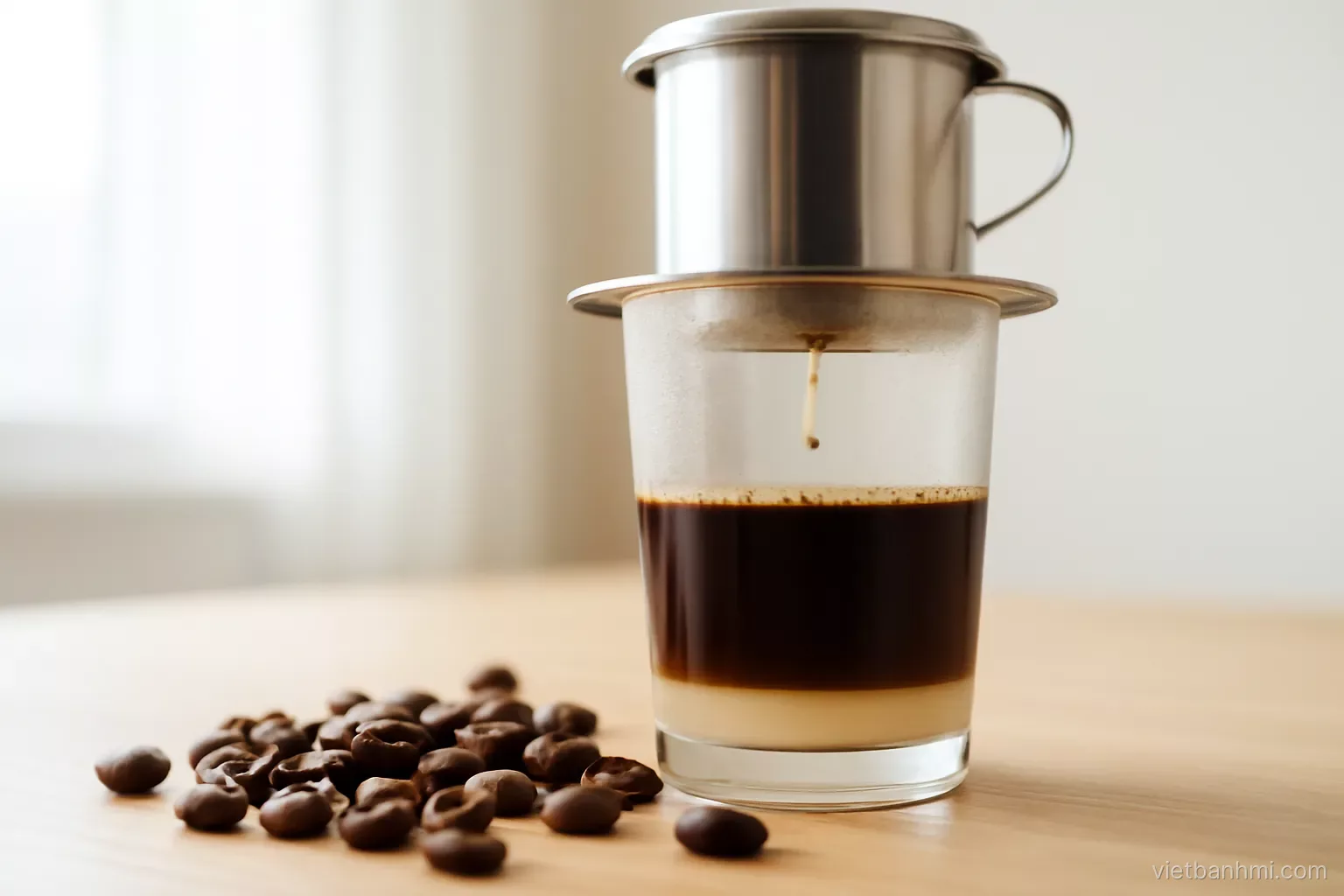
If you fall for the flavour and want it at home, the method is simple. Put about 20 g of medium-coarse ground dark-roast coffee (a robusta blend gives the authentic taste) into a phin, shake it level, and set the press disc on top. Pour in about 20 ml of water just off the boil, wait 30 seconds for the grounds to bloom, then top up to roughly 80–100 ml and let it drip for four to six minutes. For a dairy-free "sữa đá" style, stir a tablespoon of sweetened condensed coconut milk or a splash of thick cashew milk with a little sugar into the hot coffee, then pour over a full glass of ice.
The common mistakes are grinding too fine, which clogs the filter and gives a bitter, over-extracted drip, and pressing the disc down too hard. If the coffee drips through in under two minutes, the grind is too coarse; if it takes longer than about seven, it is too fine. Unsweetened almond milk on its own tends to taste thin next to robusta, so a richer nut milk or coconut cream gives a closer result.
Sources
- USDA FoodData Central – fdc.nal.usda.gov (sweetened condensed milk composition)
- Vietnam National Authority of Tourism – vietnam.travel (food and drink culture)
- Bánh Mì XANH – banhmixanh.com (menu and drink prices, checked October 2026)
Frequently asked questions
Is Vietnamese coffee vegan?
Black Vietnamese coffee is vegan. The classic milk coffee is not, because it uses sweetened condensed milk. Ask for "cà phê đen" or a café that offers nut-milk coffee.
How do I say no milk in Vietnamese?
Say "không sữa" (no milk) or "không sữa đặc" (no condensed milk). Showing the words written on your phone helps, because tones can change meaning.
Is coconut coffee dairy-free?
Not always. Many cafés add condensed milk to the coconut blend for sweetness. Ask "có sữa đặc không?" before ordering, and choose another drink if the mix is pre-made.
Can I find nut-milk coffee outside Saigon?
Modern cafés in Hanoi, Đà Nẵng, Hội An and Đà Lạt increasingly offer nut milk or oat milk. Small towns and street stalls usually do not, so black coffee and soy milk are your backups.
Is bubble tea in Vietnam dairy-free?
Usually not. Most milk teas use non-dairy creamer, fresh milk or condensed milk, and creamers can contain milk derivatives. Fruit teas without milk, or shops using named plant milks, are safer.
A coffee stop with no milk questions
When you are in Saigon and tired of checking every drink for condensed milk, Bánh Mì XANH keeps things simple: everything is fully vegan, from the banh mi to the nut-milk coffee and brown-sugar nut-milk bubble tea. Five central shops are open 24/7, including the one on Lê Thị Riêng near Bến Thành Market.
Visit the Lê Thị Riêng shop · 24/7 hotline / Zalo +84 923 183 183