Short answer: Tea in Vietnam ranges from free iced trà đá (weak green tea over ice) at street stalls to fine green tea from Thái Nguyên, scented jasmine and lotus teas, and caffeine-free herbal teas such as artichoke tea from Đà Lạt. For travellers, trà đá is the everyday thirst quencher, jasmine and lotus teas are the classic gifts, and herbal teas are a good choice when you have had enough coffee.
Coffee gets the headlines, but tea is older and arguably more woven into daily life in Vietnam. It is offered to guests, served at family altars, poured at the end of meals and drunk in the shade on every street. Knowing a little about it makes your trip richer and your coffee intake more manageable.
Trà đá: the drink of the street
Trà đá is lightly brewed green tea poured over ice, usually in a tall glass. In Hanoi it is a social institution: plastic stools, a kettle and a glass of tea for a small price are where friends meet and argue about football. In Saigon it often arrives free with your meal or coffee and is refilled without asking.
The tea is weak by design. It is meant to quench thirst, not to deliver caffeine, which makes it a perfect companion to rich or spicy food. If you want to know whether ice is safe, the large cylindrical ice with a hole through the middle is factory-made and widely used. Travellers with sensitive stomachs may still prefer to start slowly.
The main types of Vietnamese tea
| Tea | Vietnamese name | Taste | Where you meet it | Caffeine |
|---|---|---|---|---|
| Iced street tea | Trà đá | Light, slightly grassy | Stalls, eateries, free or cheap | Low |
| Green tea | Trà xanh, chè | Grassy, astringent, sweet aftertaste | Homes, northern tea shops | Moderate |
| Jasmine tea | Trà lài / trà nhài | Floral, smooth | Restaurants, cafés, gifts | Moderate |
| Lotus tea | Trà sen | Delicate, perfumed | Special occasions, gifts | Moderate |
| Artichoke tea | Trà atiso | Earthy, slightly sweet | Đà Lạt, herbal shops | None (herbal) |
| Chrysanthemum tea | Trà hoa cúc | Floral, mild | Cafés, herbal drinks | None (herbal) |
Green tea from the north
Northern Vietnam has a long tea-growing tradition, and Thái Nguyên province is the most famous name for green tea. The leaves are small, tightly rolled and steeped in small pots, often in several rounds. The first infusion may be quick and discarded to rinse the leaves; later rounds are sipped from tiny cups. The taste is grassy, astringent and finishes with a sweet aftertaste that Vietnamese tea drinkers prize.
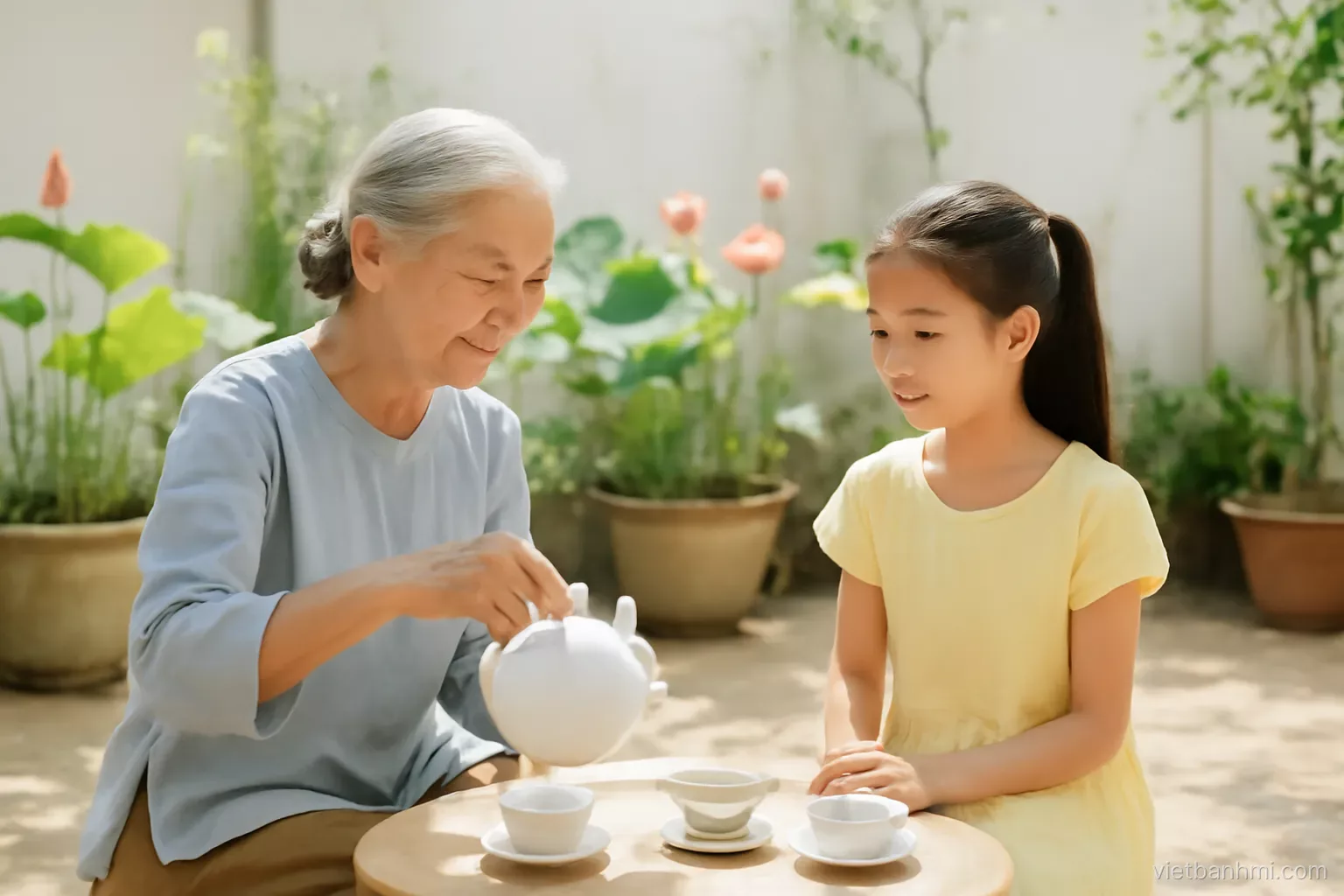
When you visit a Vietnamese home, you will very likely be offered a cup. Accepting it, even if you only sip, is polite. The host usually pours for guests first, and it is common to hold the cup with both hands when receiving it from an older person.
How to brew Vietnamese green tea
If you bring home green tea, brew it the Vietnamese way rather than like a Western tea bag. A typical home method for a small pot of about 150–200 ml:
- Warm the pot and cups with boiling water, then pour it away.
- Add about 5–8 g of tea leaves, roughly two to three teaspoons of tightly rolled leaves.
- Pour water at around 80–90°C, not fully boiling, just enough to cover the leaves, and discard it after a few seconds to rinse them.
- Fill the pot, steep for about one to two minutes, and pour out every drop into small cups so the leaves do not stew.
- Repeat for several rounds, steeping slightly longer each time.
The most common mistake is water that is too hot and a steep that is too long, which makes Thái Nguyên tea harsh and bitter. If your tea tastes sharp, lower the temperature or shorten the steep before changing the tea. Leaves left sitting in water between rounds also turn bitter, which is why Vietnamese tea drinkers always pour the pot dry.
Jasmine and lotus: scented teas
Jasmine tea is green tea scented with jasmine flowers. It is the default tea in many Vietnamese and Chinese-Vietnamese restaurants and has become a popular base for modern drinks, such as jasmine tea with lime, peach or passion fruit. It is fragrant enough to stand up to food without overwhelming it.
Lotus tea is the luxury of the family. The traditional Hanoi method scents green tea leaves inside lotus flowers or with lotus stamens, a labour-intensive process tied to the summer lotus season. Fine lotus tea is expensive and often bought as a gift, especially before Tết (Lunar New Year). Cheaper lotus-flavoured teas also exist; price is a reasonable guide to which you are buying.
Herbal teas: when you need a break from caffeine
Artichoke tea (trà atiso) is a speciality of Đà Lạt in the highlands, where artichokes are grown. It is made from the plant's flowers, leaves or roots, sold as dried bundles or tea bags, and drunk hot or iced. It is caffeine-free and slightly sweet. Chrysanthemum tea, often sweetened with rock sugar, is another gentle option found in cafés and herbal drink stalls.
Vietnamese herbal drinks are often described in terms of being "cooling" for the body, a traditional concept. We describe the taste and caffeine content, not health claims; enjoy them as refreshing drinks.
Modern tea drinks in cities
Walk through central Saigon and you will see as many tea shops as coffee carts: fruit teas, lime teas, milk teas and bubble teas aimed at a young crowd. These are sweetened and often contain milk or creamer, so ask if you avoid dairy. Fruit teas without milk are a reliable dairy-free choice. Typical prices in a mainstream chain run roughly 30,000–70,000đ, about US$1.20–2.70, depending on size and toppings.
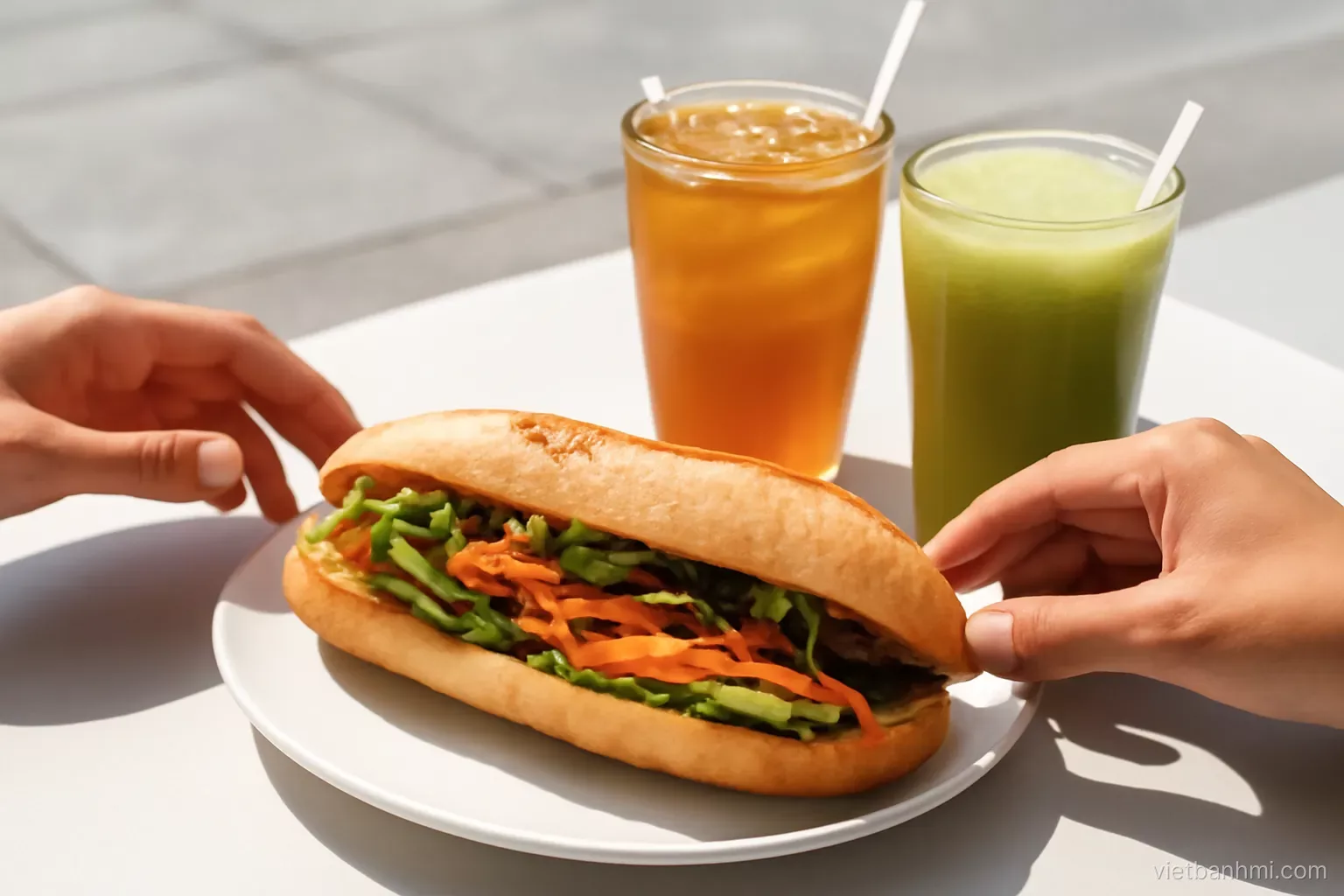
Tea also pairs beautifully with banh mi. A jasmine tea with lime refreshes the palate between bites of a spicy sandwich, and it is gentler than a second coffee late in the day. For more pairing ideas, see our coffee and drinks section.
Tea etiquette and practical tips
- Accept tea when offered in a home or office; a few sips is enough to be polite.
- Let the host pour; refill others' cups before your own if you are pouring.
- At stalls, trà đá refills are normal; you do not need to ask.
- When buying tea as a gift, a reputable shop with sealed packaging is safer than loose tea in open sacks for travel.
- Check your home country's customs rules for bringing in plant products; packaged dried tea is usually permitted but rules vary.
- Do not worry about refusing a refill; leaving a little tea in your cup is a common signal that you have had enough.
Tea on your food itinerary
A practical rhythm in the heat is coffee in the morning, trà đá with lunch, and a fragrant tea or juice in the afternoon and evening. If you travel north, set aside an hour for a proper green tea session in Hanoi; if you go to Đà Lạt, try artichoke tea where it is grown. For eating and drinking by neighbourhood in Saigon, see our Saigon food guide, and for plant-based travellers, our eating vegan in Vietnam guides.
Sources
- Vietnam National Authority of Tourism – vietnam.travel (tea culture and regional specialities)
- US Food and Drug Administration – fda.gov (caffeine guidance for healthy adults)
- Food and Agriculture Organization of the United Nations – fao.org (tea production statistics)
Frequently asked questions
What is trà đá?
Trà đá is weak green tea served over ice, the everyday drink at Vietnamese street stalls and eateries. It is often free or costs a few thousand dong and is refilled without asking.
What is the most famous Vietnamese tea?
Green tea from Thái Nguyên in the north is the best-known everyday tea, while lotus tea from Hanoi is the most prized for gifts. Jasmine tea is the one you will meet most often in restaurants.
Is artichoke tea caffeine-free?
Yes, artichoke tea is a herbal drink made from the artichoke plant, not from tea leaves, so it contains no caffeine. It is a speciality of Đà Lạt and widely sold as a souvenir.
Is it rude to refuse tea in Vietnam?
It is not a serious offence, but accepting and taking a sip is the polite norm when tea is offered in a home or office. You do not need to finish the cup.
What tea should I buy as a gift from Vietnam?
Good lotus tea, jasmine tea or Thái Nguyên green tea in sealed packaging travel well. Buy from a reputable shop and check your home country's customs rules for plant products.
Tea, banh mi and a quiet break in Saigon
When you need a break from coffee in Saigon, Bánh Mì XANH pours jasmine lime tea and nut-milk bubble tea next to fully vegan banh mi. Its five central shops are open 24/7, including the Đề Thám shop in the backpacker area by Bùi Viện, so a late cup of tea and a sandwich are always close.
Visit the Đề Thám shop · 24/7 hotline / Zalo +84 923 183 183