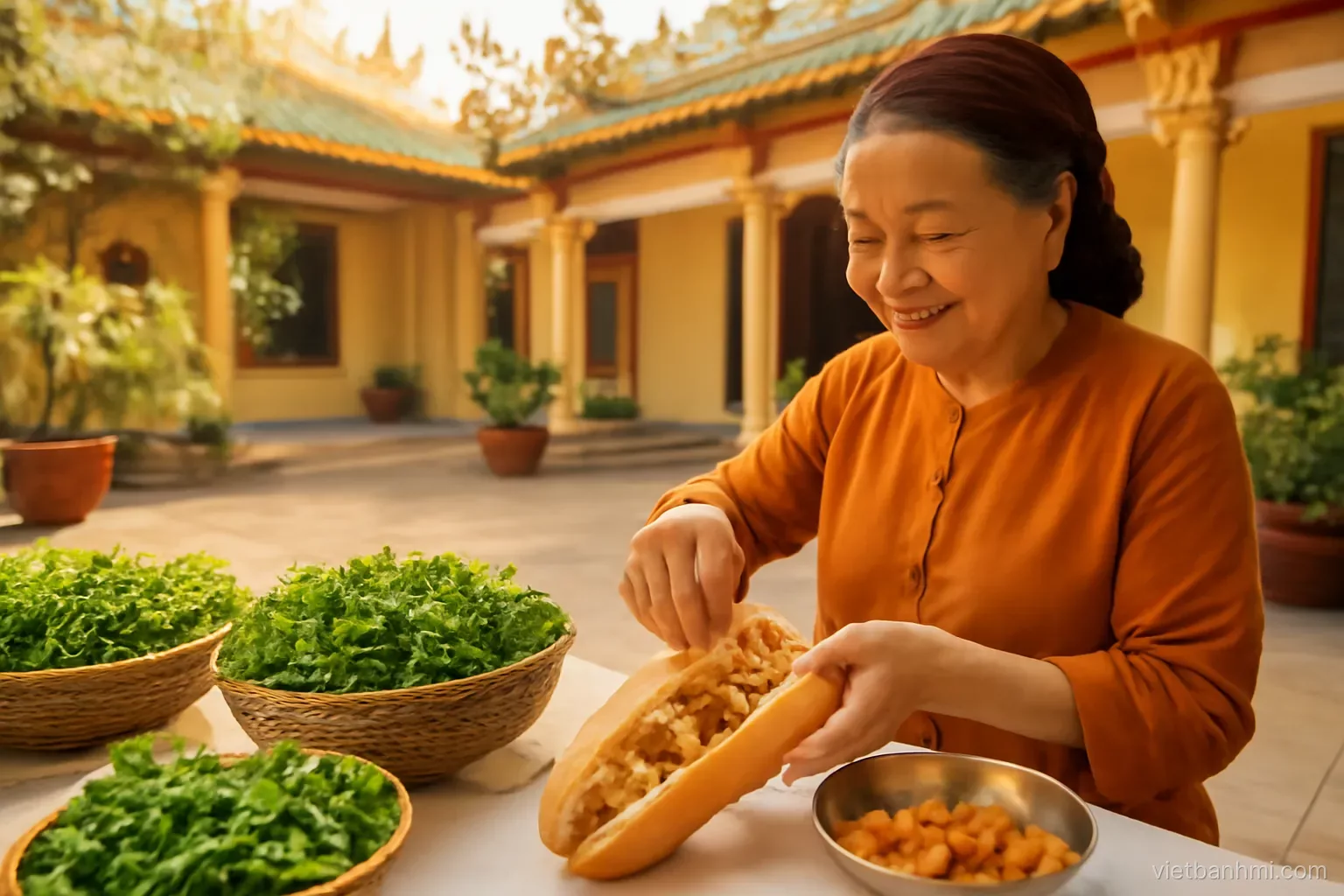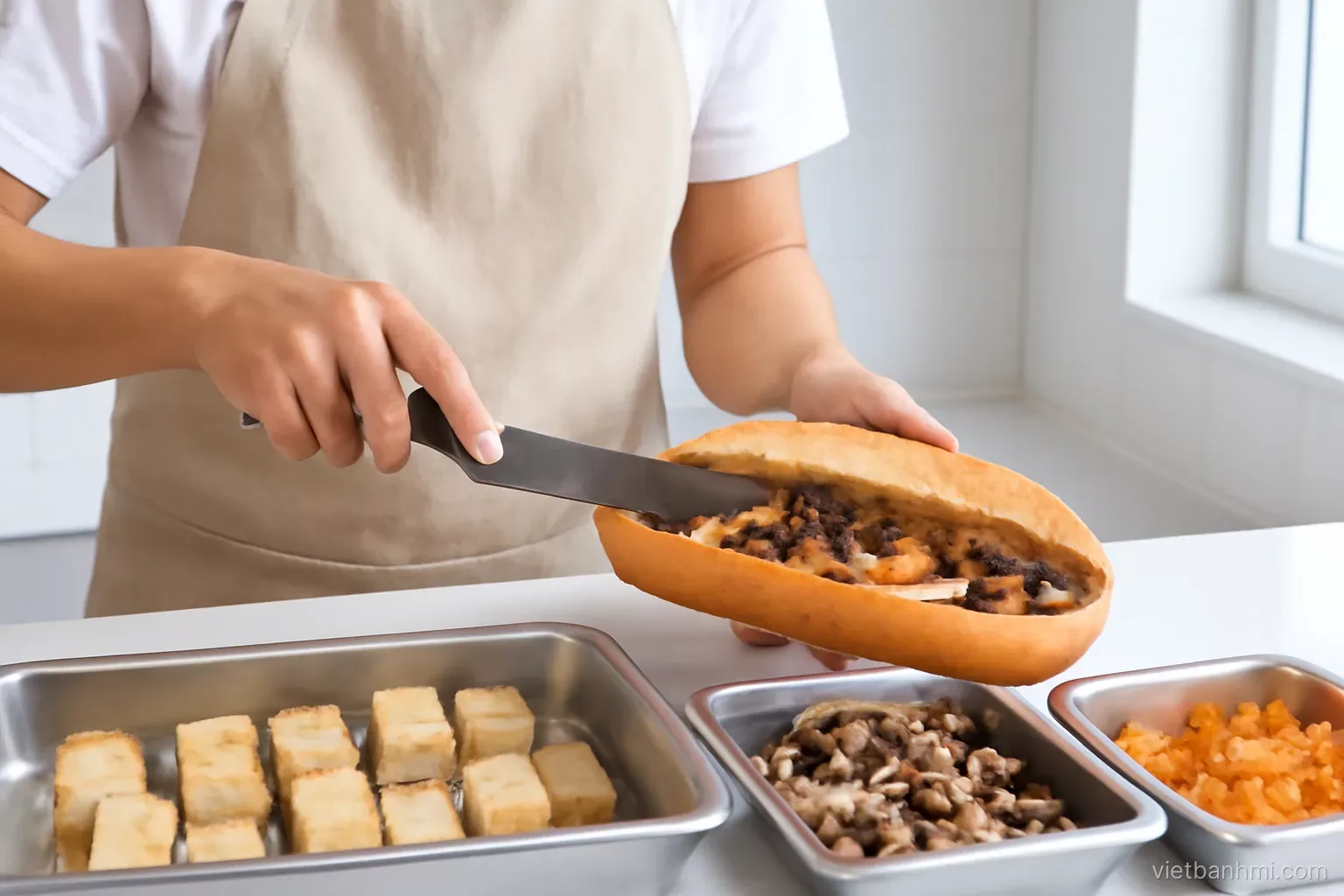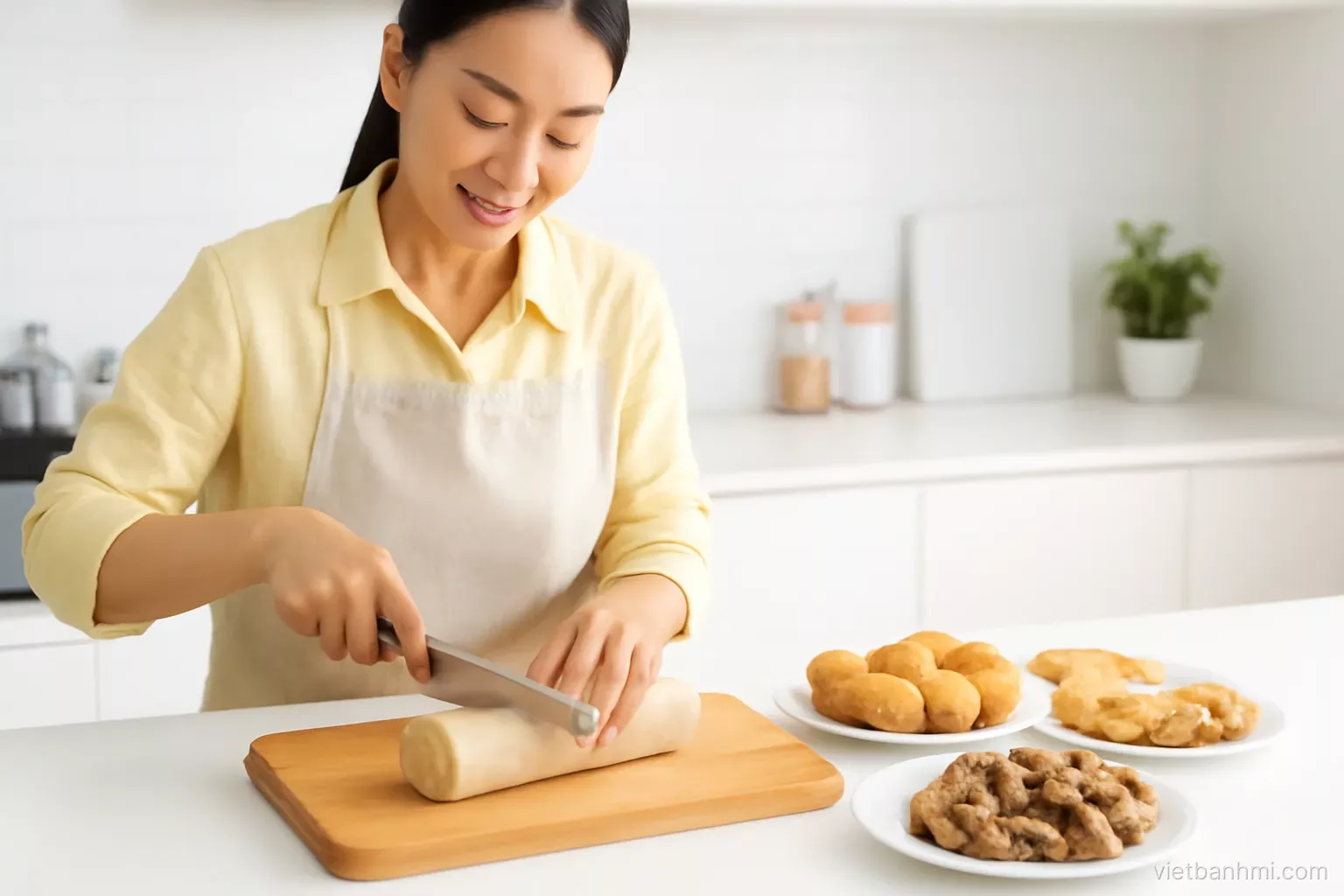
Short answer: Vegan "cold cuts" in banh mi are plant-based versions of Vietnamese deli meats, most often chả lụa chay (vegetarian pork roll) made from wheat gluten, soy protein or other grains, seasoned and steamed into a sliceable log. Alongside them, banh mi makers use fried tofu, rolled tofu skin and shredded mushrooms to provide chew, protein and savoury depth. Quality varies widely, and some commercial mock meats contain egg, so the source matters.
A tradition older than the trend
Meat analogues are not a recent invention in Vietnam. Buddhist vegetarian kitchens have long practised đồ chay giả mặn, vegetarian dishes that imitate meat and fish, so that festive and family meals could be fully vegetarian while still looking familiar. Wheat gluten, tofu, tofu skin, mushrooms, taro and konjac are the classic raw materials. When vendors began making vegetarian banh mi, they reached for this existing repertoire rather than inventing new products, which is why a vegan banh mi in Vietnam often feels more accomplished than one made abroad with a generic meat substitute. For the cultural background, see our Eating Vegan in Vietnam section.
Chả lụa chay: the vegetarian pork roll
The meat original, chả lụa, is a steamed pork sausage wrapped in banana leaf, smooth and springy, sliced thin into banh mi. Its vegetarian twin aims for the same look and bounce. Recipes vary by producer, but the common approach is to combine wheat gluten or soy protein with starch (often tapioca or potato), oil, salt, sugar, pepper and vegetarian seasoning, knead or blend it until elastic, then shape it into a log, wrap it and steam it until firm. Some versions add mushroom for flavour, or use bean curd as part of the base.
The result is mild and savoury with a slight springiness, best sliced about 3 to 5 mm thick. On its own it can taste bland; in a banh mi, with soy sauce, pickles and chili, it provides exactly the deli-sandwich structure that makes the sandwich feel classic. Bánh Mì XANH's Chả Lát Chay sandwich, for example, is built around a grain-based vegan cold cut of this kind, listed at 53,000đ.
The main plant proteins compared
| Filling | Vietnamese name | Made from | Texture in banh mi | Watch for |
|---|---|---|---|---|
| Vegetarian pork roll | chả lụa chay | Wheat gluten, soy protein or grains, starch | Smooth, springy slices | Some brands use egg white |
| Fried tofu | đậu hũ chiên | Soybeans, coagulant | Crisp outside, soft inside | Fried in shared oil at mixed stalls |
| Tofu skin roll | tàu hũ ky | Film from heated soy milk | Layered, chewy, "ham-like" | Usually vegan; check fillings |
| Shredded mushrooms | nấm xé | Oyster or king oyster mushrooms | Stringy, like pulled meat | Seasoning powder with meat extract |
| Vegan floss | chà bông chay | Mushroom or soy, dry-fried | Fluffy, crunchy topping | Regular floss is pork |
| Seitan pieces | mì căn | Wheat gluten | Dense and chewy | Contains gluten |
Why texture matters more than taste
Seasoning is relatively easy to adjust: soy sauce, sugar, pepper, garlic, lemongrass and chili can push almost any plant protein towards "savoury". Texture is harder, and it is what makes a vegan banh mi succeed or fail. A sandwich that contains only soft tofu tastes mushy against the airy bread; one with only dense seitan feels heavy. The best builders combine at least two textures, for example springy cold cut slices with crisp tofu, or chewy mushrooms with a fluffy floss topping.
This is also why the mixed or thập cẩm sandwich is the most popular choice at many vegan shops. It stacks different textures in one bite, the way the pork original stacks pâté, roll and roast meat. If you are building your own at home, aim for a total of roughly 80 to 120 g of combined protein fillings per sandwich, which fills the bread without making it collapse.
What to look for when buying mock meats
If you shop for vegan cold cuts at a Vietnamese market or supermarket, or abroad at an Asian grocer, a few checks help:
- Read the ingredient list for egg and milk. Look for trứng or lòng trắng trứng (egg, egg white) and sữa (milk). Not every "chay" product is vegan.
- Check the seasoning. Plain hạt nêm (seasoning powder) can contain meat extract; vegetarian products should use hạt nêm chay.
- Keep it cold. Fresh steamed rolls are perishable; buy from refrigerated cases and use within the date on the pack.
- Mind allergens. Most mock meats contain soy, wheat or both, so they are not suitable for people avoiding those.
- Prefer simple labels. Fewer additives often means a cleaner flavour that takes seasoning well.
How shops season and prepare each filling
Preparation turns raw mock meat into banh mi filling. Here is a typical sequence a vendor or home cook might follow, shown as an example method rather than any one shop's recipe:
- Press firm tofu for 15 to 20 minutes, cut into fingers about 1.5 cm thick and fry in oil at around 170 to 180°C until golden, roughly 4 to 6 minutes.
- For spicy tofu, toss the fried pieces in a pan with soy sauce, a little sugar, chopped lemongrass, garlic and fresh chili until glossy.
- Tear oyster mushrooms by hand, dry-fry them first to drive off water, then add oil, soy sauce and pepper until browned and chewy.
- Slice the vegetarian pork roll thin and serve it cold or briefly warmed, so it stays springy.
- Assemble with eggless mayo, pickles, cucumber, cilantro and chili, finishing with a few drops of soy sauce instead of fish sauce.
The most common mistake at home is skipping step three's dry-fry: wet mushrooms steam instead of browning and turn slimy. The second is under-seasoning tofu; it needs bold salt and spice because the bread and vegetables are mild. Detailed home recipes live on our sister site vegetarianbanhmi.com.
Where else you will meet these fillings
Once you can recognise vegan cold cuts, you will spot them all over Vietnamese vegetarian food, not only in sandwiches. Slices of chả lụa chay appear on plates of cơm tấm chay (vegetarian broken rice), tucked into fresh spring rolls, or served on top of vermicelli bowls with herbs and peanuts. Tofu skin rolls show up in hot pots and braised dishes, and vegan floss is sprinkled over sticky rice at breakfast stalls. Vegetarian restaurants often sell their house-made rolls whole for customers to take home, which is a good way to taste a fresher product than the vacuum-packed supermarket versions. If you enjoy a particular cold cut in a banh mi, ask whether the restaurant sells it by the roll; many do, especially before the 1st and 15th days of the lunar month, when demand for vegetarian food rises. Keep any roll you buy refrigerated and eat it within a few days.
Nutrition at a glance
USDA FoodData Central lists raw firm tofu (prepared with calcium sulfate) at about 144 kcal and about 17 g protein per 100 g, and calcium-set tofu is also a notable calcium source. Vital wheat gluten, the base of seitan, is extremely protein-dense by weight in its dry form, while finished seitan and cold cuts contain much water and starch, so their protein per 100 g is lower and varies by product. Mushrooms contribute little in calories but plenty of savoury flavour. For a full comparison with pork banh mi, see our Vegan Banh Mi guides.
Sources
- USDA FoodData Central – fdc.nal.usda.gov (firm tofu; vital wheat gluten; oyster mushrooms)
- National Geographic – nationalgeographic.com (Vietnamese Buddhist vegetarian cooking in Huế)
- Vietnam National Authority of Tourism – vietnam.travel
Frequently asked questions
What is chả lụa chay made of?
It is usually made from wheat gluten, soy protein or other grains combined with starch, oil and seasoning, then steamed into a sliceable roll. Recipes vary by producer, so check the label if you buy it packaged.
Is Vietnamese mock meat always vegan?
No. Some commercial products include egg white or milk, and some use seasoning with meat extract. Look for thuần chay or check ingredients for trứng and sữa.
Which vegan filling has the most protein?
By weight, seitan-based fillings and firm tofu are among the highest. Mushrooms are low in protein but add texture and flavour. Combining fillings gives a better sandwich and balanced protein.
Is tofu skin the same as tofu?
Not quite. Tofu skin, tàu hũ ky, is the film that forms on heated soy milk, dried in sheets and often rolled into "ham" or "sausage". Tofu is soy milk coagulated into curds and pressed.
Are vegan cold cuts gluten-free?
Usually not, because many are based on wheat gluten. Tofu and mushrooms are naturally gluten-free, but the bread is not, so a banh mi is not suitable for a gluten-free diet.
Try a grain-based cold cut banh mi in Saigon
If you want to taste how far vegan cold cuts have come, order the Chả Lát Chay or the mixed Thập Cẩm at Bánh Mì XANH, a fully vegan banh mi chain with five central Saigon shops open 24/7 and online delivery.
See the Bánh Mì XANH menu · 24/7 hotline / Zalo +84 923 183 183