Short answer: Around Bến Thành Market you can eat well from early morning to late night: the food aisles inside the market for noodle soups, rice plates and desserts during the day, banh mi and broken-rice shops on the surrounding streets such as Lê Thị Riêng, and evening street food and 24/7 options after the market hall closes in the early evening. Expect to pay roughly 30,000 to 80,000 VND for most single dishes, a little more inside the market than in side streets.
Getting your bearings
Bến Thành Market is the landmark at the heart of what used to be District 1. Since Ho Chi Minh City reorganised its administration on 1 July 2025, districts no longer exist as administrative units, and the market sits in the new Bến Thành ward, which also absorbed the former Phạm Ngũ Lão ward. Locals and taxi drivers still use the old district names in conversation, so "District 1" remains perfectly understood. The market faces a large roundabout, with Lê Lợi Boulevard heading north-east towards the Opera House and Nguyễn Huệ walking street, and the 23/9 Park stretching south-west towards the backpacker area.
The surrounding area has seen construction in recent years, including the metro station by the market and work on the market building and nearby public space. Layouts of entrances and outdoor vendors may shift, so treat any map as a guide and follow the crowds and the smell of grilling. For other neighbourhoods, browse our Saigon Food Guide.
Inside the market: the food aisles
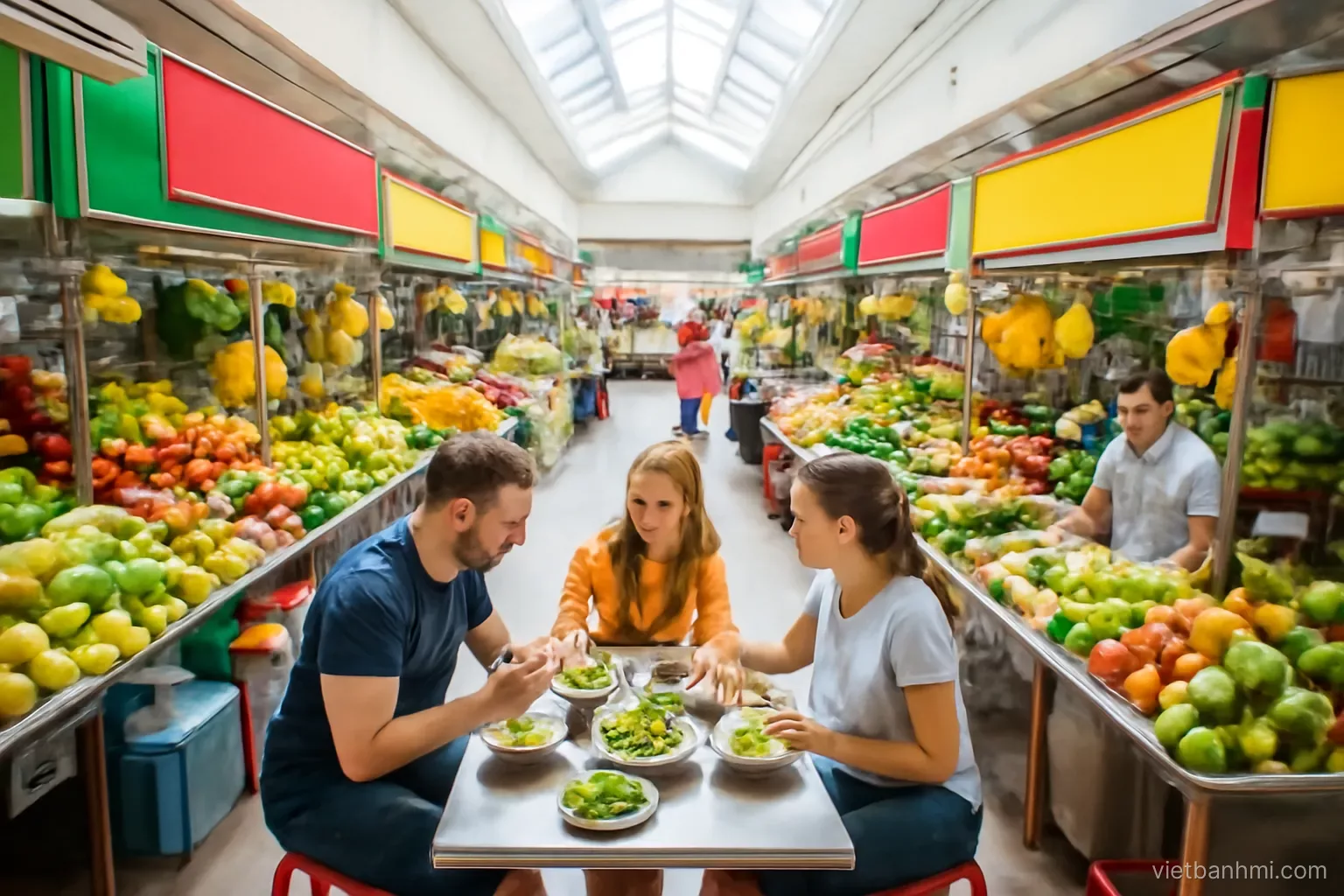
The market hall is mostly clothing, souvenirs, dried goods and fresh produce, but it has a dedicated food section with counters and stools where you can sit down for a full meal. Travel guides most often give the day market's hours as roughly 6 a.m. to 6 p.m., with some stalls closing earlier; check locally, as hours are set by the management and individual traders. The food counters are at their liveliest from late morning through lunch.
Typical dishes you will find inside include bún (rice vermicelli) bowls with grilled toppings and herbs, phở and other noodle soups, cơm (rice) plates, bánh xèo (crispy turmeric pancakes), fresh spring rolls, and chè (sweet dessert soups) with beans, jelly and coconut milk. Prices inside are higher than in side streets because of rent and tourist traffic, and some stalls have English menus with photos, which is convenient for a first meal in Vietnam. Ask the price before you sit down if none is displayed, and confirm whether the price is per bowl or per portion.
- Good for: a first, low-stress sit-down meal; trying several dishes in one place; escaping the midday sun.
- Less good for: the lowest prices, or very local, specialised stalls; those are in the streets around.
- Vegetarian note: many dishes use fish sauce in dipping sauces and broths; ask for chay (vegetarian) and không nước mắm (no fish sauce).
Banh mi on and around Lê Thị Riêng
A few minutes' walk west of the market, Lê Thị Riêng street is known among food lovers for banh mi. One of the city's most famous pork banh mi shops, with oversized, heavily loaded sandwiches and frequent queues, is here, and it draws visitors from around the world. A short walk along the same street, at number 38, Bánh Mì XANH runs a fully vegan banh mi shop open 24/7, which makes this one of the easiest places in the city to compare a classic pork sandwich with a plant-based one on the same afternoon.
Banh mi is at its best fresh and warm, so buy it right before you eat. In the midday heat, the shade of the 23/9 Park or the benches along Lê Lợi are pleasant places to sit. If you are curious about the differences between the two styles, our article on vegan versus classic banh mi compares taste, price and nutrition.
Hour by hour: a day of eating near the market
Saigon's food rhythm shifts through the day, and the market area shows it clearly. Here is an example schedule for a full day based nearby, with typical price ranges in central Saigon.
| Time | What to eat | Where to look | Typical price |
|---|---|---|---|
| 6:00–9:00 | Banh mi, sticky rice (xôi), phở, iced coffee | Side streets, carts near offices | 20,000–70,000 VND |
| 9:00–11:00 | Fresh fruit, smoothies, second coffee | Market fruit stalls, cafés on Lê Lợi | 25,000–60,000 VND |
| 11:00–13:30 | Broken rice (cơm tấm), vermicelli bowls, rice plates | Market food aisle, office lunch shops | 35,000–80,000 VND |
| 14:00–17:00 | Snacks: spring rolls, chè, sugarcane juice | Market dessert stalls, street carts | 15,000–40,000 VND |
| 17:00–21:00 | Grilled skewers, hot pot, noodle soups | Streets around the market, 23/9 Park side | 50,000–150,000 VND |
| 21:00 onward | Banh mi, porridge, late noodles | 24/7 shops, Bùi Viện area nearby | 30,000–80,000 VND |
Prices are typical ranges, not fixed rates, and USD figures use around 26,000 VND per USD (check current rate). Tourist-facing restaurants with air-conditioning can cost two or three times more.
Evenings after the hall closes
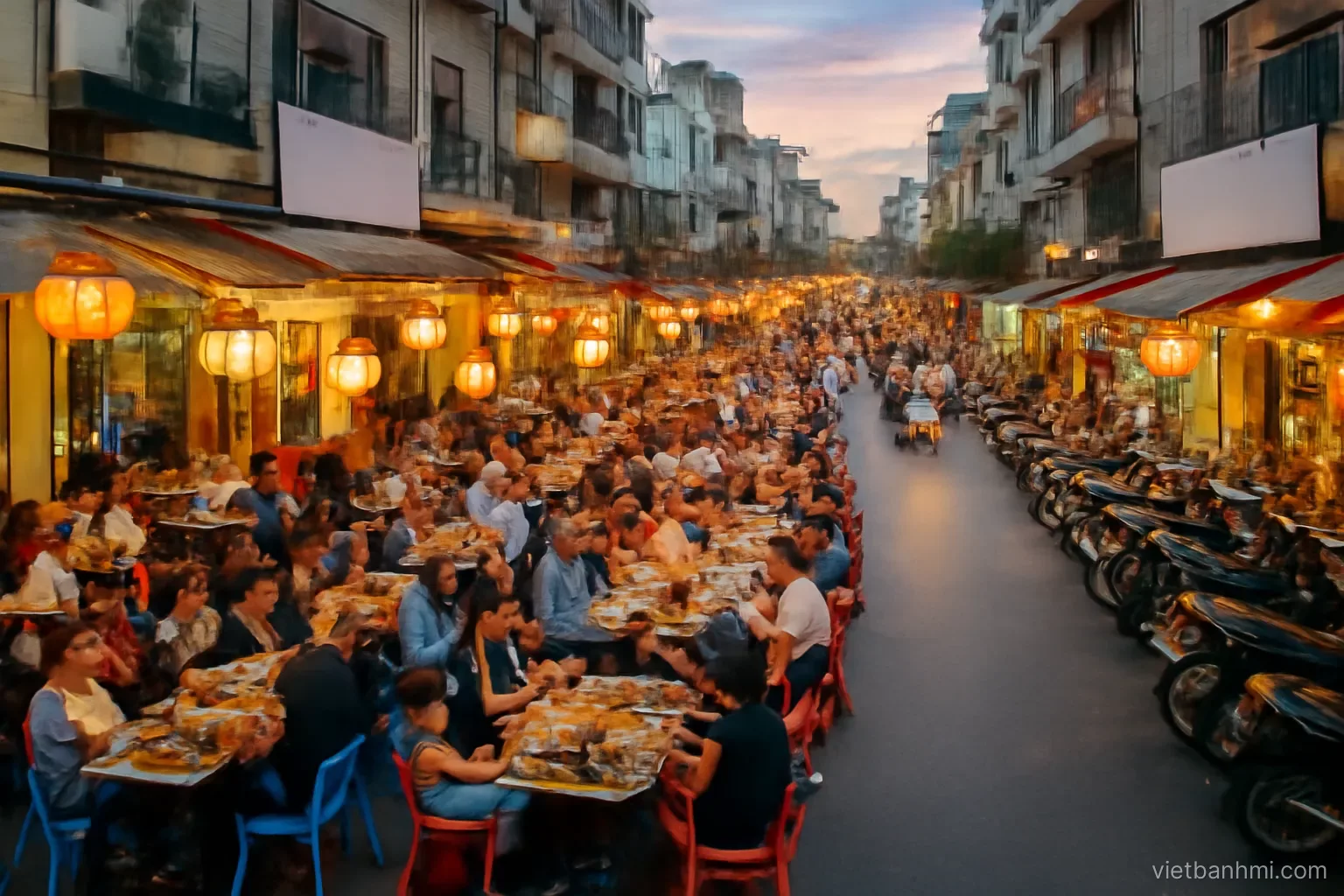
When the market hall shuts in the early evening, the area does not go quiet. Over the years, an outdoor night market has operated on the streets along the sides of the building, selling souvenirs and seafood; its exact layout and hours have changed with renovation and city planning, so check recent reviews before relying on it. Beyond that, the streets around the roundabout, the edges of the 23/9 Park and the lanes towards Bùi Viện keep serving food late into the night, with grilled meats and seafood, noodle soups and plastic-stool beer spots.
For vegetarians and vegans, evenings are when a dedicated shop is most useful, because many mixed stalls lean heavily on meat and seafood after dark. The 24/7 Bánh Mì XANH shops near the market, on Lê Thị Riêng and the small grab-and-go shop on Trần Hưng Đạo, are reliable options after dinner or after a night out.
Coffee and drinks near the market
Coffee is part of every meal rhythm in Saigon, and the market area has everything from plastic-stool coffee carts to multi-storey chain cafés. The local default is cà phê sữa đá, strong drip coffee with sweetened condensed milk over ice, usually around 20,000 to 40,000 VND at street level and more in cafés. If you prefer it black, ask for cà phê đen đá. Sugarcane juice (nước mía), pressed to order and often with a little kumquat, is a cheap and refreshing afternoon drink. For dairy-free options, many modern cafés now offer plant milks, and fully vegan shops use nut milk by default. A cold drink is also the easiest way to rest your feet: a café with a view over the roundabout or the park is a good place to plan the rest of your day. Our Coffee & Drinks section explains the classic orders.
Practical tips for first-timers
- Carry small notes. Many stalls are cash only or prefer cash, and breaking a 500,000 VND note for a 30,000 VND snack is awkward. QR bank transfer is common for locals but not always usable with foreign cards.
- Ask the price first at any stall without a visible menu, and confirm the total before eating.
- Watch your phone and bag at the curb; snatch theft from motorbikes happens in busy central areas. Keep valuables on the side away from the road.
- Drink bottled water and judge ice by the setting; ice at established shops is generally factory-made.
- Avoid peak lunch (around 11:30–12:30) at famous spots if you dislike queues; mid-afternoon is calmer.
- Mind the heat. Midday can feel brutal; schedule market browsing for the morning and eat indoors at noon.
Our Street Food Know-How section covers ordering, hygiene signals and payment in more detail.
Sources
- Vietnam National Authority of Tourism – vietnam.travel
- Tuoi Tre News – tuoitrenews.vn (Bến Thành Market renovation and public square coverage)
- Ho Chi Minh City People's Committee – hochiminhcity.gov.vn (2025 ward reorganisation)
Frequently asked questions
What time does Bến Thành Market open and close?
Most travel guides give roughly 6 a.m. to 6 p.m. for the indoor market, with some stalls closing earlier. Hours can change, especially during renovation work, so check locally on the day.
Is food inside Bến Thành Market overpriced?
It is somewhat more expensive than side streets because of rent and tourist demand, but it is convenient and easy for a first meal. Ask prices before ordering, and walk a few streets out for cheaper local spots.
Which ward is Bến Thành Market in now?
Since 1 July 2025, it is in Bến Thành ward, which covers much of the former District 1 centre including the former Phạm Ngũ Lão ward. People still say "District 1" in everyday speech.
Where can I get vegan food near Bến Thành Market?
Fully vegan Bánh Mì XANH shops are at 38 Lê Thị Riêng and 2B Trần Hưng Đạo, both open 24/7. Inside the market, ask for chay dishes without fish sauce.
Can I pay by card at the market food stalls?
Rarely. Most food stalls prefer cash, and some accept local QR payments. Bring small notes in VND.
Your 24/7 vegan stop by Bến Thành
When the market hall closes or you simply want a sandwich you do not need to question, walk to 38 Lê Thị Riêng. Bánh Mì XANH serves fully vegan banh mi and nut-milk coffee around the clock at five central Saigon shops, with delivery if you would rather stay in.
See the Lê Thị Riêng shop · 24/7 hotline / Zalo +84 923 183 183