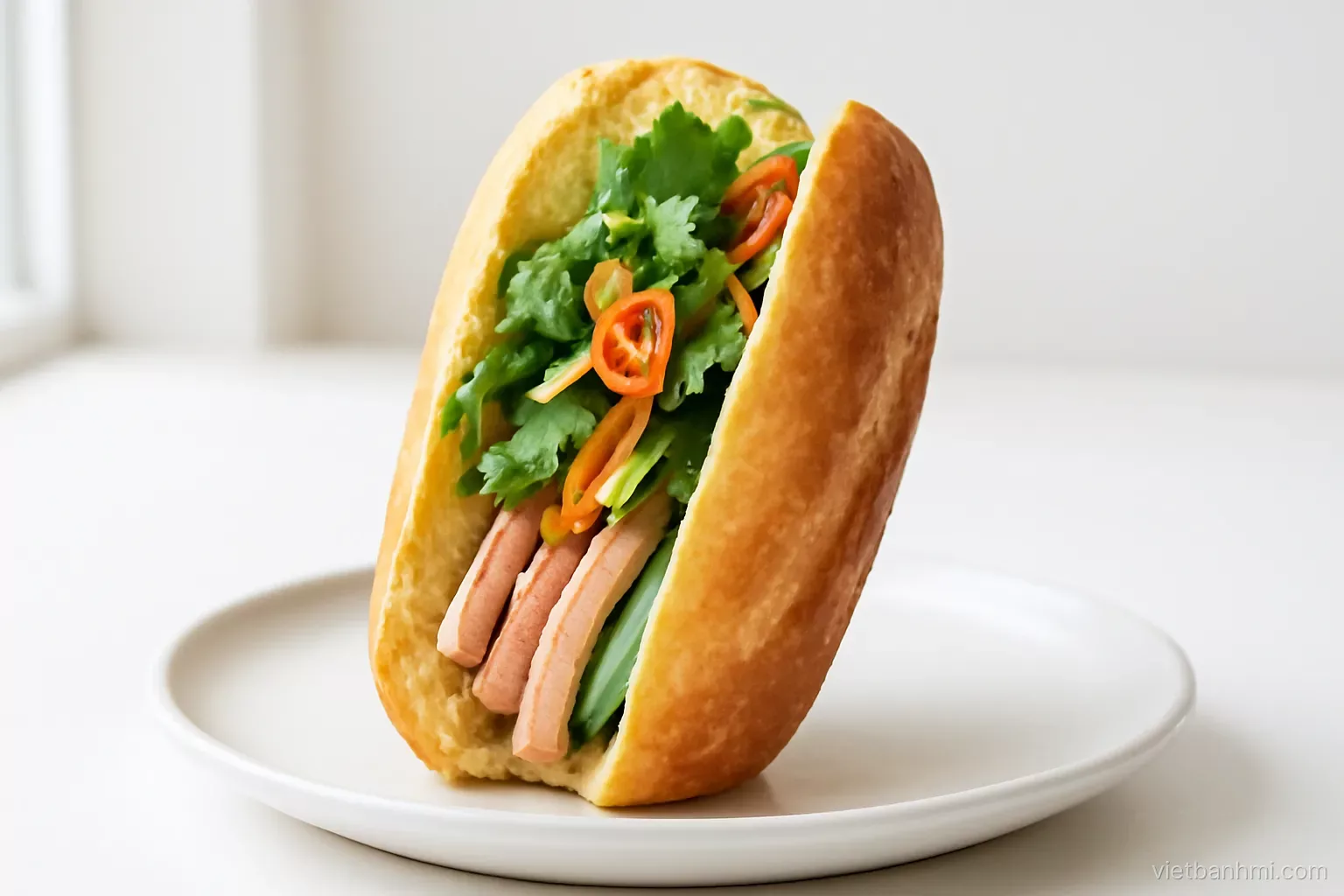
Short answer: A banh mi has six working parts: a light, crackly baguette; a fat-based spread (pâté, homemade mayonnaise or butter); a main filling; pickled carrot and daikon plus cucumber; fresh herbs and chili; and a final splash of seasoning sauce. Each layer has a job — structure, richness, protein, acidity, freshness, salt — and the sandwich works because none of them dominates.
Why the order of assembly matters
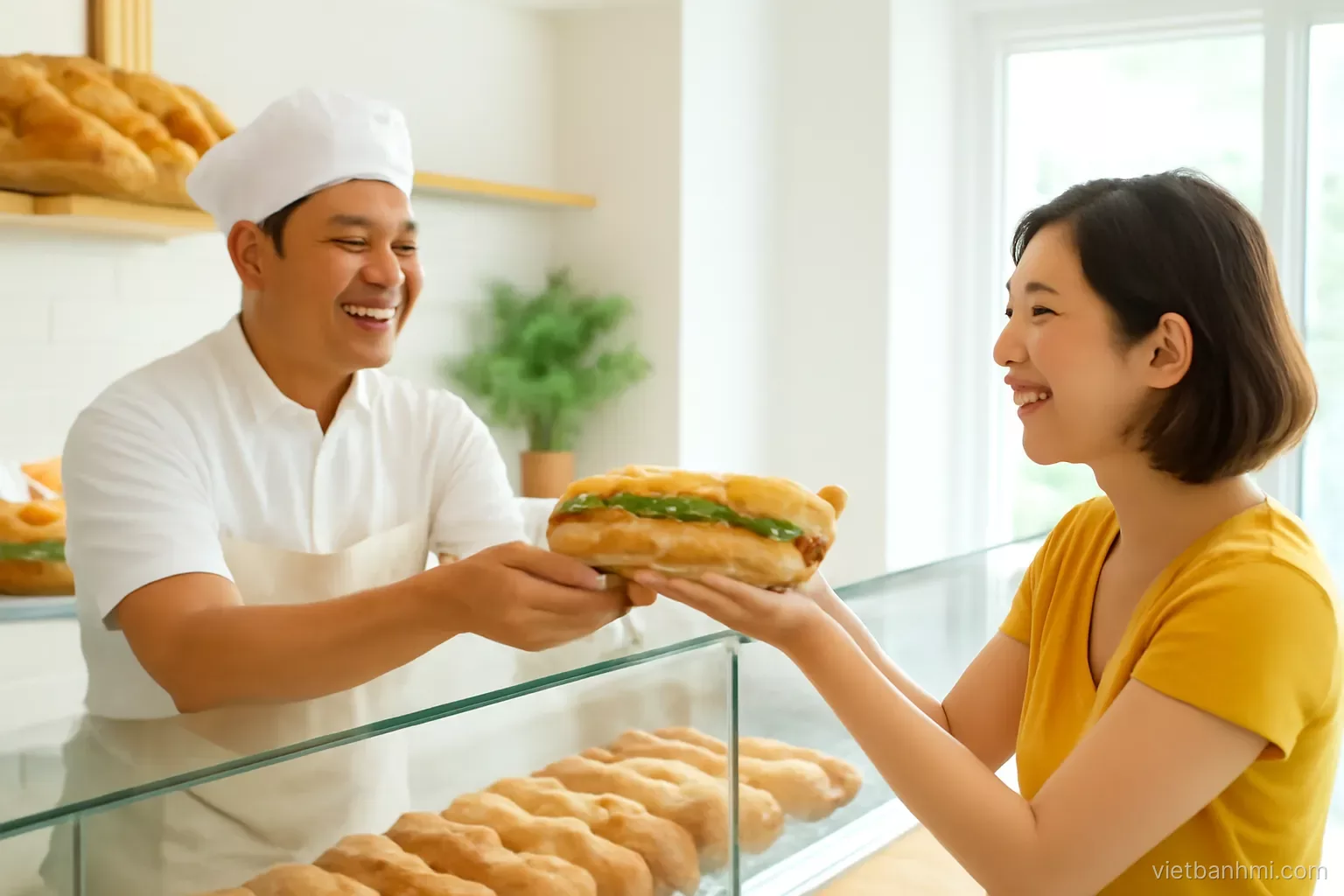
Watch a busy vendor and you will see the same sequence every time, done in under a minute: warm the bread, split it along one side without cutting all the way through, spread, fill, add vegetables, add herbs and chili, season, close. That order is not arbitrary. The spread goes directly on the crumb so it forms a thin fatty barrier; the wet pickles go on top of the filling, never touching bare bread; the herbs go last so they stay crisp; and the sauce is splashed over everything so it seeps down rather than pooling in one spot.
When a banh mi turns soggy within ten minutes, it is usually because this sequence was broken — pickles put straight onto the bread, or too much sauce poured into an unprotected crumb. If you make banh mi at home, copying the street order fixes most problems before they start.
Layer 1: the bread
The loaf is the foundation and, for most Vietnamese eaters, the deciding factor. A good one is about 20–30 cm long, light in the hand, with a thin crust that crackles audibly and an airy, cotton-soft crumb. Vendors usually reheat loaves briefly — on a charcoal grill, in a small oven or a toaster cabinet — because a warm crust stays crisp longer once the fillings go in. Some vendors pull out a little of the crumb to make room for filling; others leave it all in. We cover the bread in detail in a separate piece on why Vietnamese baguettes are so light, in our Banh Mi 101 section.
Layer 2: the spread
Most sandwiches get two spreads, one on each cut face. The classic pair is pork liver pa tê (pâté) and bơ — which literally means butter but on a banh mi cart usually means a yellow homemade mayonnaise whipped from egg yolk and oil. Some vendors use actual butter or margarine, especially on egg sandwiches. The spread does three things: it adds richness, it carries flavour from one bite to the next, and it waterproofs the bread.
At vegetarian and vegan shops the spread changes. It may be a mushroom or soy-based pâté, an egg-free mayonnaise or a plain oil-based sauce. This is also one of the first places a "vegetarian" sandwich at an ordinary cart can stop being vegetarian, because the default jar of pâté is almost always pork.
Layer 3: the main filling
The filling gives the sandwich its name. A few of the fillings you will meet most often:
| Vietnamese name | English | Notes |
|---|---|---|
| chả lụa | steamed pork roll | Smooth, mild, sliced thin; the backbone of many southern sandwiches |
| thịt nguội | cold cuts / ham | Often several kinds layered together |
| xá xíu | red barbecued pork | Sweet glaze, Chinese-Vietnamese origin |
| thịt nướng | grilled pork | Grilled over charcoal to order at some carts |
| trứng ốp la | fried egg | A cheap, popular breakfast filling |
| xíu mại | meatballs in tomato sauce | Juicy, best eaten immediately |
| đậu hũ | tofu | Fried, braised or spicy at chay shops |
| nấm | mushrooms | Common in vegetarian versions for savoury depth |
Vegetarian shops often also use a grain- or soy-based "cold cut" that is sliced like chả lụa. It gives the familiar texture without the pork, which is why many locals who are not vegetarian still order it on Buddhist fasting days.
Layer 4: pickles and cucumber
The pickle layer is called đồ chua, literally "sour things": matchsticks of carrot and daikon soaked in a light brine of vinegar, sugar, salt and water. It is crunchy, sweet-sour and slightly sharp, and it is what keeps a sandwich full of pâté and cold cuts from feeling heavy. Most vendors add one or two long spears of cucumber as well, for cool crunch and water.
Pickles are usually made fresh every day or two. If they taste flabby, very sweet or fizzy, they are old. The amount matters too: a good vendor squeezes the pickles lightly before adding them, so the brine flavours the sandwich without flooding the bread.
Layer 5: herbs and chili
The standard herb is ngò (cilantro), added as whole sprigs with stems. Many vendors add hành lá (spring onion), sometimes as scallion oil. In some regions you may get Vietnamese coriander or other herbs, but cilantro is the default almost everywhere. Fresh chili — typically sliced red bird's-eye chili — goes in at this stage, or a spoonful of chili sauce. Herbs and chili are the easiest layer to customise:
- Không ngò — no cilantro.
- Không hành — no spring onion.
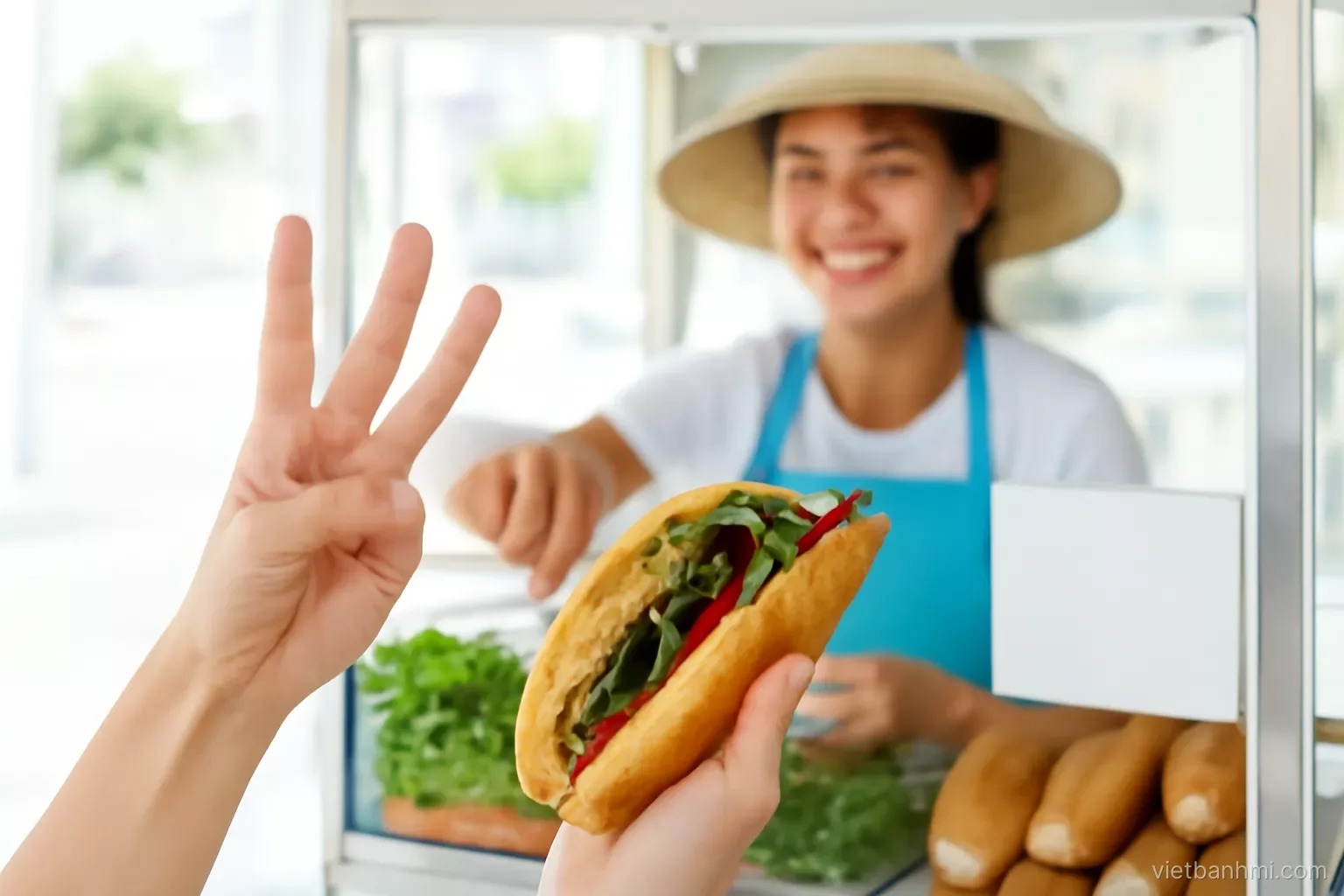
- Không cay — no chili; ít cay — a little; cay nhiều — lots.
- Thêm đồ chua — extra pickles.
Layer 6: the seasoning splash
Just before closing the bread, many vendors shake a few drops of soy sauce or a seasoning sauce such as Maggi over the filling. It is a small step with a big effect: a final hit of salt and savoury depth that ties everything together. Some carts use a little of the cooking juices from their roast or barbecued pork instead; meatball sandwiches get a spoonful of the tomato sauce. If you are avoiding fish sauce, ask what goes into this last splash — most bottled soy and seasoning sauces do not contain fish, but house sauces vary.
The layers also shift by region, which is a good way to see the structure at work. In Hanoi, the spread often carries most of the flavour and the vegetable layer is lighter. In Hải Phòng's finger-thin bánh mì que, the whole sandwich shrinks to two layers — pâté and chili sauce — inside a stick of bread. In Hội An, house sauces and extra fillings make the sandwich wetter and richer, so a well-toasted loaf matters even more. The six-part logic stays the same; what changes is how much weight each part carries.
Common faults and what they tell you
Once you know the layers, you can judge a banh mi in the first two bites. A chewy, leathery crust means the bread is old or was never reheated. A sandwich that sags and drips means too much wet pickle or sauce on unprotected crumb. A heavy, greasy feeling usually means too much spread and not enough pickle. And a bland one is almost always missing the herbs or the final splash of seasoning. None of these is about price; a 20,000đ cart can get every layer right, and an expensive shop can get them wrong.
The same logic applies to vegan banh mi. Without pâté and pork, the filling needs more care — tofu that has been well seasoned, mushrooms cooked until they are deeply savoury, and a spread with enough body to do the waterproofing job. A shop that builds a vegan sandwich layer by layer with the same discipline as a classic cart will produce something that does not feel like a substitute. Ingredient notes on pickles, herbs and sauces live in our Flavors & Ingredients section.
Sources
- Oxford English Dictionary – oed.com (entry "banh mi")
- Saigoneer – saigoneer.com ("The Saga of the Bánh Mì")
- Roads & Kingdoms – roadsandkingdoms.com ("The Sandwich That Ate the World", 2016)
Frequently asked questions
What is the yellow sauce in banh mi?
It is usually bơ, a homemade mayonnaise made from egg yolk and oil, which vendors call "butter". Some carts use real butter or margarine instead. Vegan shops use egg-free alternatives.
What are the orange and white strips in banh mi?
They are đồ chua, pickled carrot and daikon cut into matchsticks and soaked in vinegar, sugar and salt. They add crunch and acidity to balance the rich spread and fillings.
Why do vendors toast the bread?
Warming the loaf crisps the thin crust and makes it shatter when you bite. A warm crust also stays crisp for longer once moist fillings go in.
Can I ask for no pâté?
Yes, say không pa tê. It is a very common request, and vendors will usually add a little extra mayonnaise or butter to keep the sandwich moist.
Does every banh mi contain fish sauce?
No. Fish sauce is not a standard banh mi ingredient, though it can turn up in marinades for grilled meat or in a house dipping sauce. If you avoid it, ask about the marinade and the final seasoning splash, or choose a dedicated vegetarian shop.
See every layer done vegan, around the clock
If you want to taste how the six layers work without pâté or pork, Bánh Mì XANH in Saigon builds fully vegan banh mi at five central shops that never close. Compare the Chả Lát Chay, a grain-based vegan cold cut, with the Đậu Hũ Cay spicy tofu and you will see how much each filling changes the sandwich.
Browse the Bánh Mì XANH menu · 24/7 hotline / Zalo +84 923 183 183