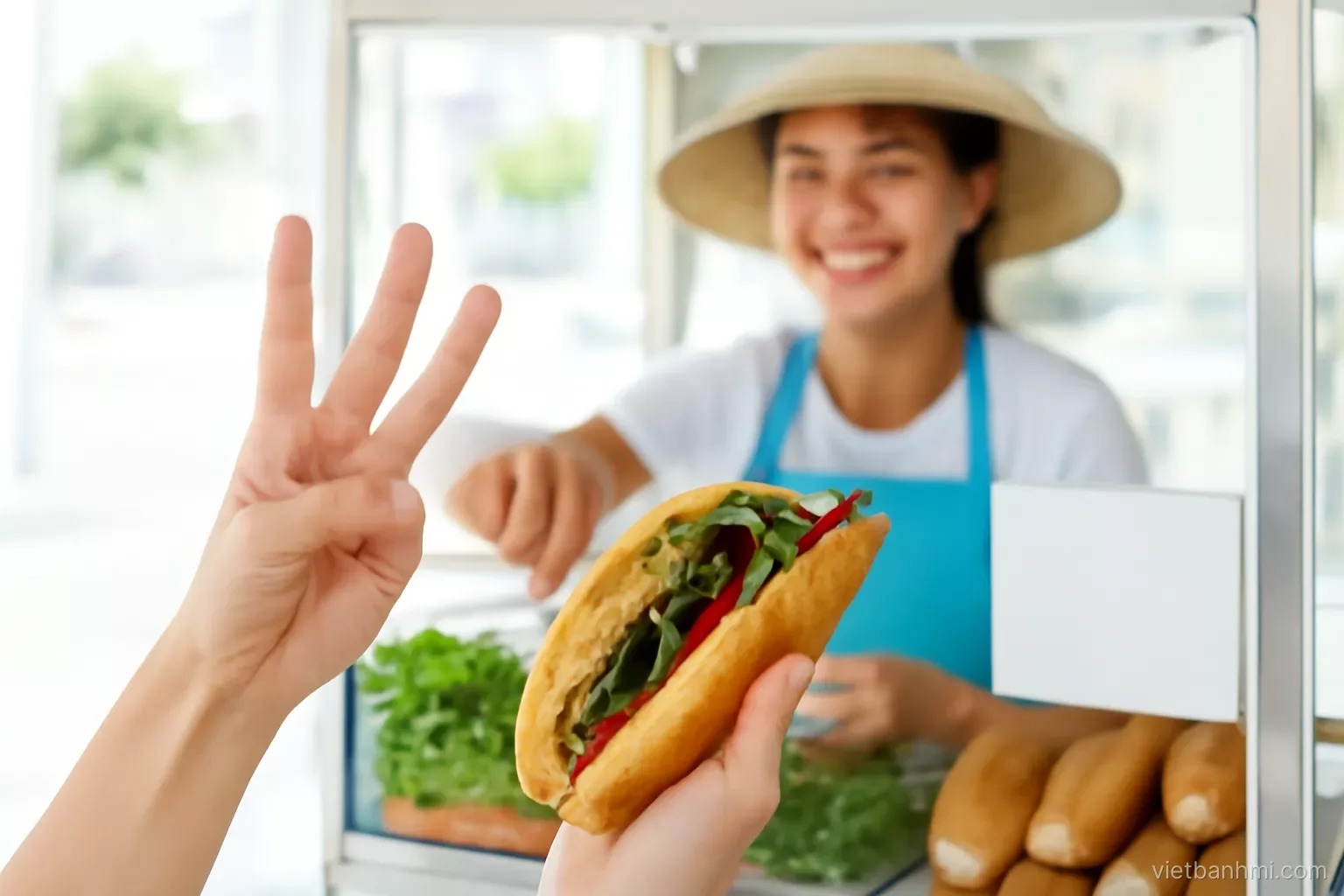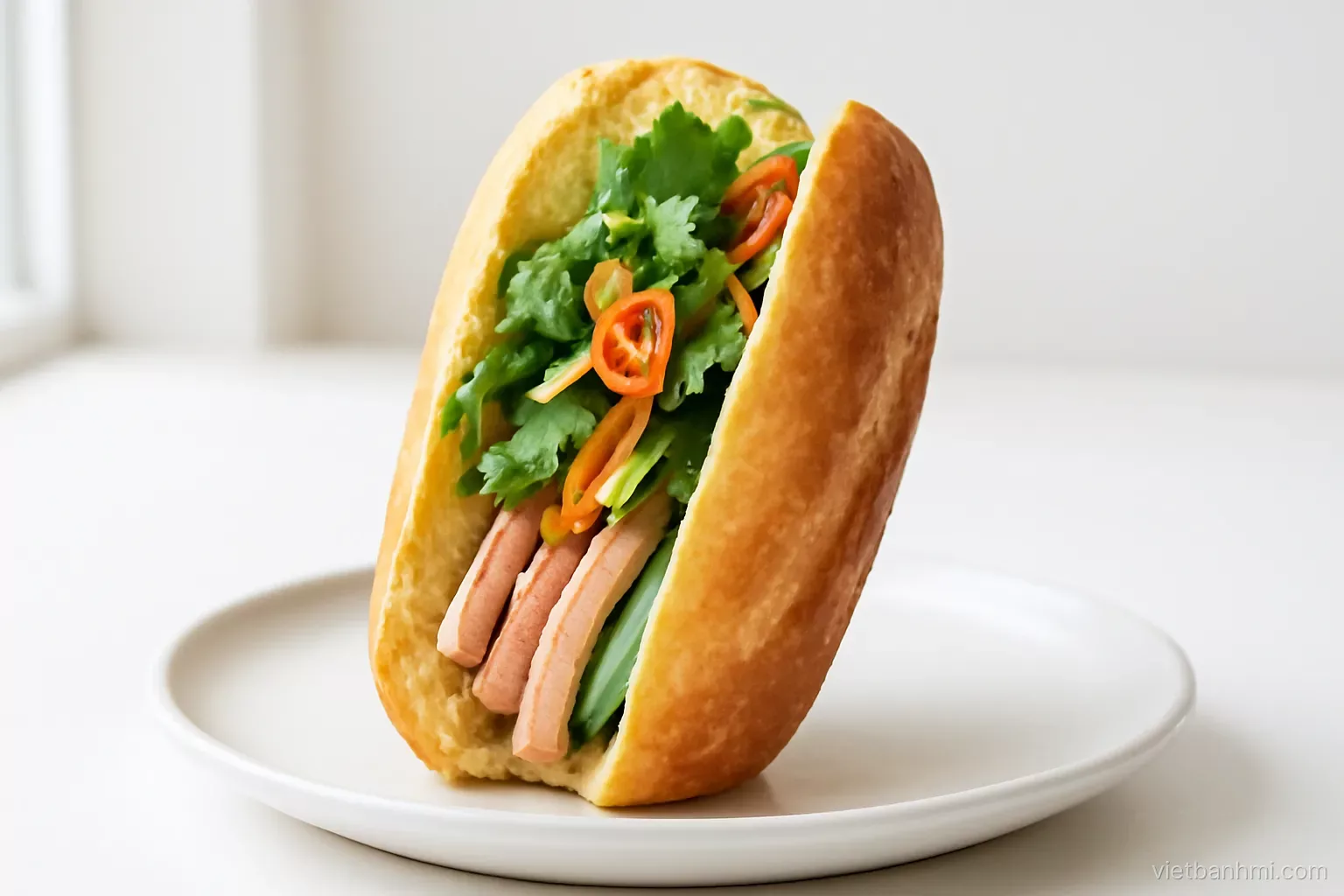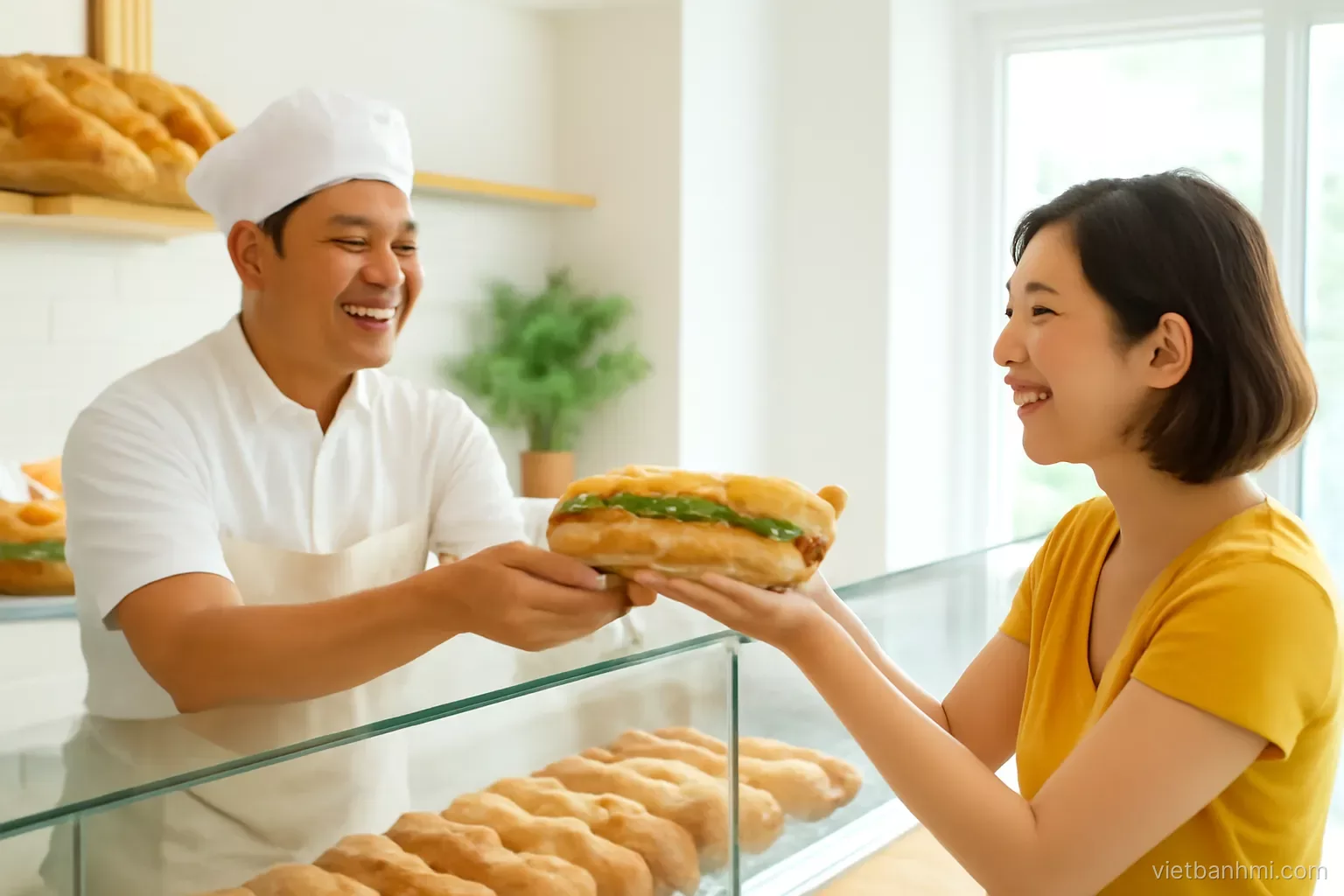
Short answer: Banh mi went global with the Vietnamese emigrants who left after 1975 and opened bakeries, sandwich shops and food trucks in the US, France, Australia, Canada and elsewhere. From those community shops it moved into mainstream food culture in the 2000s, entered the Oxford English Dictionary in 2011, and got a Google Doodle in 2020. Versions abroad tend to be bigger and breadier than the light, cheap sandwich you find in Vietnam.
The starting point: a cheap Saigon sandwich
By the 1960s and early 1970s the loaded banh mi was everyday food in southern Vietnam — fast, filling and inexpensive, sold from carts and bakery counters. It was not a dish anyone thought of as an export. That changed with the end of the war in 1975 and the years of emigration that followed, when large numbers of Vietnamese resettled abroad, many arriving as refugees with few resources. Food was one of the few businesses that could be started with skills rather than capital.
United States: bakeries, trucks and Little Saigons
In the US, Vietnamese communities grew in places such as San Jose and Orange County in California, and Houston in Texas. Bakeries producing Vietnamese-style loaves opened to serve these communities, and the sandwich followed. Food trucks were an important part of the story: catering trucks served workers at factories, construction sites and schools, and some Vietnamese families built businesses around supplying and running them.
Lee's Sandwiches is the best-documented example. According to the company's own history, the family began serving banh mi to students and residents in the San Jose area in 1983, growing from a catering-truck business into a sandwich chain. Its story is often used to illustrate how banh mi moved from serving a community to serving everyone. Across the country, countless smaller family shops did the same thing with less publicity.
France, Australia and beyond
France had Vietnamese communities long before 1975, and Paris's 13th arrondissement became known for Vietnamese and other Asian shops, where banh mi sits comfortably beside the city's own baguettes. Australia saw significant Vietnamese resettlement from the late 1970s; suburbs such as Cabramatta in Sydney and Footscray and Richmond in Melbourne became associated with Vietnamese food, including what Australians often simply call "pork rolls". Canada, Germany, the UK and many other countries followed similar paths on a smaller scale.
In each place the sandwich adapted to local bread and tastes. Some shops imported or recreated Vietnamese-style loaves; others used local rolls. Fillings stayed recognisable — pâté, cold cuts, pickles, cilantro, chili — but portion sizes tended to grow to match local expectations.
Into the mainstream: milestones you can verify
| Year | Milestone |
|---|---|
| After 1975 | Vietnamese emigrants open bakeries and sandwich shops abroad |
| 1983 | Lee's Sandwiches begins in San Jose, California (company history) |
| 2000s | Food media and TV travel shows feature banh mi; chef-driven versions appear in Western cities |
| 24 March 2011 | "Banh mi" added to the Oxford English Dictionary |
| 24 March 2020 | Google Doodle "Celebrating Bánh Mì" shown in Vietnam and several other countries |
| 30 March – 2 April 2023 | First Vietnam Banh Mi Festival held in Ho Chi Minh City, at the Youth Cultural House |
| 2024–2026 | The festival continues each year; the May 2024 edition and the 4th edition (23–26 April 2026) were held at Lê Văn Tám Park |
Travel television helped. When Anthony Bourdain featured a banh mi stall in Hội An on his show No Reservations, that shop, Bánh Mì Phượng, became a pilgrimage stop for visitors — a pattern repeated with other stalls featured by food bloggers and video creators since.
Why banh mi travels so well
Plenty of national dishes never catch on abroad. Banh mi did, for reasons that are mostly practical:
- A familiar format. Bread and fillings need no explanation in countries that already eat sandwiches.
- A distinct flavour profile. Pickles, herbs and chili make it taste different from a Western deli sandwich without being intimidating.
- Low cost and speed. It suits lunch counters, food trucks and takeaway.
- Endless flexibility. The structure accepts almost any filling — lemongrass chicken, tofu, mushrooms, even fusion fillings — while staying recognisable.
- Easy to make vegetarian. Swap pork for tofu or mushrooms and keep everything else.
Abroad versus in Vietnam: what to expect on your trip
If your idea of banh mi comes from a shop in Los Angeles, London or Melbourne, the first sandwich in Vietnam may surprise you. It is usually smaller, the bread lighter and crisper, the price a fraction of what you pay at home, and the fillings more varied by region. In Hanoi you may get little beyond pâté and cold cuts; in Hải Phòng a finger-thin stick with chili sauce; in Saigon a fully loaded "special"; in Đà Lạt a bowl of meatball soup with bread to dip. Our regional styles section explains each.
Prices give a sense of scale. A cart sandwich in central Saigon commonly costs around 20,000–40,000đ (about US$0.80–1.60), and even premium shops rarely go much past 75,000–100,000đ. Abroad, banh mi in a big Western city usually costs several times that. Use the trip to try the versions that rarely travel — breakfast pans, meatball bowls, grilled chili-salt bread — rather than only the one you already know. For planning which cities and dishes to fit in, see Food Trip Planning.
How to spot a good banh mi abroad
If you want to practise before your trip, a few signs separate a serious banh mi shop from a menu item added for fashion. The best indicator is the bread: shops that bake their own Vietnamese-style loaves, or buy them daily from a Vietnamese bakery, will have a light, crackly roll rather than a dense sub. Look for pickles made in-house — bright, crunchy and sharp, not limp — and for whole sprigs of cilantro rather than a sprinkling of chopped leaves. A cabinet of pâté, cold cuts and roast pork is a good sign, as is a short menu; shops that list twenty fusion fillings often treat the bread as an afterthought. Finally, notice who is eating there. A queue of Vietnamese families on a weekend morning usually means the shop tastes like home to somebody, which is the most reliable review you can get.
Once you have that baseline, Vietnam will show you how much further the sandwich goes. Many travellers find the biggest surprise is not a particular filling but the bread itself, which is almost always better on its home ground.
The next wave: systematised and plant-based
The most recent turn is happening back in Vietnam. Modern banh mi brands with standard recipes, clean shops, long opening hours and online ordering are becoming part of the street landscape alongside carts. At the same time, vegan banh mi has moved from the pagoda gate to the city centre. Bánh Mì XANH, a fully vegan chain that opened in Saigon in October 2023, is an example of both trends at once, and the brand says many of its shops have more than half international customers — a sign of how much the sandwich's global audience now shapes what is sold at home.
Sources
- Lee's Sandwiches – leesandwiches.com (company history)
- Oxford English Dictionary – oed.com (entry "banh mi", 2011)
- Google Doodles archive – doodles.google ("Celebrating Bánh Mì", 24 March 2020)
- Saigon Giai Phong newspaper – sggp.org.vn (Vietnam Banh Mi Festival coverage)
Frequently asked questions
When did banh mi become popular in the US?
It spread with Vietnamese communities after 1975, especially in California and Texas, and reached the mainstream in the 2000s. Chains like Lee's Sandwiches, which began in San Jose in 1983, helped introduce it beyond the community.
Is banh mi in Vietnam different from banh mi abroad?
Usually yes. In Vietnam it tends to be smaller, cheaper and lighter, with thin-crusted bread and many regional styles. Abroad, portions are often larger and the bread denser.
Is there a banh mi festival in Vietnam?
Yes. Ho Chi Minh City held its first Vietnam Banh Mi Festival in 2023 and has continued it since, with recent editions at Lê Văn Tám Park. Dates change each year, so check local news before your trip.
Why is banh mi called pork roll in Australia?
Many Australians first met banh mi in Vietnamese bakeries that sold it as a "pork roll", describing its main fillings. The name stuck alongside "banh mi".
Which banh mi should I try first in Vietnam?
Start with a local style you cannot get at home: a Hanoi pâté banh mi, a Hải Phòng stick, a Saigon breakfast pan or a Đà Lạt meatball bowl. If you are vegetarian, try a vegan banh mi from a dedicated shop in Saigon.
The global sandwich, brought back home
Banh mi left Vietnam with emigrants and came back as a world favourite — and now visitors from everywhere fill Saigon's banh mi shops. Bánh Mì XANH is a fully vegan take that many international travellers seek out, with five central shops open 24/7 and online ordering for delivery.
Discover Bánh Mì XANH · 24/7 hotline / Zalo +84 923 183 183