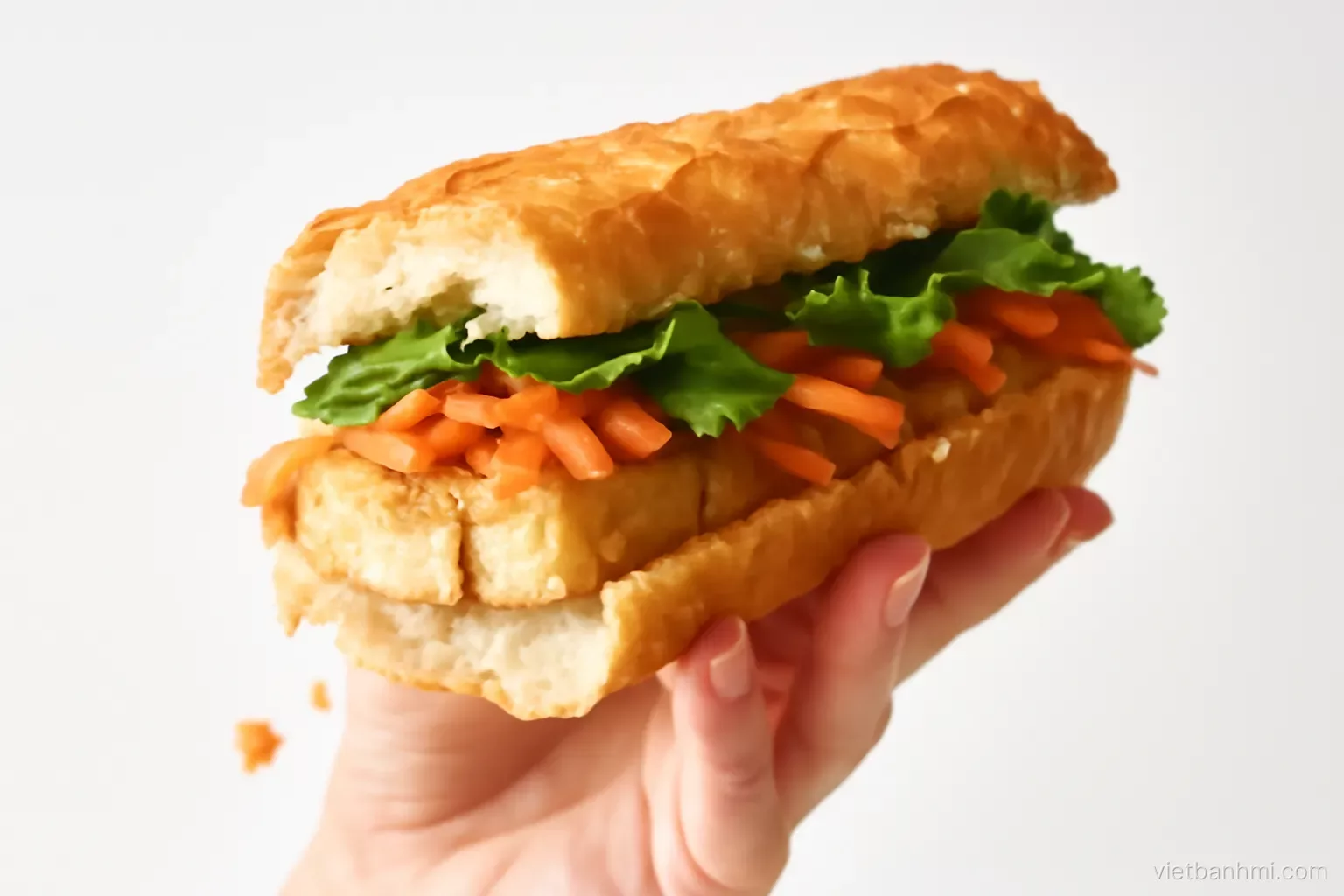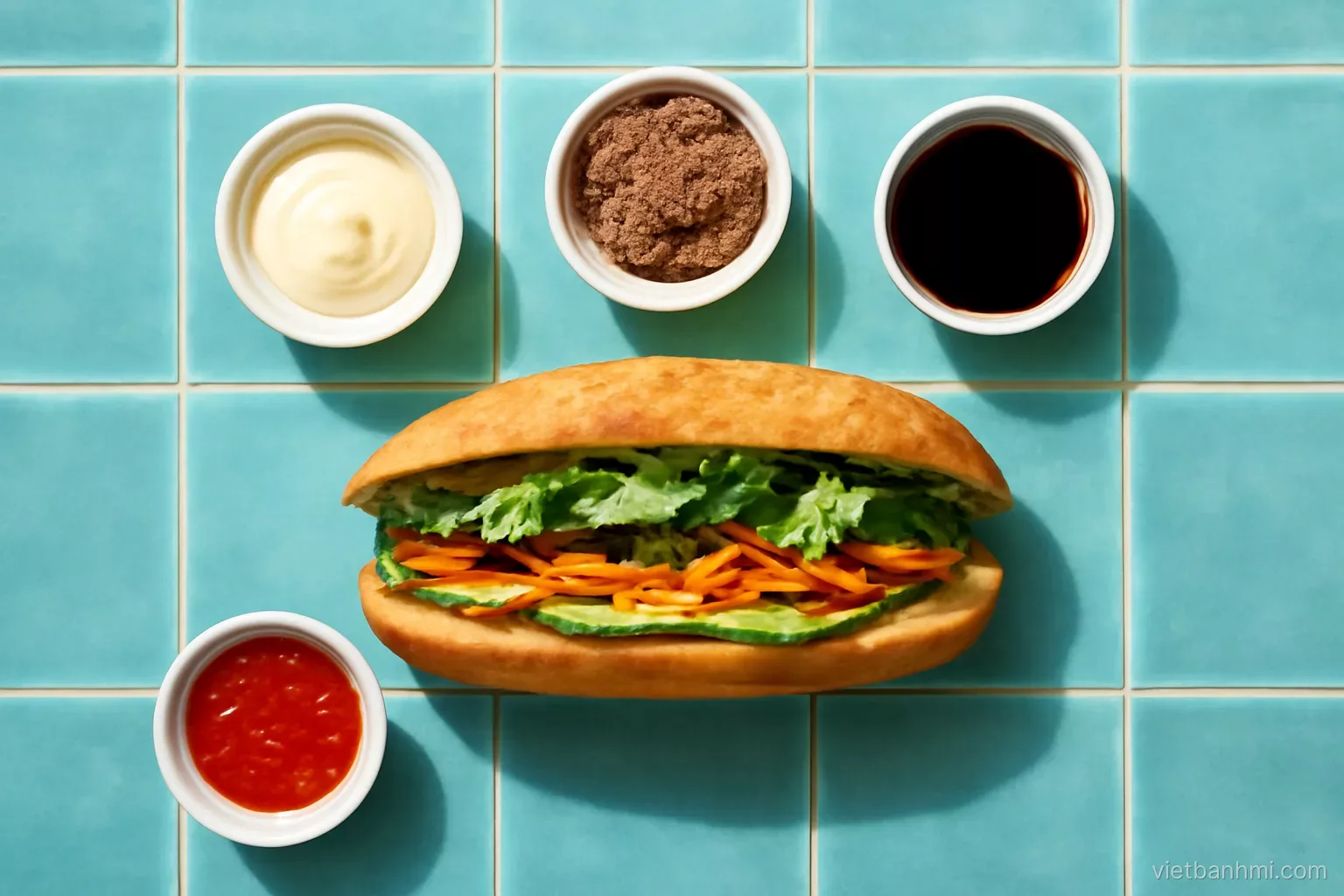
Short answer: A classic banh mi usually has a rich spread (Vietnamese-style mayonnaise, often called bơ, and/or pâté), a splash of soy-based seasoning sauce, and chili sauce or fresh chili. Together they add fat, salt, umami and heat. For vegetarians, the spreads are the trap: traditional mayonnaise contains egg, pâté is usually liver-based, and some sauces contain fish. Vegan shops replace them with plant-based spreads and soy seasonings.
The sauce layer: why it matters
Bread, filling, pickles and herbs make a sandwich. The sauces are what make it taste like banh mi. The spread forms a barrier between the crumb and the wet fillings, keeping the bread crisp longer, while also adding richness. The seasoning sauce delivers the salty, savory note that ties every layer together. The chili brings heat and color. Leave out any one of these and regulars will notice immediately.
Understanding the sauces also helps you order. Many requests travelers have, such as "no egg", "no pork" or "less spicy", are really about the sauce layer. For more on ordering politely and clearly at a stall, see Street Food Know-How.
The main sauces and spreads at a glance
| Vietnamese name | What it is | Flavor role | Vegan in traditional form? |
|---|---|---|---|
| bơ / bơ trứng / sốt mayonnaise | Egg-yolk and oil emulsion, a pale yellow "butter" | Richness, moisture barrier | No (egg); vegan versions exist |
| pa-tê (pâté) | Smooth spread, usually pork or chicken liver | Deep savory richness | No; mushroom or tofu pâtés exist |
| nước tương / xì dầu | Soy sauce or soy-based seasoning sauce | Salt, umami | Usually yes; check labels |
| tương ớt | Chili sauce, often with garlic and vinegar | Heat, tang, color | Often yes; check labels |
| nước mắm | Fish sauce, sometimes in marinades or dressings | Salty umami | No |
| mỡ hành | Scallion oil | Savory, aromatic fat | Only if made with vegetable oil |
Bơ: Vietnamese "butter" that is really mayonnaise
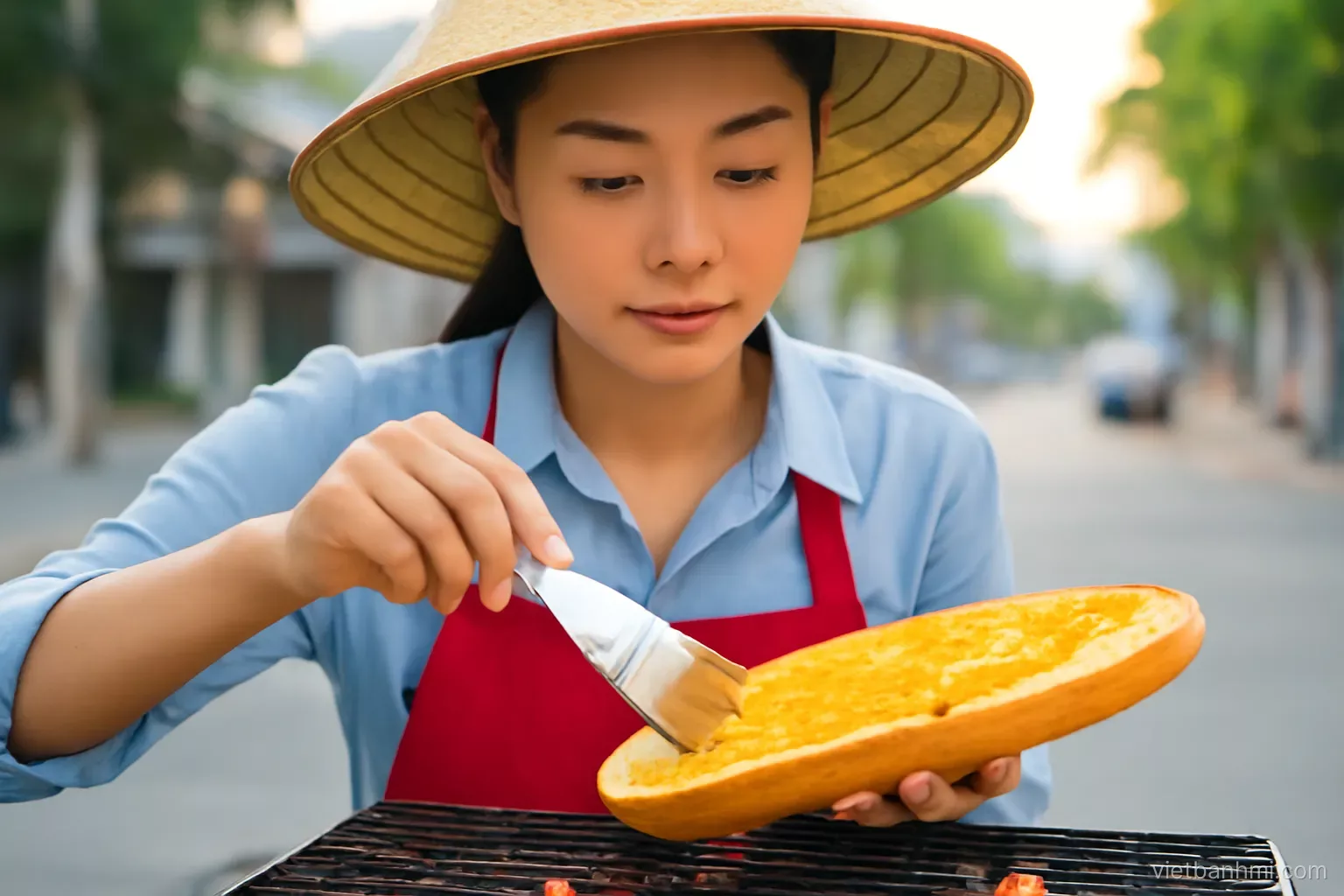
When a vendor asks if you want bơ, they rarely mean dairy butter. In banh mi, bơ usually means a homemade emulsion of egg yolk and oil, sometimes called bơ trứng (egg butter), thicker and more yellow than Western mayonnaise and less tangy. It is spread generously on the inside of the bread. Confusingly, bơ also means avocado in Vietnamese, and real dairy butter appears in sweet banh mi, so context matters.
This spread is one of the main reasons a "vegetarian" banh mi at a regular cart may not be vegan. If you avoid egg, say "không bơ" (no mayo/butter) or choose a shop that makes a plant-based version. A simple vegan mayo at home: blend 100 ml unsweetened soy milk with 10 ml lime juice or vinegar and a pinch of salt, then drizzle in 200 ml neutral oil with a stick blender until thick, about 30–60 seconds. Refrigerate and use within 4–5 days.
Pâté: the savory backbone
The classic Saigon banh mi starts with a smear of pa-tê, a smooth spread usually made from pork or chicken liver, a legacy of French charcuterie adapted to Vietnamese taste. It gives a deep, almost meaty earthiness that many locals consider essential. It is also hidden in plain sight: even a sandwich ordered "with egg only" may come with pâté unless you say otherwise.
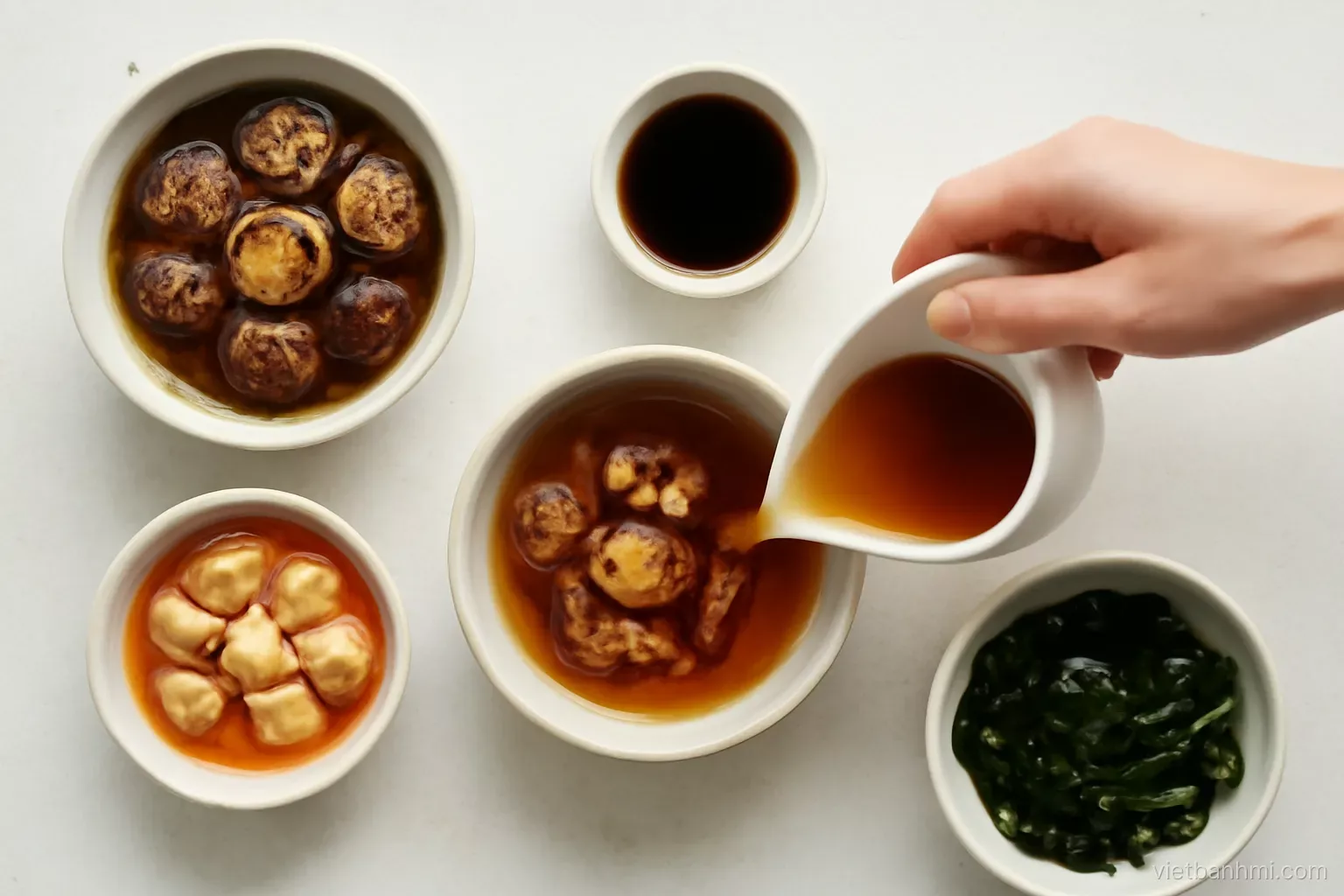
Vegetarians and vegans should say "không pa-tê" (no pâté) clearly. Plant-based kitchens recreate the effect with spreads based on mushrooms, tofu or nuts, cooked down with soy sauce and aromatics until rich and savory. A good mushroom pâté is one of the most convincing meat-free substitutions in Vietnamese cooking, because mushrooms are naturally full of umami compounds.
Seasoning sauce: the final splash
Just before closing the sandwich, many vendors shake a few drops of dark seasoning sauce over the fillings. This is usually soy sauce or a soy-based seasoning sauce, sometimes a branded liquid seasoning popular in Vietnamese kitchens. It adds salt and a concentrated savory hit that wakes up the vegetables. A few drops are enough; too much makes the bread soggy and the sandwich salty.
Most soy-based seasonings are plant-based, but formulations vary between brands and countries, and some contain flavor enhancers or other additives. If you are strict, read the label on any bottle you buy for home use. At a stall, the bigger concern is whether any marinade or dressing includes nước mắm (fish sauce), which is common in Vietnamese cooking.
Chili sauce and other heat
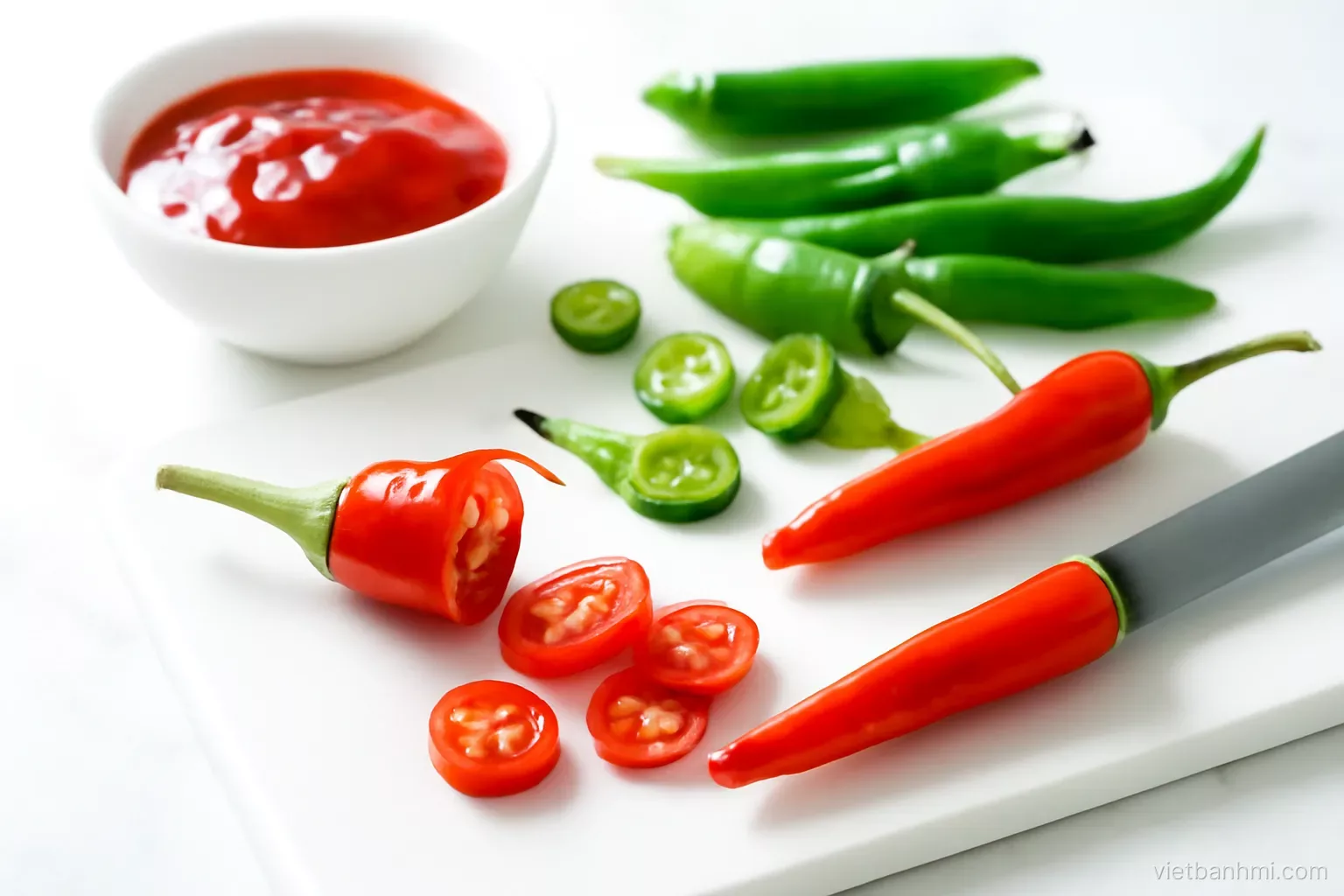
Tương ớt (chili sauce) is usually a smooth, bright red sauce of chili, garlic, sugar and vinegar, sweeter and thinner than many Western hot sauces. It is often added along with fresh sliced chili. Heat levels vary widely between vendors, so if you are sensitive, say "ít cay" (a little spicy) or "không cay" (not spicy). Our separate article on chili covers heat levels and how to handle them in detail, as part of the Flavors & Ingredients collection.
Sauce and crisp bread: the takeaway problem
Sauces are where flavor and texture pull in opposite directions. The more liquid in a banh mi, the faster the crumb turns soft, and in Saigon's humid air a heavily sauced sandwich can lose its crackle in 10 minutes. Vendors manage this with order: the thick spread goes on first, directly against the bread, as a moisture barrier; wet fillings and pickles go in the middle; the seasoning sauce is a few drops on top rather than a pour.
If you are carrying a sandwich back to your hotel or onto a bus, ask for less sauce or sauce in a small bag on the side, and make sure the pickles are drained before they go in. At home, toast the cut faces of the bread for a minute before spreading, let warm fillings rest so they are not steaming, and add the final splash of soy only when you are ready to eat. These small steps make a bigger difference than any particular brand of sauce.
Useful phrases for ordering sauces
- Không bơ – no mayonnaise/butter spread
- Không pa-tê – no pâté
- Không nước mắm – no fish sauce
- Ít nước sốt – less sauce
- Không cay / ít cay – not spicy / a little spicy
- Tôi ăn chay – I eat vegetarian (use with care: some people understand this as vegetarian, not strictly vegan)
Show the phrases on your phone if pronunciation feels daunting. Vendors are used to visitors pointing and smiling.
Sauces in fully vegan banh mi
A dedicated vegan shop removes the guesswork, because every spread and sauce on the counter is plant-based. The challenge for the shop is flavor: replacing the richness of egg mayonnaise and the depth of liver pâté without losing the banh mi character. Good kitchens do it with plant-based spreads, soy seasonings, and fillings such as spicy tofu or grain-based cold cuts that carry their own savory punch.
In Saigon, Bánh Mì XANH is a fully vegan banh mi chain whose sandwiches include the Đậu Hũ Cay (spicy tofu, 56,000đ) and the Chả Lát Chay (grain-based vegan cold cut, 53,000đ). For a traveler who wants the full sauce experience without asking a vendor to leave things out, a fully vegan counter is simply easier.
Sources
- USDA FoodData Central, mayonnaise and soy sauce entries – fdc.nal.usda.gov
- US Food and Drug Administration, food allergen labeling (egg, fish, soy, wheat) – fda.gov
- Vietnam National Authority of Tourism – vietnam.travel
Frequently asked questions
What is the yellow spread in banh mi?
It is usually a homemade Vietnamese mayonnaise, called bơ or bơ trứng, made from egg yolk and oil. It is richer and less tangy than Western mayo and is not vegan unless the shop makes a plant-based version.
Is the pâté in banh mi pork?
Traditional banh mi pâté is usually made from pork or chicken liver. Vegetarian and vegan shops use mushroom, tofu or nut-based spreads instead. Say "không pa-tê" to leave it out.
What is the dark sauce sprinkled on banh mi?
Usually soy sauce or a soy-based liquid seasoning, added in a few drops for salt and umami. Most are plant-based, but formulations vary, so check labels if you are strict.
How do I order a banh mi with less sauce?
Say "ít nước sốt" (less sauce) before the vendor starts building. This is also useful for takeaway, because less sauce keeps the bread crisper.
Can I get vegan sauces at a regular banh mi cart?
Sometimes, but it is hard to be sure. The mayo usually contains egg and the pâté contains liver. For a fully vegan sandwich, a dedicated vegan shop is the more reliable choice.
Every sauce plant-based, no questions needed
If decoding mayo, pâté and fish sauce feels like work on holiday, skip it. When you are in Saigon, Bánh Mì XANH serves fully vegan banh mi with spicy tofu, grain-based cold cuts and more, at five central shops open 24/7. You can also order delivery online and the shop calls back to confirm.
Order vegan banh mi from Bánh Mì XANH · 24/7 hotline / Zalo +84 923 183 183