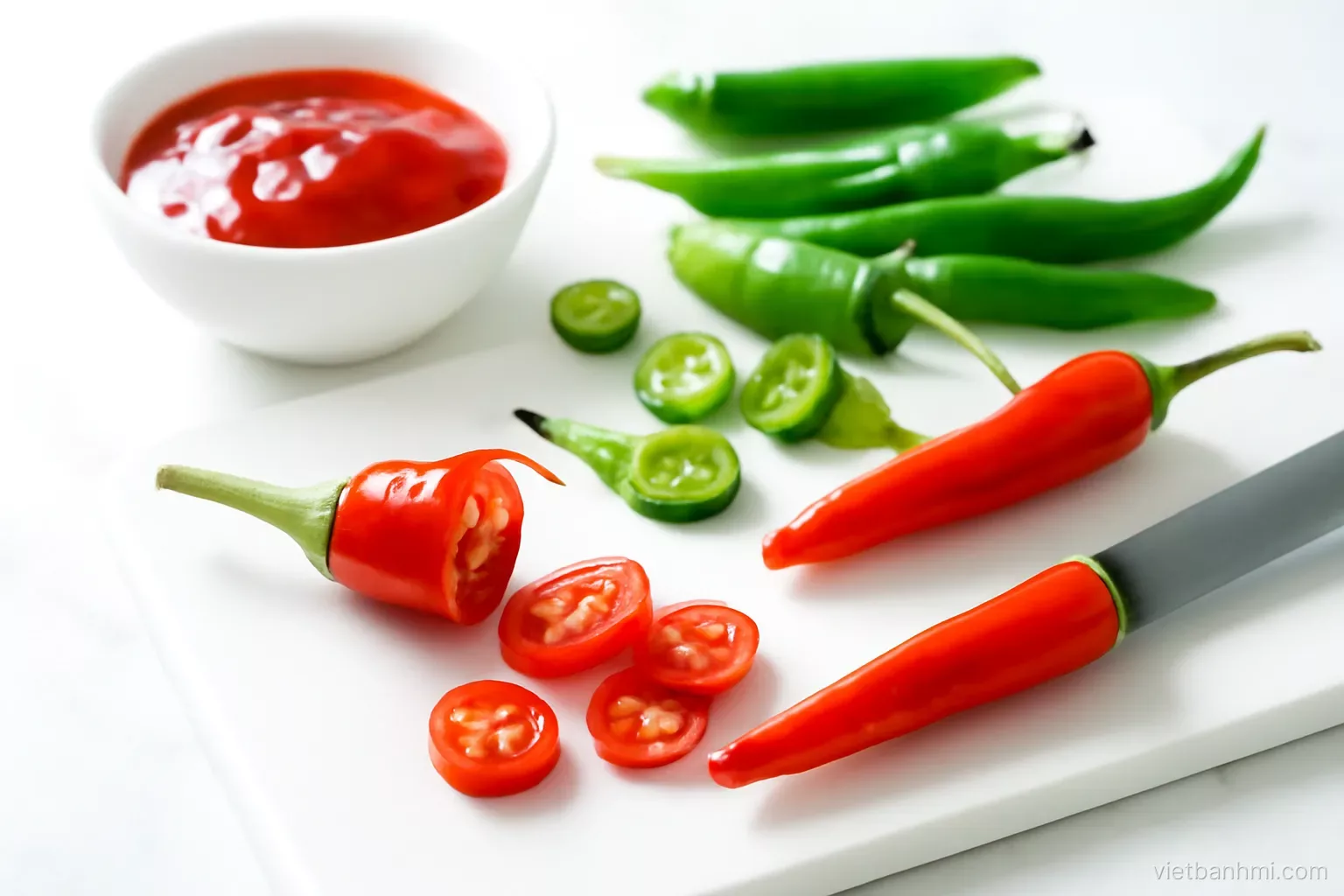
Short answer: Banh mi can be very spicy, because vendors often add slices of ớt hiểm (bird's eye chili), which typically measure around 50,000–100,000 Scoville heat units, roughly ten or more times hotter than a jalapeño. Chili sauce adds milder, sweeter heat. You control it with three phrases: "không cay" (not spicy), "ít cay" (a little spicy) and "cay" (spicy). Say it before the vendor starts building, because chili goes in early.
Why chili belongs in banh mi
Heat is the last piece of the banh mi balance. Rich spreads, savory fillings, sweet-sour pickles and fresh herbs all compete for attention, and a little chili sharpens everything, making each bite taste brighter. In southern Vietnam especially, many people expect some heat in almost every savory dish, and a banh mi without chili feels unfinished to regulars.
That does not mean every banh mi is fiery. Vendors usually add chili by default in a modest amount and adjust if you ask. The problem for visitors is that "modest" to a Saigon vendor can be a lot to someone unused to bird's eye chilies. Knowing what is going in, and how to ask for more or less, makes the difference between a great sandwich and a teary one. For more on handling ordering at stalls, see Street Food Know-How.
The types of chili you will meet
| Vietnamese name | What it is | Approximate heat | How it appears in banh mi |
|---|---|---|---|
| ớt hiểm | Bird's eye chili, small and pointed, red or green | Very hot, often cited at 50,000–100,000 SHU | Thin fresh slices laid along the filling |
| ớt sừng | Long "horn" chili, larger and fleshier | Milder than bird's eye | Slices for color and gentler heat |
| tương ớt | Chili sauce, smooth, sweet-tangy | Mild to medium | Squeezed over the filling |
| sa tế | Chili oil, often with lemongrass, garlic and shallot | Medium to hot, oily | Occasionally, in some fillings or as a side |
| ớt ngâm | Chilies pickled in vinegar | Hot, sharp | A spoon of slices or a splash of the vinegar |
For comparison, jalapeños are commonly rated at about 2,500–8,000 SHU. Heat varies widely with variety, ripeness and growing conditions, so treat all these numbers as rough guides. Two chilies from the same bag can taste very different.
How to control the heat: phrases that work
Vietnamese is tonal, but these short phrases are widely understood, especially when paired with a gesture. Showing them on your phone works too.
- Không cay – not spicy. Pronounced roughly "khom kai". Use this if you want no chili at all.
- Ít cay – a little spicy. Roughly "eet kai".
- Cay vừa – medium spicy.
- Cay / thêm ớt – spicy / add more chili.
- Không ớt – no chili (more literal, useful if "không cay" gets you only a reduced amount).
- Ớt để riêng – chili on the side.
Timing matters. Many vendors add chili early in the build, right after the main filling, so speak up when you order rather than when the sandwich is nearly closed. If you want to taste the sandwich first, ask for chili on the side; many stalls have a jar of chili sauce or pickled chili you can add yourself.
Chili sauce versus fresh chili
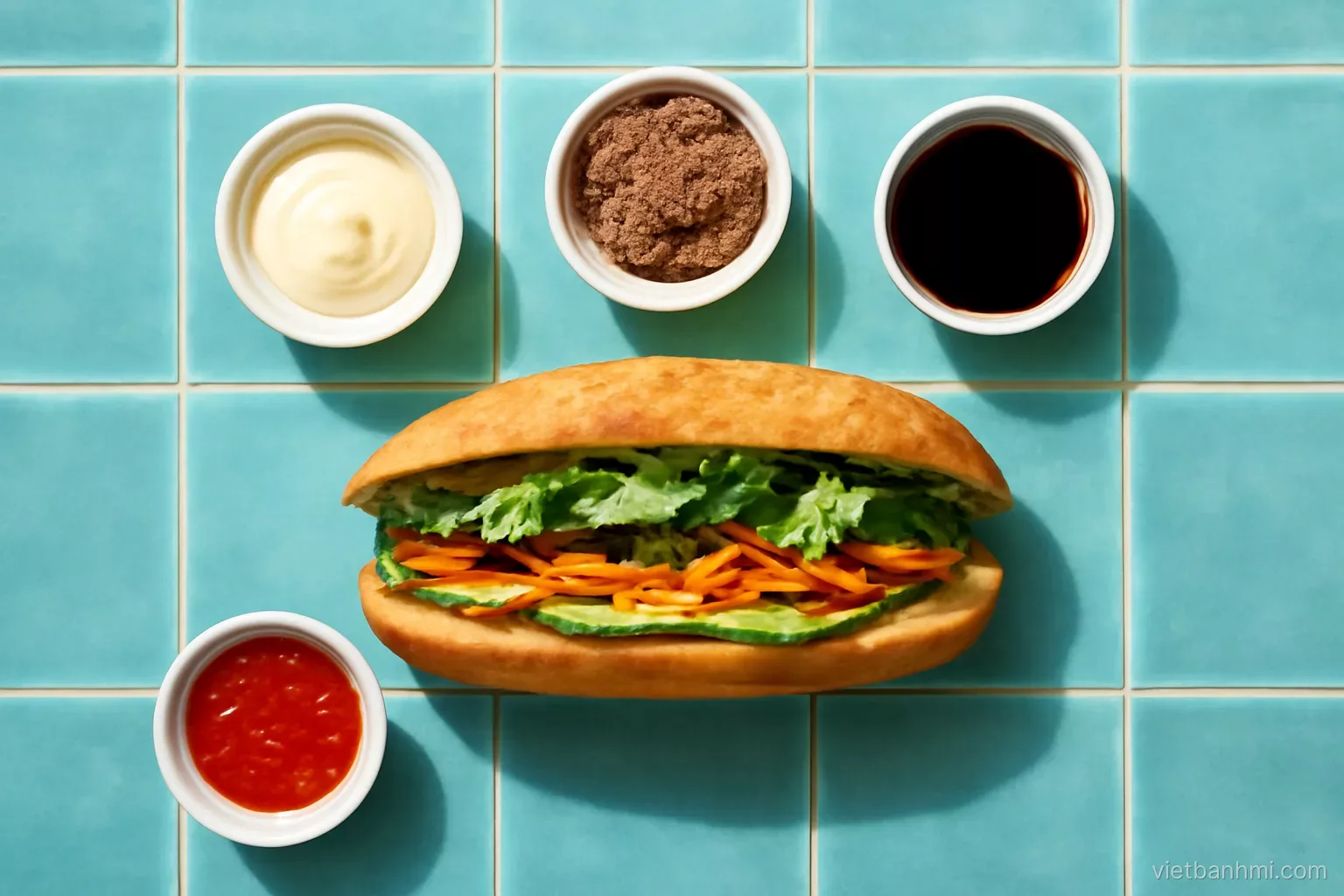
Tương ớt and fresh ớt hiểm do different jobs. Chili sauce is smooth, sweet and tangy, typically made from chili, garlic, sugar and vinegar, with heat that spreads evenly through the sandwich. Fresh bird's eye chili delivers sudden bursts: one bite is mild, the next contains a slice and lights up your mouth. Many vendors use both, and the combination is what gives a Saigon banh mi its lively, uneven heat.
If you like flavor but fear surprises, ask for chili sauce only and no fresh chili. You will get the color and gentle warmth without the sharp spikes. Conversely, chili lovers can ask for extra fresh slices and skip the sauce, which keeps the bread drier.
When it is too hot: what actually helps
The burning sensation from chili comes mainly from capsaicin, a compound that binds to heat-sensing receptors in your mouth. It does not dissolve well in water, which is why gulping water often spreads the burn rather than putting it out. A few things work better:
- Something fatty or milky. Capsaicin dissolves in fat. Vietnamese iced coffee with condensed milk, or a nut-milk drink, can soothe the burn.
- Sugar. Sweet drinks or a sweet bite help distract and dull the sensation.
- Starch. Eat a piece of plain bread from the end of the sandwich.
- Cucumber. The cool, watery crunch already inside the banh mi offers relief between bites.
- Time. The peak usually fades within a few minutes.
Avoid touching your eyes after handling fresh chilies, and wash your hands with soap. If you cook at home with ớt hiểm, wearing gloves while slicing large amounts saves discomfort later.
Chili in vegan and vegetarian banh mi
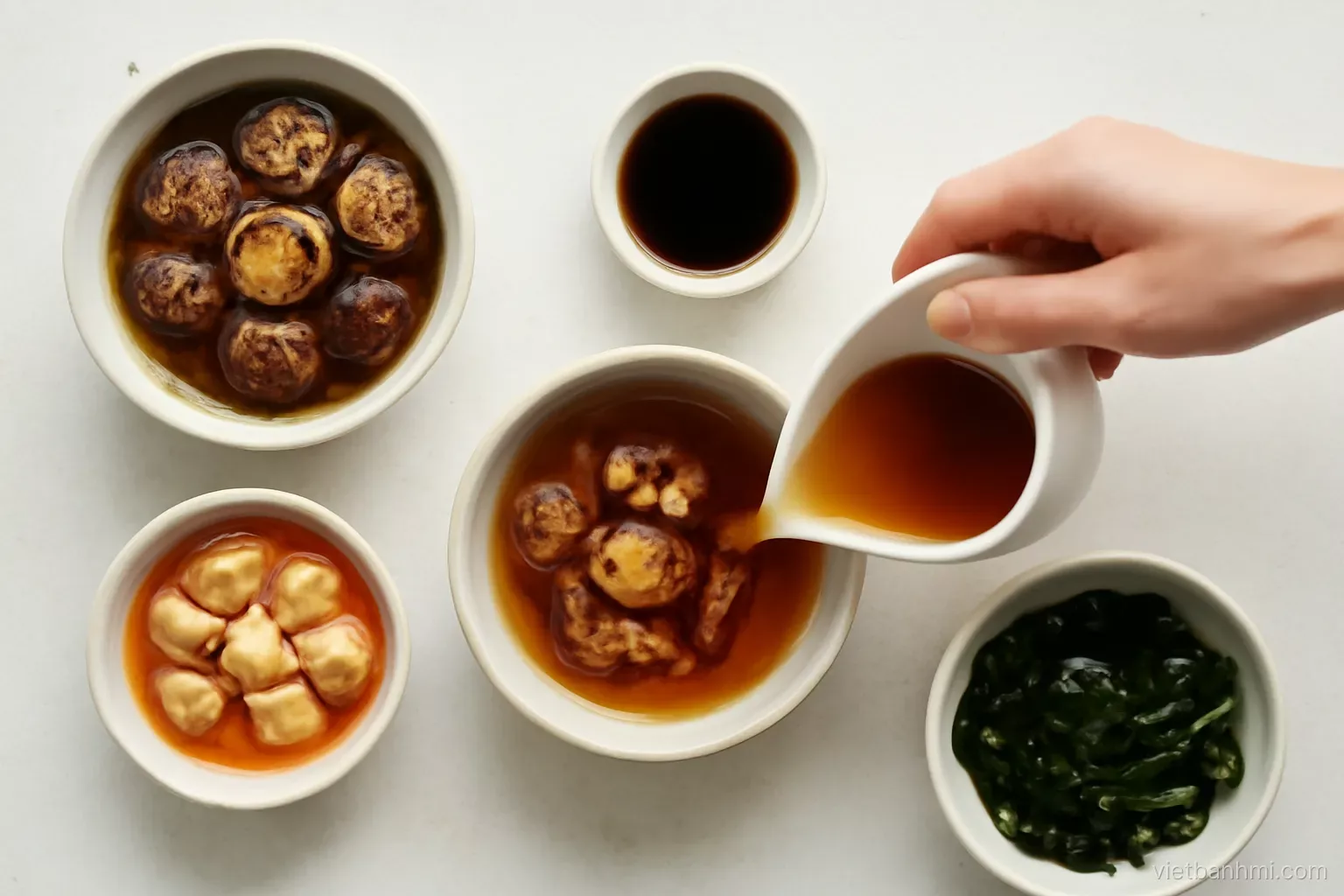
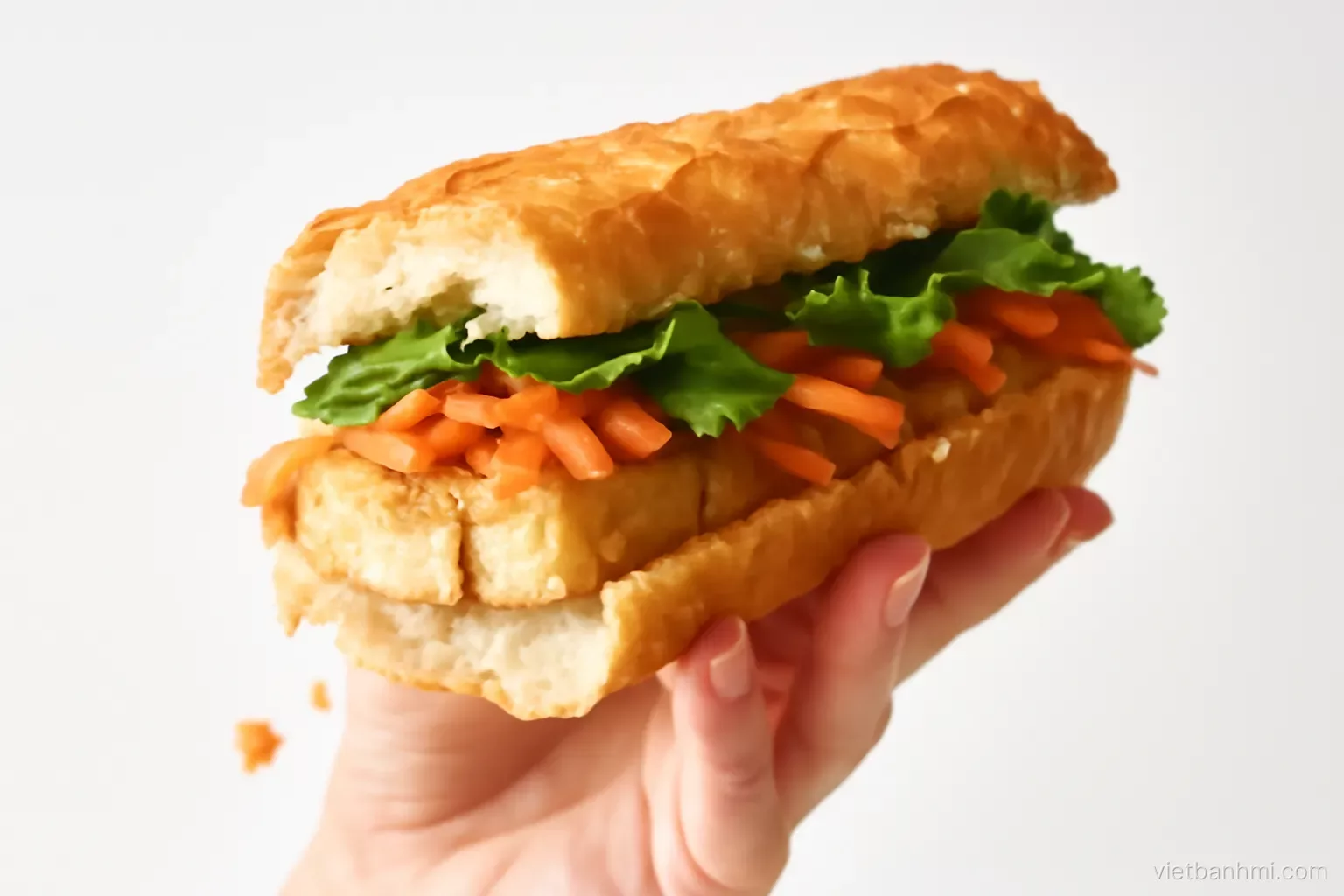
Chili is one of the easiest ways to make a plant-based banh mi taste bold. Tofu and mushrooms absorb heat and seasoning well, and a spicy marinade or chili-coated tofu can feel as satisfying as a grilled meat filling. Fresh chilies are vegan, and most chili sauces are plant-based too, though recipes vary. The one to watch is chili condiments that include dried shrimp or fish sauce, which appear in some Vietnamese kitchens; if you are strict, ask.
The Đậu Hũ Cay (spicy tofu, 56,000đ) at Bánh Mì XANH, a fully vegan banh mi chain in Saigon, is an example of building a whole sandwich around chili heat with tofu as the carrier. At a fully vegan shop, you can focus on how spicy you want it rather than whether the chili sauce hides anything. More on what goes into plant-based fillings is in our Vegan Banh Mi section.
Regional heat: north, center and south
Spice preferences vary across Vietnam. Central Vietnam, especially around Huế, has a reputation for some of the country's hottest food, and banh mi in central cities may come with generous chili. Saigon and the south tend to pair heat with sweetness, so you will notice sugar in sauces and pickles alongside the chili. In Hanoi and the north, food is often milder at the base, with chili offered on the side to add yourself. Our Regional Styles section explores how banh mi changes from city to city.
If you cook banh mi at home outside Vietnam, fresh bird's eye chilies are usually sold in Asian grocery stores, sometimes labeled as Thai chilies. They freeze well: put whole chilies in a sealed bag and slice them straight from the freezer as needed, which keeps a supply on hand for weeks. For a milder home version, remove the seeds and pale inner ribs before slicing, since much of the capsaicin is concentrated in that inner tissue. A quick homemade ớt ngâm is also easy: slice 30 g of chilies into a small jar, cover with 100 ml white vinegar and a pinch of sugar and salt, and refrigerate for a day before using. Wherever you are, the vendor's default is a starting point, not a rule. Asking for your preferred heat is completely normal, and vendors appreciate customers who know what they want.
Sources
- USDA FoodData Central, peppers, hot chili, red, raw – fdc.nal.usda.gov
- Chile Pepper Institute, New Mexico State University – cpi.nmsu.edu
- Vietnam National Authority of Tourism – vietnam.travel
Frequently asked questions
Is banh mi spicy?
Often, yes, at least a little. Vendors commonly add chili sauce and sometimes slices of bird's eye chili by default. You can ask for "không cay" (not spicy) or "ít cay" (a little spicy) when ordering.
How hot is bird's eye chili?
Bird's eye chili is commonly cited at around 50,000 to 100,000 Scoville heat units, while jalapeños are around 2,500 to 8,000. Heat varies a lot between individual chilies, so expect some surprises.
How do I say "not spicy" in Vietnamese?
Say "không cay", roughly pronounced "khom kai". For no chili at all, "không ớt" is more literal. Say it before the vendor starts making your sandwich.
What should I drink if banh mi is too spicy?
Something with fat or sugar works better than water, such as Vietnamese iced coffee with condensed milk or a nut-milk drink. Plain bread and cucumber also help.
Is Vietnamese chili sauce vegan?
Most basic chili sauces made from chili, garlic, sugar and vinegar are plant-based, but recipes vary. Some homemade condiments contain dried shrimp or fish sauce, so ask if you are strict.
Turn up the heat, the vegan way
Now that you can order your heat level with confidence, put it to work. When you are in Saigon, try the spicy tofu banh mi at Bánh Mì XANH, a fully vegan chain with five central shops open 24/7. Use the shop finder to get the closest one, or order delivery online.
Find your nearest Bánh Mì XANH · 24/7 hotline / Zalo +84 923 183 183