Short answer: Hội An banh mi stands out for its generous, saucy fillings and the house sauces each stall guards closely, packed into a well-toasted loaf. Two stalls made it internationally famous — Bánh Mì Phượng, after it appeared on Anthony Bourdain's TV show, and Madam Khánh, known as "the Banh Mi Queen". Expect to pay a few tens of thousands of dong, go mid-morning or late afternoon to dodge queues, and ask clearly if you want it vegetarian.
Why Hội An became a banh mi destination
Hội An is a small, walkable old trading port in central Vietnam, now part of Đà Nẵng city after the 2025 provincial merger. Its well-preserved old town is a UNESCO World Heritage Site, and it draws a huge number of visitors relative to its size. Food is a big part of the attraction — cao lầu noodles, chicken rice and bánh mì above all. The banh mi here gained an outsized reputation partly because of travel television and partly because the local style suits hungry walkers: a single sandwich here is closer to a full meal.
The tipping point most people cite is Anthony Bourdain's visit for his series No Reservations, which featured Bánh Mì Phượng. After that, the stall became a fixture of travel blogs and itineraries. Food writers and video creators then spread the word about other stalls, including Madam Khánh's, and today "where to eat banh mi in Hội An" is one of the first things many visitors search.
What makes the Hội An style different
There is no official recipe, and stalls differ, but several traits come up again and again:
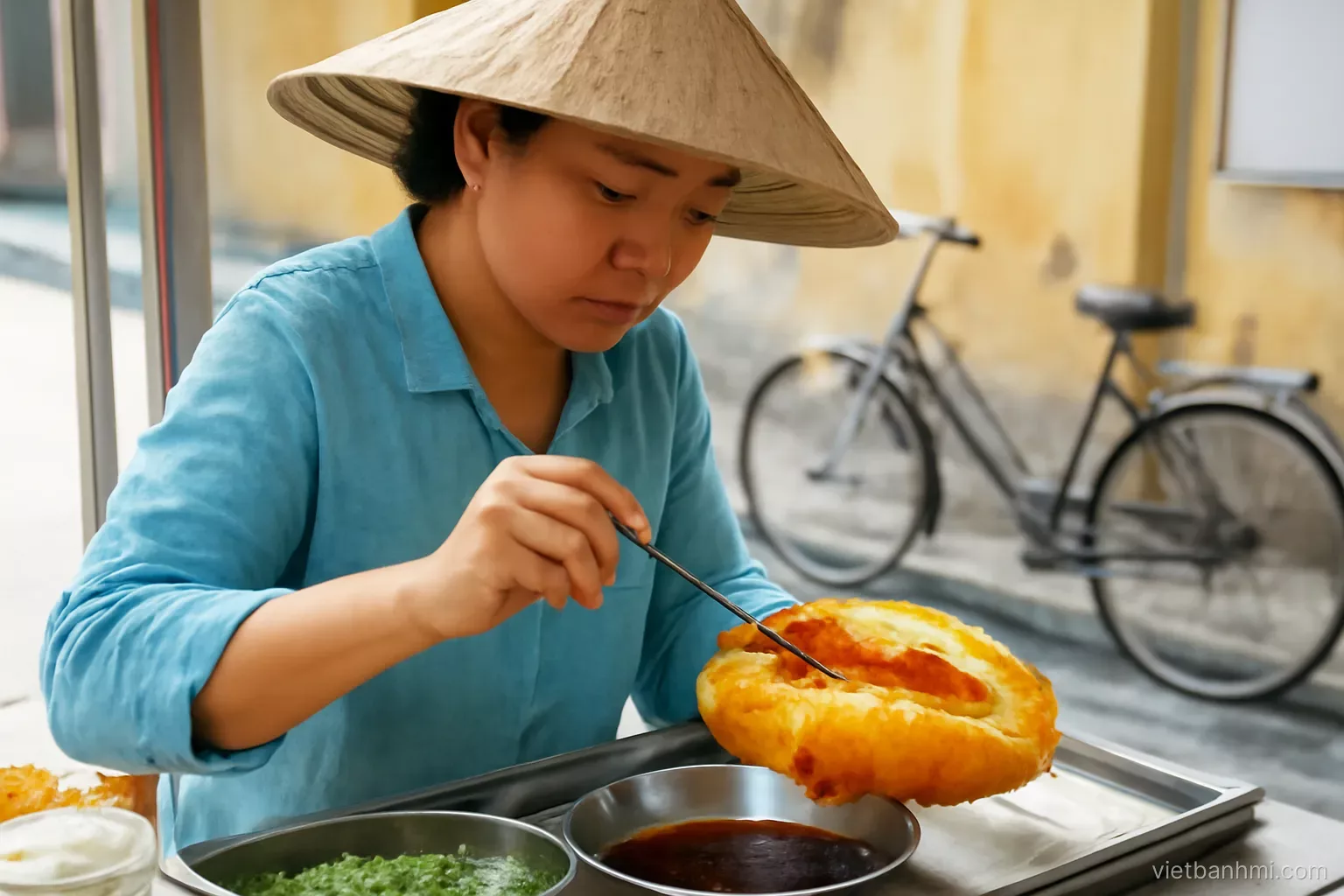
- House sauces. Many stalls finish their sandwiches with their own sauces — savoury gravies, chili sauces and mixes based on the cooking juices of their meats. These are closely guarded and are a big part of each stall's identity.
- Many fillings in one loaf. A "mixed" Hội An banh mi can combine several meats, pâté, egg and vegetables, more like Saigon's special than Hanoi's lean loaf.
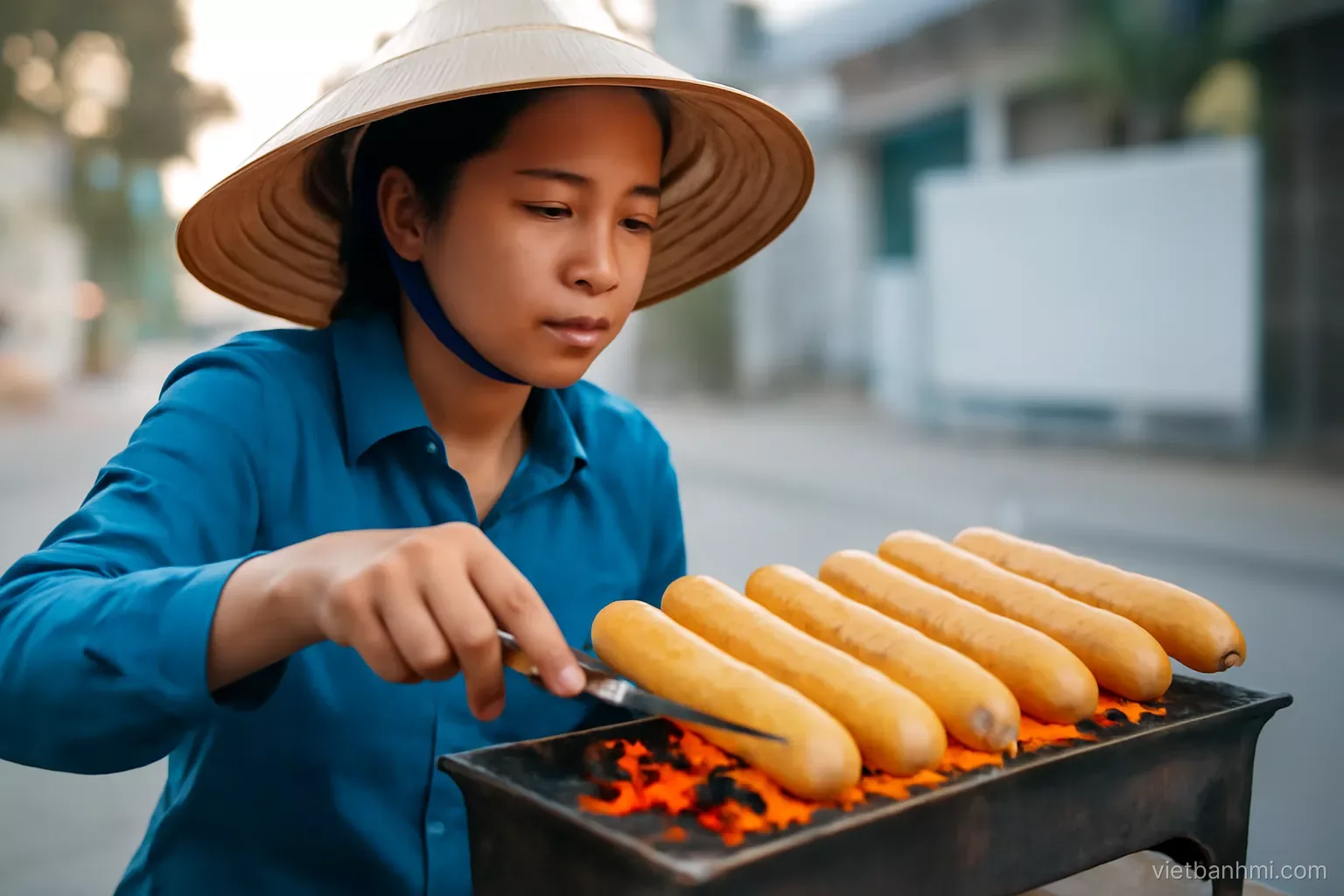
- Well-toasted bread. Because the fillings are wet, a crisp, warmed loaf is essential, and good stalls reheat every one.
- Herb-forward. Central Vietnamese cooks use plenty of fresh herbs, and the vegetable layer is usually generous.
The result is richer and saucier than most southern carts. Eat it immediately; a Hội An banh mi carried back to your hotel will be much softer by the time you unwrap it.
The famous stalls
| Stall | Location | Known for |
|---|---|---|
| Bánh Mì Phượng | Phan Châu Trinh street, near the old town | Featured on Anthony Bourdain's No Reservations; long menu, often a queue |
| Madam Khánh – The Banh Mi Queen | 115 Trần Cao Vân street | Family stall running for decades; known for its own sauces |
The story behind the Madam Khánh name is worth knowing. According to features in Vice's Munchies and other outlets, the founder's own name is Nguyễn Thị Lộc; Khánh is her husband's name, which customers attached to the stall, and she accepted it. Reports in recent years say she has passed the daily running of the stall to her family. Both stalls appear in almost every guide, so they are busy, and opinions online are mixed between devotees and those who prefer quieter neighbourhood carts.
That is worth taking seriously. Hội An has many small stalls and bakeries outside the main tourist streets that make excellent banh mi for local customers at lower prices. If the famous queues are long, walk a few streets away from the old town centre and look for a stall with a steady flow of Vietnamese customers.
Prices, timing and practical tips
A Hội An banh mi from a local stall commonly costs around 20,000–35,000đ (about US$0.75–1.35); the famous stalls usually charge somewhat more, and prices vary with fillings. Some practical advice:
- Go off-peak. Queues at famous stalls build in late morning and around sunset when tour groups pass. Early morning or mid-afternoon is usually calmer.
- Bring small notes. Cash in 10,000đ and 20,000đ notes speeds things up; many stalls also accept bank QR transfers.
- Specify chili. House chili sauces can be strong; say ít cay (a little spicy) if unsure.
- Eat on the spot. Saucy fillings soften the bread quickly.
- Check hours. Small stalls may close for a day or two around Tết or family events.
Hội An's heat and rain shape the day too. In the hottest months, mornings and evenings are far more pleasant for walking and eating, and in the October–December rainy season the old town can flood, which may close some stalls briefly. Our Food Trip Planning section has more on seasons.
How to order at a Hội An stall
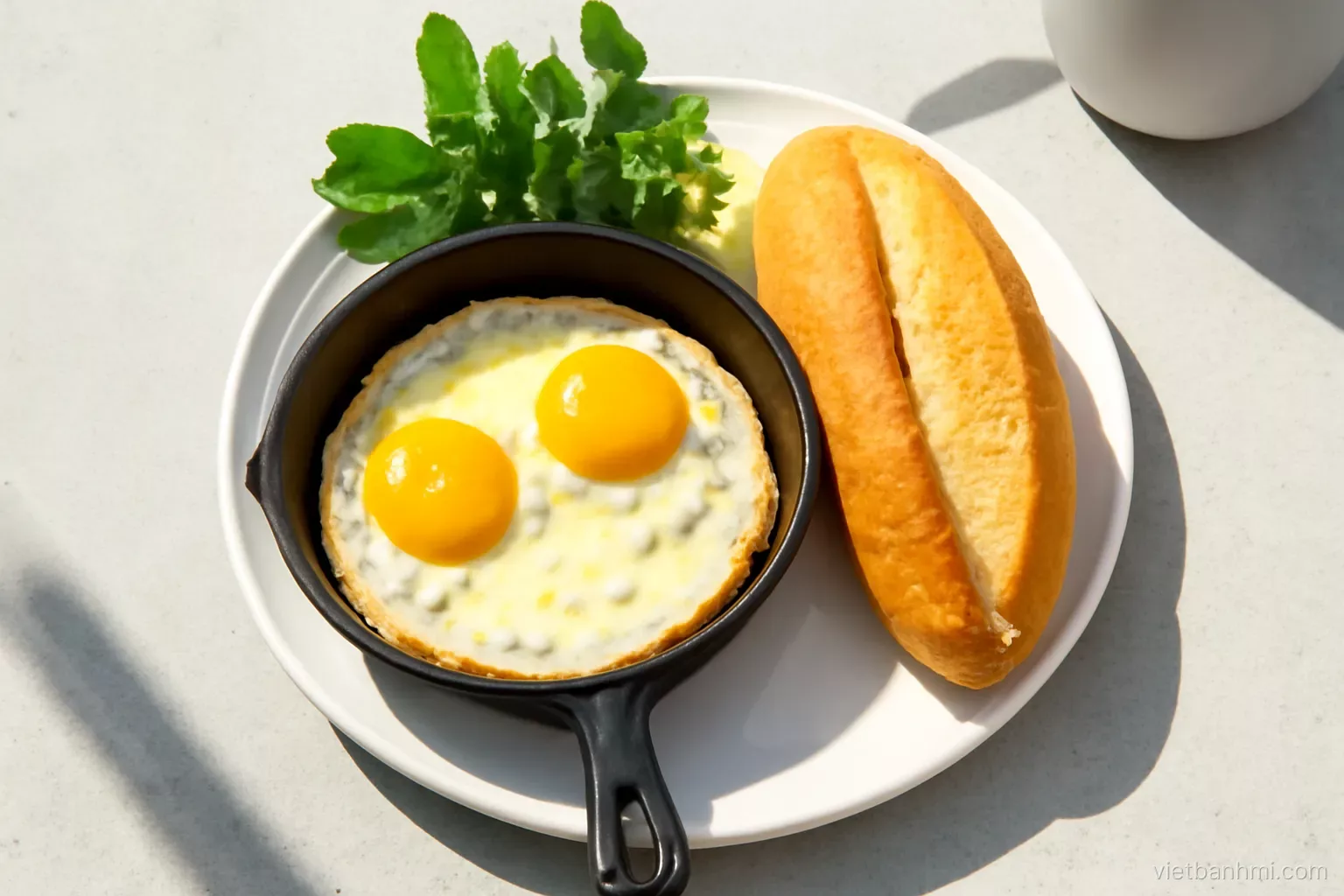
Famous stalls in Hội An are used to visitors and often have menus in English listing their combinations, so ordering is mostly a matter of choosing a number or a filling and saying how much chili you want. At smaller stalls, the usual street approach works: point at the fillings, hold up fingers, and use a few key words. Thập cẩm means "mixed" — the stall's everything version — and is a good first order anywhere in town. If you want to taste the bread and sauce without a heavy filling, an egg banh mi (bánh mì trứng) is a lighter, cheaper option.
As an example of how to fit banh mi into a day in Hội An: a neighbourhood stall for an early breakfast before the old town fills up, cao lầu or chicken rice for lunch, and a famous stall in mid-afternoon when queues are shorter. That spreads the eating out, avoids the busiest hours and lets you compare a local stall with a famous one on the same day. Locals rarely eat banh mi as a late dinner in Hội An, but many stalls stay open into the evening for visitors.
One more practical note: Hội An is compact and mostly walkable, but the famous stalls sit on busy streets with little seating. Plan to eat standing or take your sandwich to a quiet bench nearby rather than walking far with it.
Vegetarian and vegan banh mi in Hội An
Hội An has a reasonable number of vegetarian restaurants and some stalls offer meat-free banh mi, typically with tofu, egg, vegetables and sauces. The challenge is the same as anywhere: house sauces may be based on meat juices or contain fish sauce, the pâté is usually pork, and the "butter" is often egg mayonnaise. Ask directly: có chay không? (do you have vegetarian?), không nước mắm (no fish sauce), and if you are vegan, không trứng (no egg). A dedicated vegetarian restaurant is the safest choice for strict diets.
If your trip continues to Saigon, vegan banh mi becomes much easier: the city has fully vegan shops in its centre, some open around the clock. Our Vegan Banh Mi section explains what to look for.
Combining Hội An with other banh mi stops
Hội An is about an hour by road from Đà Nẵng's airport, which makes it easy to fit into a north–south route. Many visitors pair it with Hanoi and Saigon, which gives a neat three-point tasting of banh mi: lean and pâté-led in the north, saucy and generous in the centre, loaded and herb-heavy in the south. Đà Nẵng itself has its own street banh mi scene, including thin stick loaves similar to Hải Phòng's.
Sources
- UNESCO World Heritage Centre – whc.unesco.org (Hoi An Ancient Town)
- Vice / Munchies – vice.com ("Meet the Banh Mi Queen of Hoi An")
- Vietnam National Authority of Tourism – vietnamtourism.gov.vn
Frequently asked questions
Which is better, Bánh Mì Phượng or Madam Khánh?
It is a matter of taste, and both have loyal fans. Phượng is larger and busier, with a long menu; Madam Khánh is known for its sauces. Many visitors try both and add a neighbourhood stall for comparison.
How much does banh mi cost in Hội An?
Local stalls commonly charge around 20,000–35,000đ. The famous stalls usually charge somewhat more, and prices depend on fillings. Check the price before ordering if it is not displayed.
When is the best time to avoid queues?
Early morning and mid-afternoon are usually quieter. Late morning and the hour around sunset are busiest at famous stalls.
Can I get vegetarian banh mi in Hội An?
Yes, some stalls and vegetarian restaurants offer it. Ask about fish sauce, egg mayonnaise and meat-based sauces, and choose a dedicated vegetarian restaurant if you are strict.
Did Anthony Bourdain eat banh mi in Hội An?
Yes, his show No Reservations featured Bánh Mì Phượng, which helped make the stall famous with international visitors.
Loved Hội An's generous banh mi? Try it vegan in Saigon
If your route runs south, Bánh Mì XANH serves fully vegan banh mi with the same generous spirit at five central Saigon shops, open 24/7 including Sundays and Tết. The Thập Cẩm mixes vegetables, tofu and mushrooms in one loaf, a good match for anyone who liked Hội An's many-filling style.
See the Bánh Mì XANH menu · 24/7 hotline / Zalo +84 923 183 183