Short answer: Say "cà phê sữa đá" (iced coffee with sweetened condensed milk) for the classic, "cà phê đen đá" for iced black coffee, or "bạc xỉu" if you want mostly milk with a little coffee. Add "ít ngọt" (less sweet) if you do not want a sugar rush. Expect to pay around 15,000–30,000đ (about US$0.60–1.20) at a street stall and 35,000–65,000đ (about US$1.40–2.50) in a modern café.
Vietnamese coffee is one of the first things travellers fall for in Saigon, and one of the first things that confuses them. Menus are short, vendors are fast, and the drink you get depends on a handful of words. This guide gives you those words, explains what actually goes into the glass, and tells you how to adjust strength and sweetness without a phrasebook in your hand.
What is in a glass of cà phê sữa đá
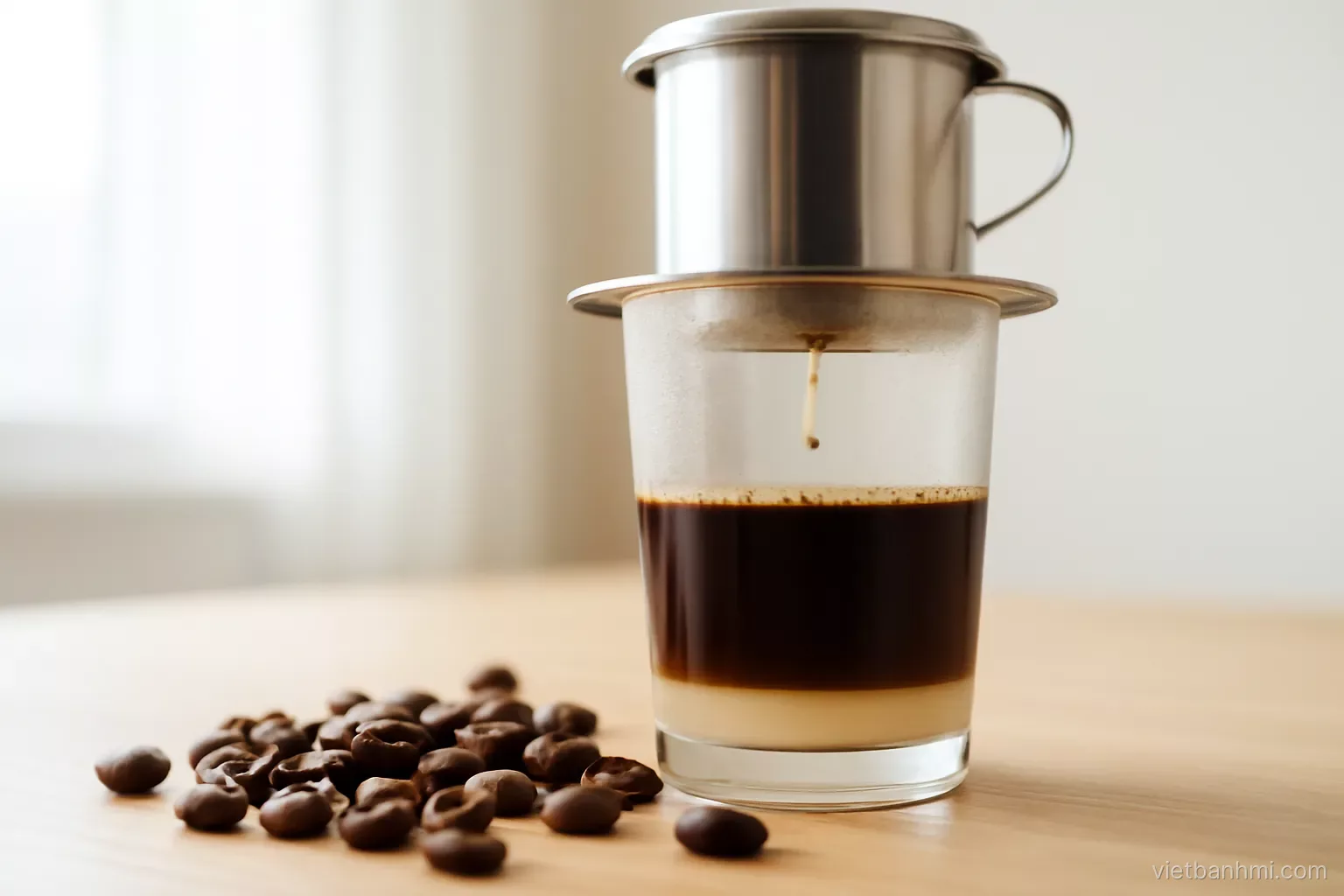
The traditional Saigon iced milk coffee has three ingredients: strong coffee, sweetened condensed milk (sữa đặc) and ice. The coffee is usually made in a phin, a small stainless-steel or aluminium drip filter that sits on top of the glass. Ground coffee goes in the chamber, a press disc sits on top, hot water is poured over, and the coffee drips slowly through for four to six minutes. The result is concentrated, thick and low in volume, closer to a long espresso than to an American drip coffee.
Most stalls in a busy city do not brew one phin per customer at rush hour. Instead they brew a large batch in a cloth sock filter or a big phin and keep the concentrate in a jug. That is not a shortcut to be suspicious of; it is how high-volume coffee carts have always worked. If you want to watch your own phin drip, sit down at a café rather than a takeaway cart.
The beans are typically robusta, often blended with some arabica, and roasted dark. Vietnam is one of the world's largest coffee producers and grows mostly robusta, much of it in the Central Highlands around Buôn Ma Thuột, according to the International Coffee Organization. Robusta tastes bitter, earthy and chocolatey, and it stands up to the sweetness of condensed milk in a way a light arabica would not.
The core coffee vocabulary
You only need a few words. Vendors in central Saigon are used to visitors, so pointing and smiling works too, but saying the name of the drink gets you exactly what you want and usually a warmer reaction.
| Say this | What you get | Typical street price |
|---|---|---|
| Cà phê sữa đá | Iced coffee with condensed milk, the classic | 15,000–30,000đ |
| Cà phê sữa nóng | Hot coffee with condensed milk, often served with the phin on the cup | 15,000–30,000đ |
| Cà phê đen đá | Iced black coffee, usually pre-sweetened with sugar | 12,000–25,000đ |
| Cà phê đen nóng | Hot black coffee | 12,000–25,000đ |
| Bạc xỉu | Saigon-style milky coffee: lots of condensed and fresh milk, a little coffee | 18,000–35,000đ |
| Trà đá | Iced weak green tea, often free or a few thousand dong | 0–5,000đ |
Prices are rough ranges for street stalls and small family cafés in central Saigon in 2026. Café chains and specialty shops charge more, and a tourist-facing café on a famous street may charge double. None of these numbers are fixed by anyone; use them only to spot an obvious outlier.
Adjusting sweetness and strength
Sweetness is the most common complaint from first-timers. A standard cà phê sữa đá can carry a couple of tablespoons of condensed milk, and USDA FoodData Central lists sweetened condensed milk at about 320 kcal and about 54 g of sugar per 100 g. Even the black version, đen đá, is often sweetened with sugar before it reaches you. These phrases help:
- Ít ngọt (less sweet) works for both milk and black coffee.
- Ít sữa (less milk) for a darker, stronger cà phê sữa.
- Không đường (no sugar) for black coffee. Ask before they pour, since sugar often goes into the glass first.
- Đậm (strong) or nhạt (light) if you want to change the coffee concentration.
- Ít đá (less ice) if you want more drink and less dilution.
Bạc xỉu, cà phê sữa and black coffee: which to choose
If you drink lattes at home, start with bạc xỉu. The name is usually traced to a Cantonese phrase used by Saigon's Chinese community, and the drink is the gentlest option on the board: a glass that is mostly milk, with coffee as an accent. It is also the one most likely to be made with both condensed milk and fresh milk, so it is creamy rather than just sweet.
If you drink espresso or strong filter coffee, go straight to cà phê đen đá, ideally không đường. Dark-roasted robusta without sugar is bitter and intense, and many visitors find it far more interesting than the sweet versions. Somewhere in between, cà phê sữa đá with ít ngọt is the sweet spot for most people, and it is the drink you will see on every corner from dawn onward.
A practical tip: when your glass arrives with the coffee and milk in separate layers, stir hard before your first sip. The condensed milk sinks, and the top inch is nearly pure coffee.
Where to drink it in central Saigon
Coffee in Saigon happens at three levels. The first is the sidewalk cart or stall with low plastic stools, often run by one person, which opens very early and sells mostly to office workers and drivers. The second is the family café in a shophouse, sometimes with a mezzanine and fans, where people sit for an hour over one glass. The third is the modern café or chain, with air conditioning, Wi-Fi and a menu that also lists cold brew, coconut coffee and nut-milk drinks.
Each has its moment. Early morning, between roughly 6:00 and 8:30, is when street coffee is at its liveliest. Mid-afternoon, when the heat peaks, is when an air-conditioned café earns its price. In the evening many Saigonese switch to tea, juice or a late coffee at a sidewalk spot. If you are exploring the area around Bến Thành Market or the backpacker streets by Bùi Viện, our Saigon food guide breaks down what to eat and drink by neighbourhood and time of day.
Paying, tipping and etiquette
At stalls you usually pay after you finish; at cafés with a counter you often pay when you order. Cash is still common, but many vendors now display a bank QR code that local customers scan. Foreign cards rarely work at a small cart, so keep small notes such as 10,000đ, 20,000đ and 50,000đ. Handing over a 500,000đ note for a 20,000đ coffee at 7 a.m. is a reliable way to make a vendor sigh.
Tipping is not expected for coffee. Rounding up a few thousand dong is fine but not necessary. It is normal to sit for a long time over one drink, and it is normal for the vendor to refill your iced tea without asking. If you want the bill, say "tính tiền" (the bill, please). For more on payment, hygiene signals and street etiquette, see our street food know-how section.
Common mistakes and quick fixes
- Ordering "coffee" in English and getting cà phê sữa. Many vendors assume visitors want the milk version. Say "đen" if you want black.
- Not stirring. The condensed milk settles; stir until the colour is even.
- Drinking three in one morning. Robusta-heavy coffee is strong; pace yourself, especially in the heat.
- Expecting dairy-free by default. The classic drink is built on condensed milk. If you avoid dairy, order black or look for a café that makes nut-milk coffee.
What to pair with your coffee
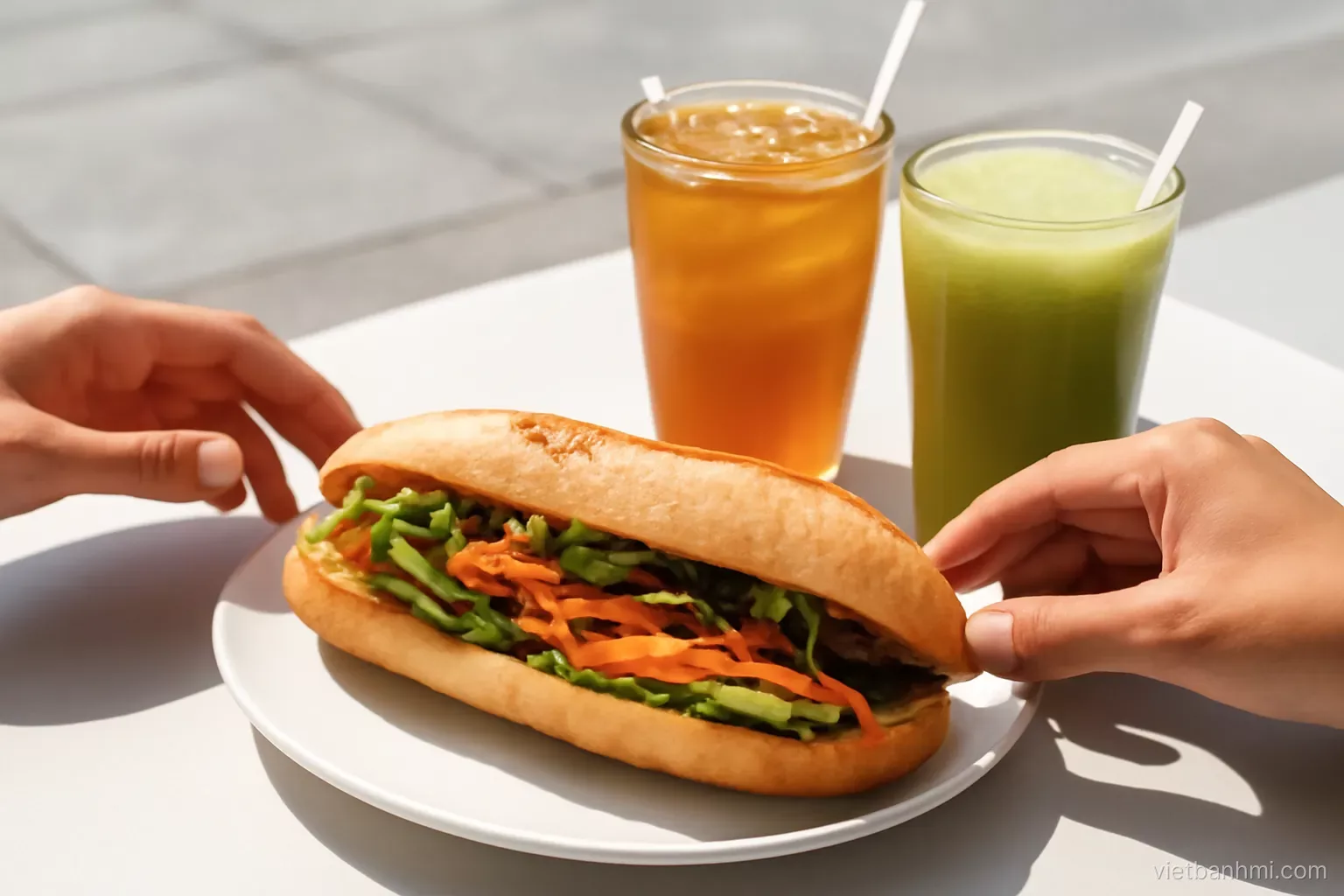
Coffee in Vietnam is often a breakfast drink, and the natural companion is a banh mi. A crusty baguette with savoury filling, pickles and chili is a strong match for a sweet, cold coffee: the sugar and fat in the drink soften the heat and acidity of the sandwich. Vegans and people who avoid dairy can still enjoy the pairing by ordering black coffee or nut-milk coffee alongside a vegan banh mi. We explore those options in our vegan banh mi guides.
Sources
- International Coffee Organization – ico.org (coffee production by country and species)
- USDA FoodData Central – fdc.nal.usda.gov (sweetened condensed milk, canned)
- Vietnam National Authority of Tourism – vietnam.travel (food and drink culture)
Frequently asked questions
What does cà phê sữa đá mean?
It means coffee (cà phê), milk (sữa), ice (đá). The milk is sweetened condensed milk rather than fresh milk, which is why the drink is so thick and sweet. It is the most common coffee order in southern Vietnam.
How do I ask for less sugar in Vietnamese coffee?
Say "ít ngọt" for less sweet, or "không đường" for no sugar in black coffee. Say it as you order, because many vendors add sugar or condensed milk to the glass before the coffee. Pointing at the condensed milk can and shaking your head also works.
What is the difference between bạc xỉu and cà phê sữa đá?
Bạc xỉu is mostly milk with a small amount of coffee, often mixing condensed and fresh milk. Cà phê sữa đá is mostly coffee with condensed milk. If you like lattes, bạc xỉu is the gentler choice.
How much should a Vietnamese iced coffee cost in Saigon?
At street stalls and small cafés expect roughly 15,000–30,000đ, around US$0.60–1.20. Air-conditioned cafés and chains are often 35,000–65,000đ. Prices vary by location, so treat these as rough ranges rather than fixed rates.
Is Vietnamese coffee stronger than regular coffee?
Usually yes, per glass. It is often made with robusta, which contains roughly twice the caffeine of arabica, and brewed as a small, concentrated pour. Strength varies a lot between shops, so start with one glass and see how you feel.
Coffee and banh mi, any hour of the day
When you are in Saigon and want your coffee with a proper sandwich, try Bánh Mì XANH: fully vegan banh mi, five central shops open 24/7, and a Cà Phê XANH drinks menu that includes black coffee (35,000đ) and nut-milk coffee (45,000đ) for anyone skipping condensed milk. You can also order delivery online if the afternoon heat keeps you indoors.
See the Bánh Mì XANH menu · 24/7 hotline / Zalo +84 923 183 183