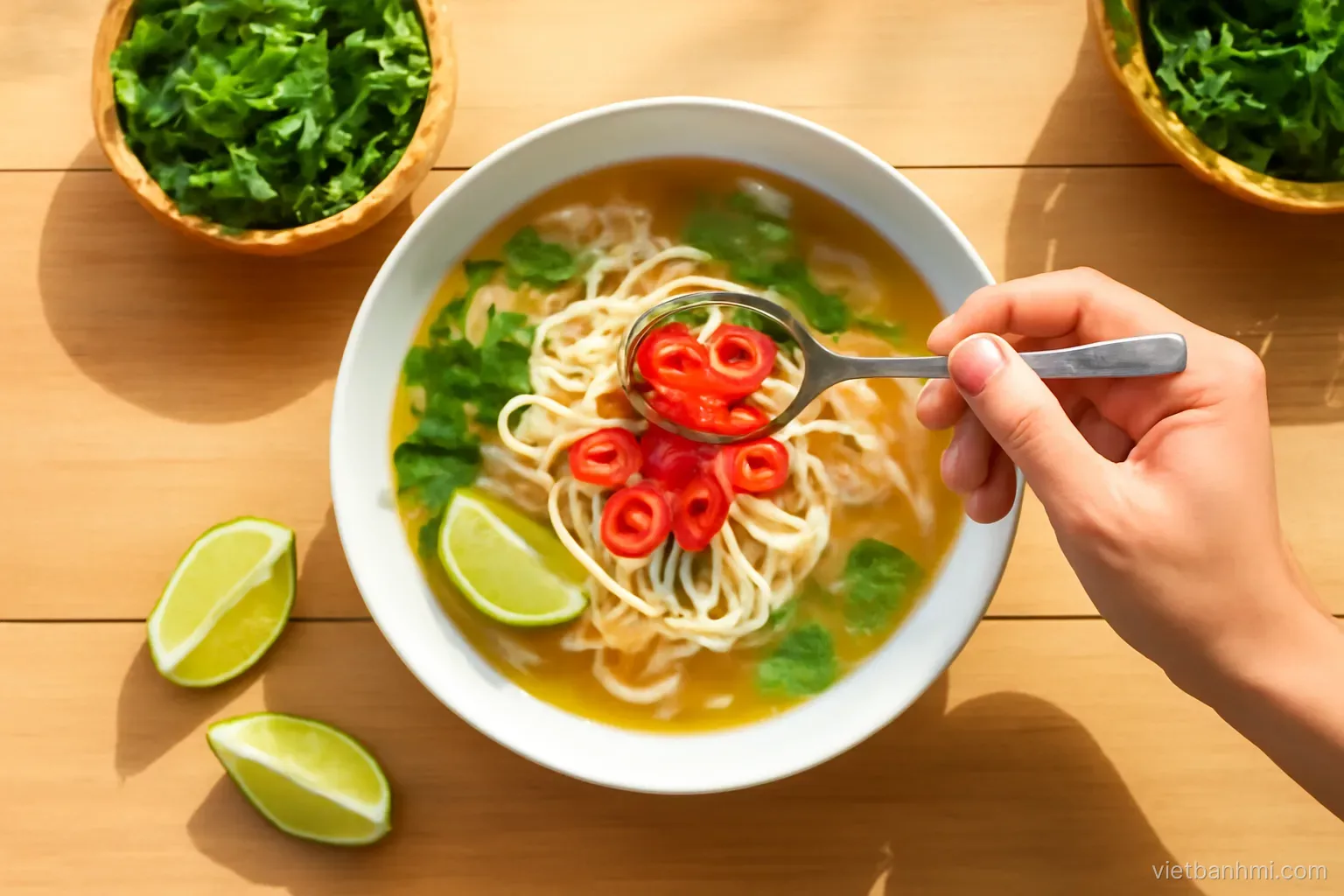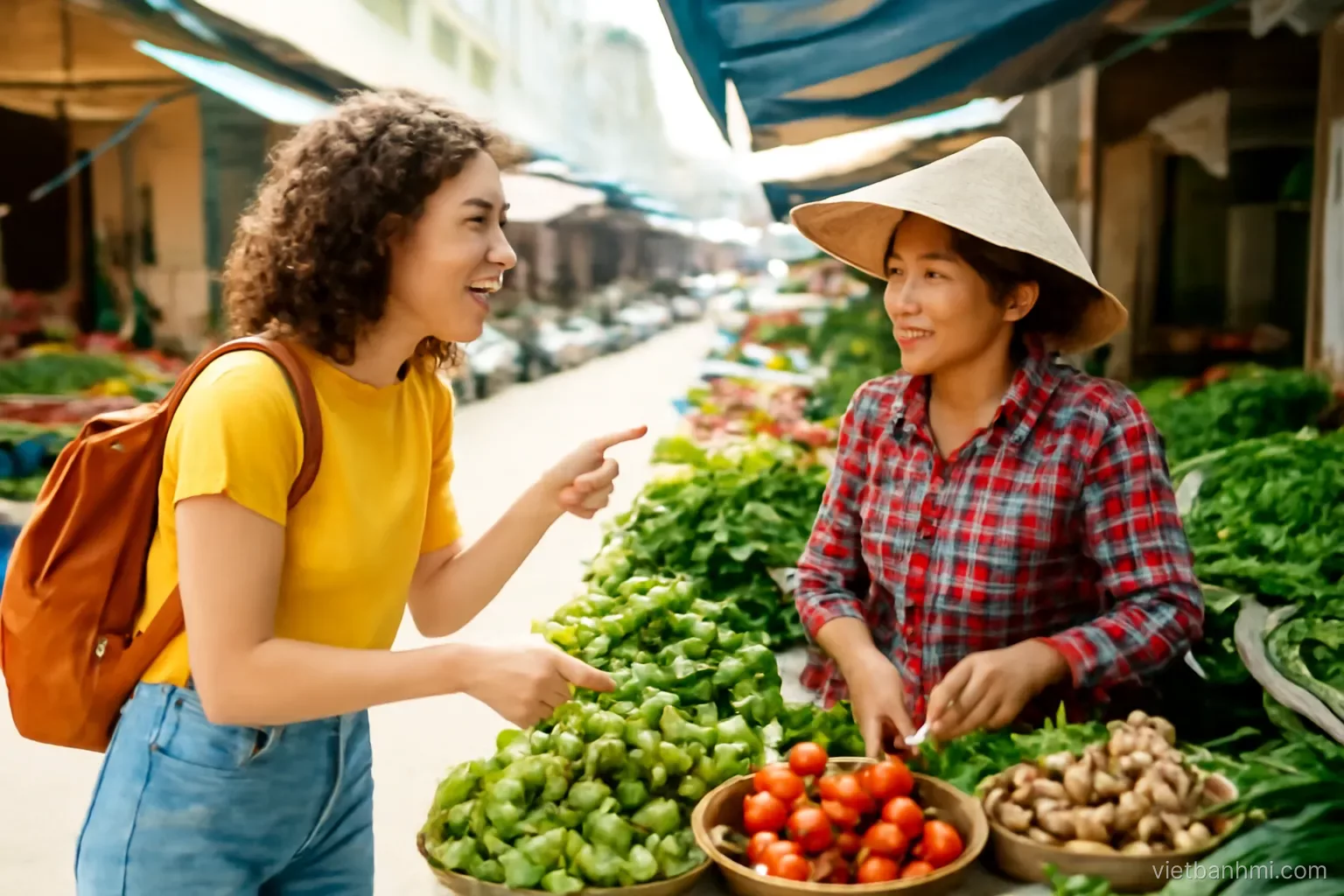
Short answer: Vietnamese street food uses peanuts, fish sauce, shrimp paste, dried shrimp, soy sauce and wheat in many places you would not expect, often in sauces, broths and garnishes rather than the main ingredient. Explain your allergy with a written Vietnamese card, ask about sauces and toppings specifically, prefer stalls that cook to order, and carry your emergency medication and travel insurance. For severe allergies, simple dishes and specialist kitchens are safer than complex street dishes.
Why allergies are tricky in street food
Vietnamese street food is built from components: a broth, a dipping sauce, a pile of herbs, a sprinkle of crushed peanuts, fried shallots, a spoon of chili oil. Each component may be made in advance, sometimes by a different supplier, and the vendor may not think of them as "ingredients" at all. Travel guides on eating with allergies in Vietnam make the same recommendation: ask about the sauces and marinades, not just the main item, because fish sauce and shrimp paste can be present in dishes that do not look like seafood.
The other challenge is shared equipment. Small stalls use one wok, one fryer and one set of ladles, so cross-contact is likely. Vendors are generally kind and willing to help, but there is no formal allergen labeling at the street level. If your allergy is severe, plan with that in mind.
Where common allergens hide
| Allergen | Vietnamese | Common hiding places |
|---|---|---|
| Peanuts | đậu phộng (south), lạc (north) | Crushed on noodle salads and sticky rice, peanut dipping sauce for fresh rolls, some sweet soups, peanut oil for frying |
| Shellfish | tôm (shrimp), cua (crab), hải sản (seafood) | Shrimp paste in soups and dips, dried shrimp in salads and chili oil, crab in bún riêu |
| Fish | cá, nước mắm (fish sauce) | Dipping sauces, dressings, marinades, stir-fries, many broths |
| Soy | đậu nành, nước tương (soy sauce) | Tofu, soy sauce, vegetarian mock meats, soy milk, many vegetarian dishes |
| Wheat / gluten | bột mì (wheat flour) | Banh mi bread, egg noodles (mì), soy sauce, wheat gluten in mock meat |
| Egg | trứng | Mayonnaise-type spread in banh mi, fried rice, egg noodles, cakes, egg coffee |
| Sesame | mè (south), vừng (north) | Sticky rice toppings, rice crackers, sweet soups, some dipping sauces |
Two notes for specific diets. Rice noodles (phở, bún) and rice paper are usually made from rice, which helps people avoiding gluten, but soy sauce and some seasonings contain wheat. And vegetarian food is not automatically safer for allergies: chay kitchens use a lot of soy, wheat gluten and peanuts.
An allergy card in Vietnamese
Write this on your phone or print a small card. Replace the bracketed word with your allergen from the table above. Keep it short, clear and serious in tone.
"Tôi bị dị ứng nặng với [đậu phộng]. Nếu ăn phải, tôi có thể phải đi cấp cứu. Xin đừng cho [đậu phộng], dầu [đậu phộng] hoặc nước chấm có [đậu phộng] vào món ăn. Cảm ơn!"
In English: "I have a severe allergy to [peanuts]. If I eat it, I may need emergency treatment. Please do not put [peanuts], [peanut] oil or sauces containing [peanuts] in my food. Thank you!" For milder intolerances, a softer version works: "Tôi không ăn được [tôm]" ("I cannot eat [shrimp]"). The key word is dị ứng (allergy), and nặng means severe.
Ordering strategy at the stall
- Choose simple, cooked-to-order dishes. A banh mi assembled in front of you or a stir-fry made to order lets you see what goes in and stop it.
- Avoid complex shared sauces. Dipping sauces, chili oils and peanut sauces are often prepared in bulk and are the most common source of hidden allergens.
- Ask for garnishes on the side. Crushed peanuts, fried shallots and sesame are sprinkled at the end; say "không đậu phộng" or "không mè" before the cook reaches for them.
- Go at quieter times. Vendors listen better at 10:30 than at 12:15, when twenty office workers are waiting.
- Use specialist shops. Kitchens with a short, fixed menu and stable recipes, including chains with published menus, are easier to assess than stalls that improvise.
- When unsure, skip it. There will be another stall around the corner.
Dishes worth extra caution
Some popular street dishes combine several allergens at once, which makes them harder to adapt than to avoid. Bún thịt nướng and other noodle salads are typically dressed with fish sauce and topped with crushed peanuts and fried shallots. Fresh spring rolls in the south often come with a peanut-and-hoisin dip. Bánh tráng trộn, the mixed rice-paper snack popular with students, can include dried shrimp, quail egg, chili-satay oil and peanuts in a single bag. Bún riêu is built on crab. Sweet soups (chè) frequently feature peanuts, sesame and coconut milk, and many cakes use egg and wheat flour.
By contrast, dishes cooked to a single recipe in front of you are easier to control: a plain rice plate with stir-fried vegetables and tofu, a soup with a clearly described broth, grilled corn or sweet potato, or fresh fruit. Packaged snacks from supermarkets and convenience stores carry ingredient lists, mostly in Vietnamese and sometimes in English, which can be useful on travel days. Learning the written forms of your allergens, such as đậu phộng, tôm or mè, lets you scan those labels quickly.
Before you fly: medication and insurance
If you carry an epinephrine auto-injector, bring at least two, keep them in your hand luggage with a doctor's letter, and check your airline's rules on carrying medical devices. Pharmacies in Vietnam stock common antihistamines, but do not count on finding your exact prescription brand. Buy travel insurance that covers emergency medical care, and note the nearest international hospital or clinic in each city you visit. Vietnam's emergency ambulance number is 115.
Organizations such as Food Allergy Research & Education (FARE) publish general advice on traveling with food allergies, including how to prepare chef cards and plan for emergencies abroad; it is worth reading before any long trip. Our Food Trip Planning section covers the arrival day, when tiredness makes it easy to slip up.
Example: building a lower-risk food day
As an example, a traveler with a shellfish and fish allergy in Saigon might plan a day like this: breakfast of plain sticky rice with mung bean or a banh mi from a shop with a published menu and no seafood; lunch of rice with tofu and vegetables stir-fried to order with soy sauce only; an afternoon of fresh fruit they peel themselves; and dinner at a vegetarian restaurant, where fish sauce and shrimp paste are not used at all, while still asking about sesame or peanuts if relevant. A fully vegan shop is often a useful option for people with fish, shellfish, egg or dairy allergies, because those ingredients are not on the menu, though you should still tell staff about your allergy and ask about cross-contact. Ask about soy, wheat, peanuts and sesame there just as anywhere else; Bánh Mì XANH in Saigon, for instance, is fully vegan, and its menu centers on tofu, mushrooms and a grain-based vegan cold cut, so soy and grain allergies are the questions to raise with the shop. For more about what goes into Vietnamese sauces, see our Flavors & Ingredients section.
Sources
- Food Allergy Research & Education (FARE) – foodallergy.org
- Local Vietnam, "Traveling with food allergies in Vietnam" – localvietnam.com
- U.S. Centers for Disease Control and Prevention, Yellow Book: Vietnam – cdc.gov
Frequently asked questions
How do I say I am allergic in Vietnamese?
Say "Tôi bị dị ứng" followed by the food, for example "Tôi bị dị ứng đậu phộng" for peanuts. Add "nặng" (severe) for serious allergies and show it in writing.
Is Vietnamese street food safe for peanut allergies?
It can be managed but needs care, because peanuts appear in sauces, garnishes and frying oil. Choose cooked-to-order dishes, avoid peanut dipping sauces and ask before garnishes are added.
Is fish sauce a problem for a shellfish allergy?
Fish sauce is made from fish, not shellfish, but shrimp paste and dried shrimp are also common in Vietnamese cooking. People with either allergy should ask about both.
Is Vietnamese food gluten-free?
Many dishes are based on rice noodles and rice paper, but banh mi bread, egg noodles, soy sauce and wheat-gluten mock meat contain gluten. Ask about soy sauce in particular.
What is the emergency number in Vietnam?
The ambulance number is 115. Keep the address of the nearest international hospital or clinic handy as well, and carry travel insurance that covers emergency care.
A published menu takes some guesswork out
If fish, shellfish, egg or dairy are your concern, Bánh Mì XANH in Saigon makes life simpler: every banh mi is fully vegan, prices and items are listed online, and five central shops are open 24/7. Still mention your allergy to the staff and ask about cross-contact, soy, gluten and nuts. Check the menu for soy and wheat, then call the hotline if you have questions before ordering.
Review the Bánh Mì XANH menu · 24/7 hotline / Zalo +84 923 183 183