Short answer: Carry cash in small notes for street food; it works everywhere. Most stalls in big cities also display a bank-transfer QR code, which locals use constantly, but a foreign visitor can only pay that way with a Vietnamese bank account or with one of the foreign wallets connected to Vietnam's VietQRGlobal network, which in 2026 covers mainly Chinese, Korean, Thai, Lao and Cambodian apps. Cards work at chains, supermarkets and ride-hailing apps, rarely at street stalls.
Cash is still the universal option
Vietnam's currency is the đồng (VND). Notes in everyday use run from 1,000 to 500,000 VND. The smaller denominations of 1,000, 2,000 and 5,000 are paper, while 10,000 and above are polymer, which survives rain and the occasional trip through the washing machine. Coins exist but are rarely seen. For street food, the most useful notes are 10,000, 20,000, 50,000 and 100,000, because a typical purchase costs between 15,000 and 80,000 VND and small vendors may struggle to break a 500,000 note early in the morning.
The banknotes carry a lot of zeros, which causes the most common mistake: confusing the 20,000 and 500,000 notes, which are both bluish, or the 10,000 and 100,000. Sort your notes by value in your wallet, and glance at the number before you hand anything over. Honest mistakes happen in both directions, and vendors are generally quick to correct an obvious one.
| Note | Approx. USD | Good for | Watch out |
|---|---|---|---|
| 10,000 VND | $0.40 | Iced tea, sticky rice, small change | Do not confuse with 100,000 |
| 20,000 VND | $0.75 | Street coffee, banh mi at a cart | Similar color to 500,000 |
| 50,000 VND | $1.90 | Noodle soup, rice plates | Pink-purple; easy to spot |
| 100,000 VND | $3.85 | A meal with drinks | Do not confuse with 10,000 |
| 200,000 VND | $7.70 | Restaurants, shared dinners | Some stalls lack change early |
| 500,000 VND | $19.20 | Hotels, bigger bills | Hard to break at small stalls |
USD conversions use around 26,000 VND per USD (check current rate) and are approximate.
Getting cash: ATMs and exchange
ATMs are widespread in cities and accept major international cards. Most charge a per-withdrawal fee, and your home bank may add its own fees and exchange margin, so fewer, larger withdrawals usually cost less than many small ones. Machine limits vary by bank. When an ATM or card terminal offers to charge you in your home currency instead of VND, choosing VND usually avoids a poor conversion rate.
Exchanging cash is easy too. Banks change major currencies, and licensed exchange counters and some jewelry shops in city centers also exchange US dollars and euros. Bring clean, undamaged notes; torn or heavily marked foreign notes are sometimes refused. Avoid exchanging large amounts at the airport if better rates are available in town, but changing a small sum on arrival for a taxi and a first meal is sensible.
QR codes: everywhere for locals, partial for visitors
Walk past any banh mi cart in Saigon or Hanoi and you will probably see a small printed QR code taped to the glass. This is VietQR, the national standard for instant bank transfers, run through the NAPAS payment network. Locals open their banking app, scan, enter the amount and pay in seconds; the vendor often confirms by checking their phone or a small speaker that announces incoming transfers. For many young Vietnamese, it has replaced cash for small purchases.
For visitors, it depends on where your money lives:
- With a Vietnamese bank account (common for long-stay residents and digital nomads with the right visa), VietQR works just as it does for locals.
- With a connected foreign wallet: NAPAS launched VietQRGlobal in 2025, and news reports from 2026 say it supports visitors using Alipay, UnionPay and Weixin Pay from China, several South Korean apps, and payment systems from Thailand, Laos and Cambodia, with more markets planned. Coverage at small street vendors is growing but not universal.
- With an ordinary foreign card or wallet (for example a European or American bank app), you generally cannot scan a Vietnamese VietQR code directly. Some travel-money services advertise workarounds; check fees and reliability before you rely on one.
The practical advice: if your wallet is on the supported list, try it, but carry cash anyway. When a vendor's code does not work with your app, they will happily take dong.
Cards and apps: where they work
International Visa and Mastercard cards are widely accepted at hotels, supermarkets, convenience stores, shopping malls, chain cafés and most mid-range restaurants. Some places add a small surcharge for cards. Street stalls and small family eateries rarely take cards.
Ride-hailing and delivery apps such as Grab let you pay by card in the app, which makes food delivery a good cashless option. Many restaurants and shops also take orders directly through their websites; ask how payment works when they confirm the order. For example, Bánh Mì XANH in Saigon takes delivery orders through its website and calls back to confirm, which is handy late at night or in heavy rain.
Security and practical habits
Street food areas are generally safe, but a few habits protect your money. Keep only the day's cash in an easy-to-reach pocket and the rest in your bag or hotel safe, so you do not reveal a thick wad of notes at every stall. When using a phone to pay or look up a translation near the curb, hold it away from the road; snatch thefts from passing motorbikes are a known risk in busy city streets. At ATMs, prefer machines inside bank branches or malls, cover the keypad and take your card promptly; some machines return the card only after dispensing cash, others before, and travelers do leave cards behind. Finally, let your bank know you are traveling if it requires notice, because a blocked card on day one is a common and avoidable headache.
A simple payment kit for a food-focused trip
- Cash for three days in mixed small notes, kept separate from your main stash.
- One main card and one backup from different banks, in case one is blocked for fraud protection abroad.
- A ride-hailing app with a card linked, for transport and delivery.
- Your home wallet app, if it is on the VietQRGlobal list, to test on QR codes.
- A small zip pouch for coins and small notes, so you are not pulling out a thick wad at every stall.
Etiquette at the moment of payment
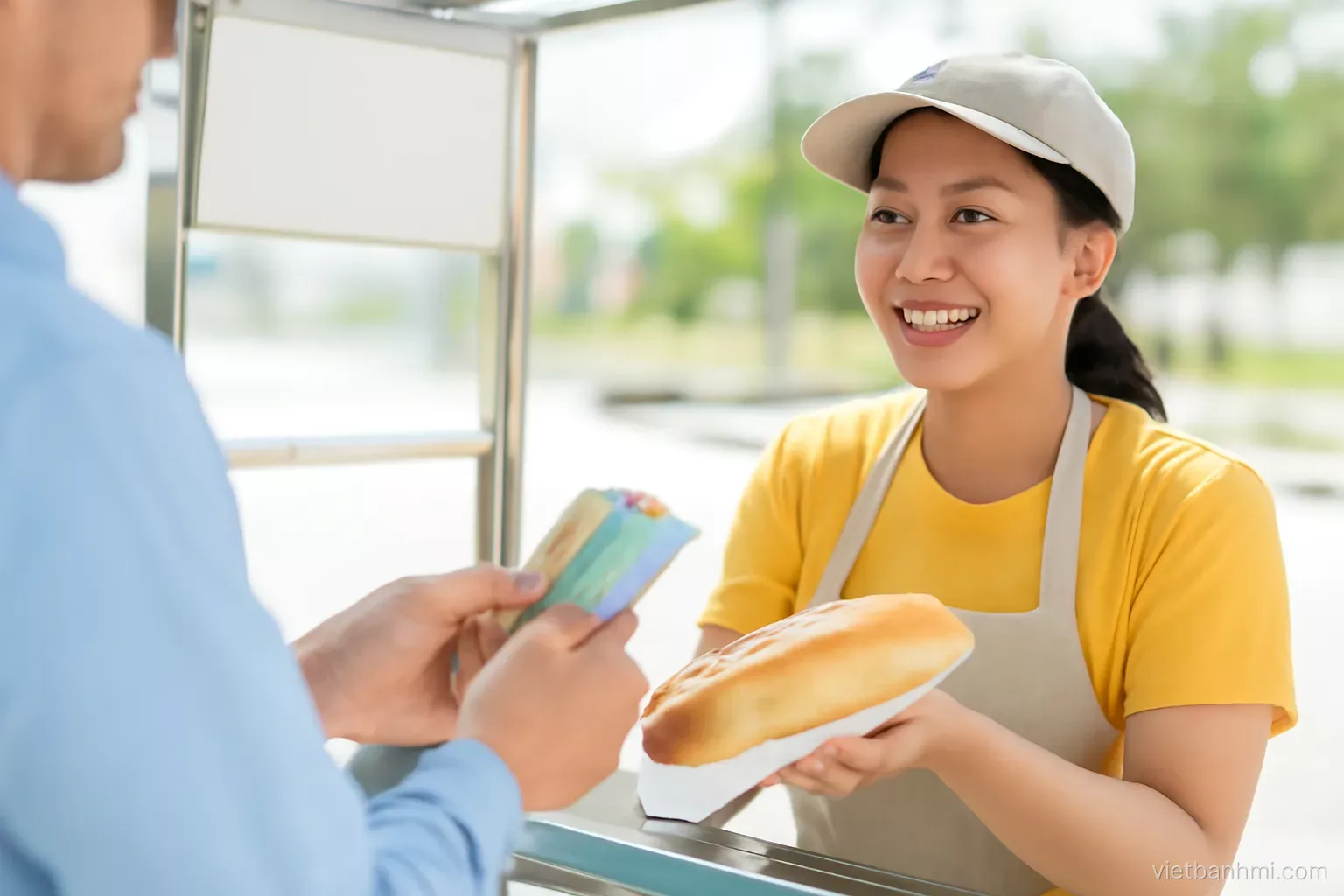
Paying is quick and informal. At sit-down stalls you pay after eating; at takeaway carts you pay when you receive the food. Hand over money with one hand or both; using both hands, or your right hand with your left touching your forearm, is a polite gesture that older vendors appreciate, though nobody expects it. Tipping is not expected at street stalls, and you do not need to leave coins on the table. If a vendor has no change, they may round down or ask a neighbor to break your note; small differences of a few thousand dong are usually rounded in the customer's favor. For more on fair prices, see our guide to street food prices in the Street Food Know-How section, and for planning your first day after landing, see Food Trip Planning.
Sources
- NAPAS (National Payment Corporation of Vietnam) – napas.com.vn
- Tuoi Tre News, "Foreign tourists enjoy easier QR payments across Vietnam as cross-border network expands" – tuoitrenews.vn
- Viet Nam News, "QR payments make Việt Nam more convenient for international visitors" – vietnamnews.vn
- State Bank of Vietnam – sbv.gov.vn
Frequently asked questions
Do street food vendors in Vietnam accept cards?
Rarely. Street stalls and small eateries mostly take cash and bank-transfer QR codes; cards are accepted at chains, supermarkets, hotels and many sit-down restaurants.
Can tourists pay with VietQR codes?
Only with a Vietnamese bank account or a foreign wallet connected to the VietQRGlobal network, which in 2026 includes Alipay, UnionPay, Weixin Pay and several Korean, Thai, Lao and Cambodian apps. Most Western bank apps cannot scan these codes directly.
How much cash should I carry for street food?
Around 300,000–500,000 VND in small notes covers a day of street food for one person with some margin. Keep larger notes for hotels and restaurants.
Which Vietnamese banknotes are easy to confuse?
The 20,000 and 500,000 notes look similar in color, and 10,000 and 100,000 differ only by a zero. Sort your notes by value and check before paying.
Should I tip when paying at a street stall?
No tip is expected. A smile and "cảm ơn" are the normal way to say thanks, and rounding up is optional.
Cash, QR or delivery: banh mi any hour
However you pay, Bánh Mì XANH keeps it simple in Saigon: five central shops open 24/7 serving fully vegan banh mi, plus delivery orders through its website, confirmed by phone. It is a handy fallback on a rainy night when you would rather not hunt for change at a street cart.
Order Bánh Mì XANH online · 24/7 hotline / Zalo +84 923 183 183