Short answer: Most Vietnamese street food is cooked mild, and the heat is added by you at the table with fresh chili, chili sauce, chili oil or pickled chili. The main exceptions are some central Vietnamese dishes, especially from Hue, and pre-dressed salads and banh mi, where the cook adds chili for you. Say "không cay" (not spicy) or "ít cay" (a little spicy) when ordering, and season the rest yourself.
Spicy at the table, not in the pot
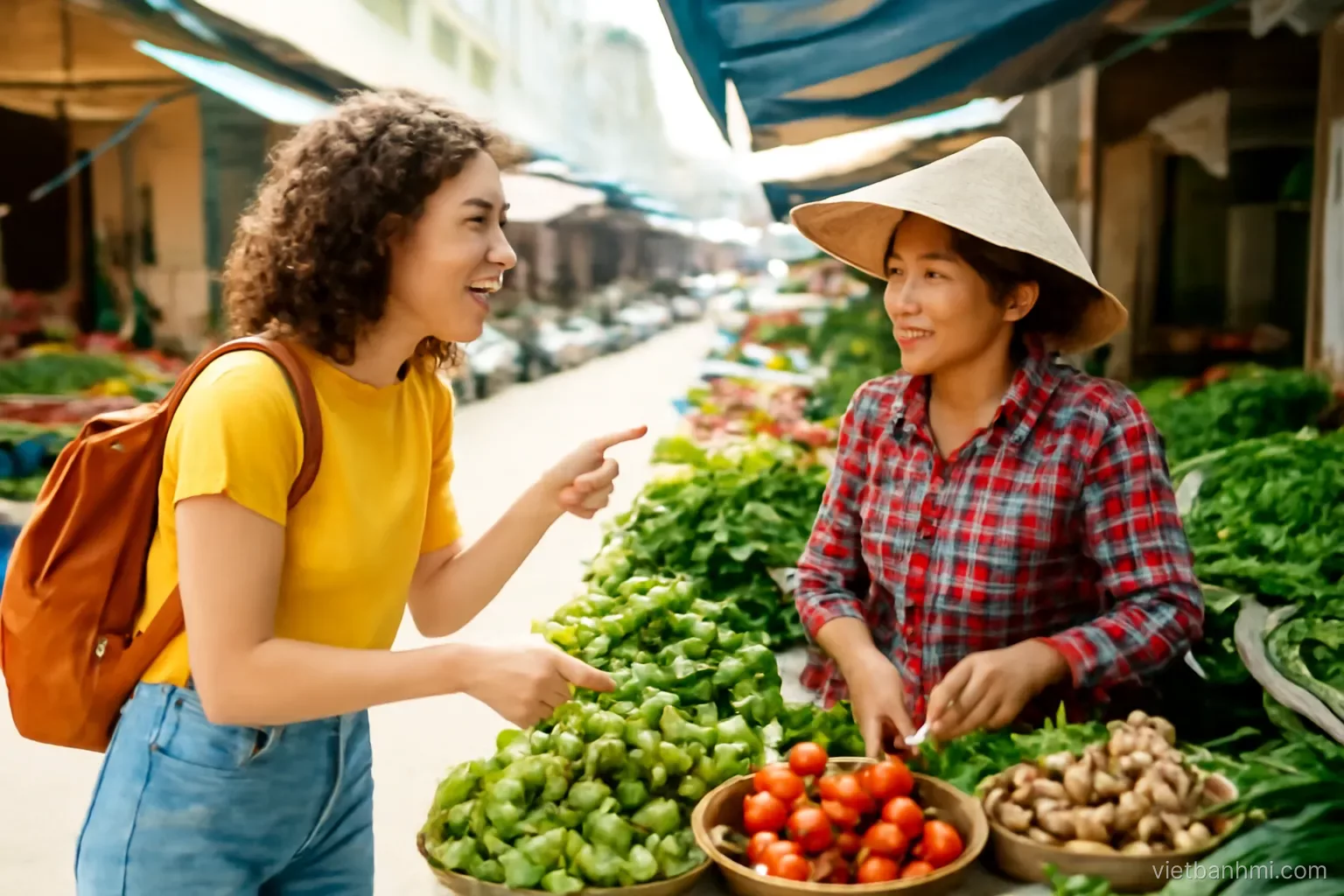
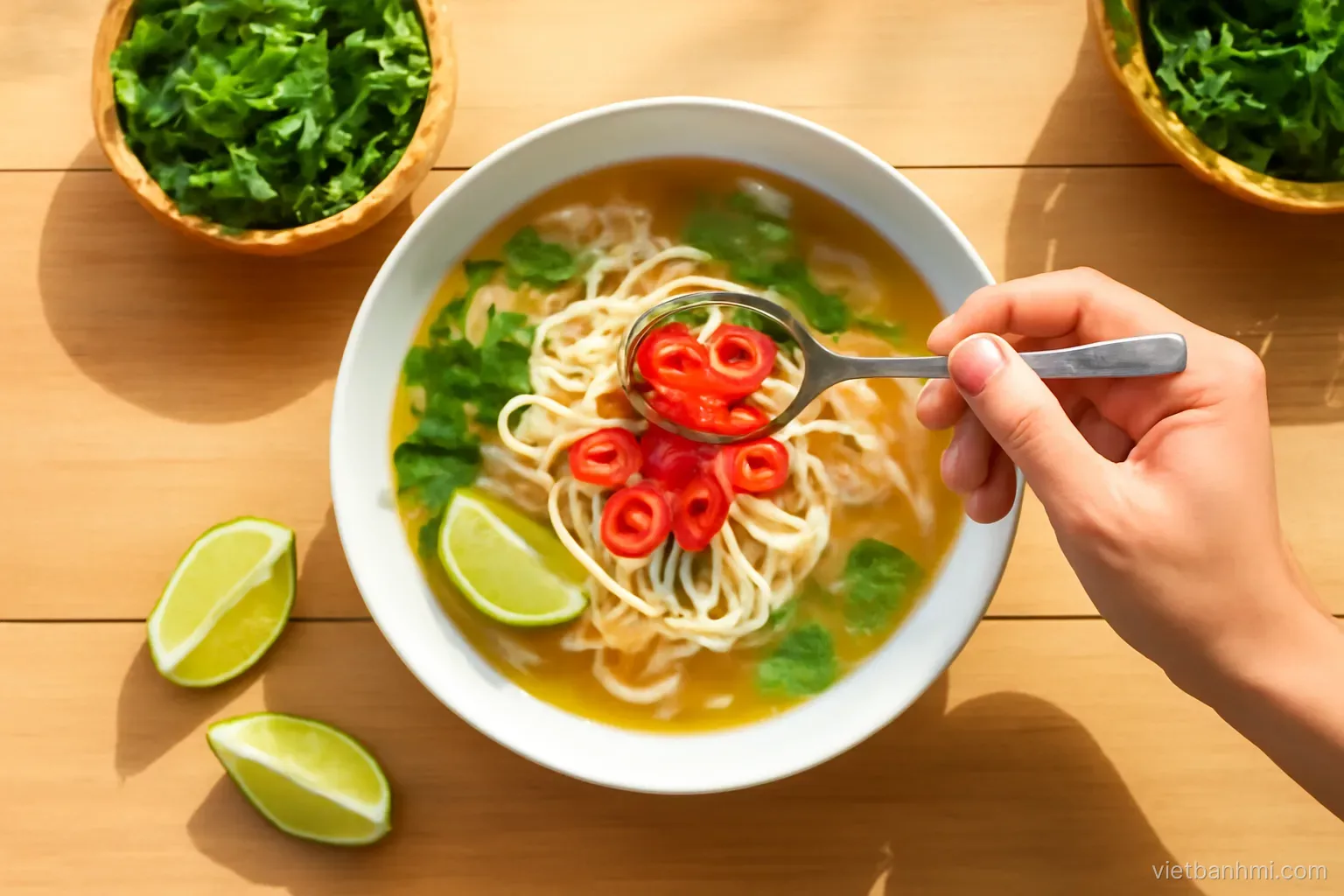
Visitors expecting Thai-level heat are often surprised: a bowl of phở or a plate of broken rice arrives tasting savory, sweet and herbal, but barely hot. That is by design. Vietnamese cooking tends to keep heat on the side so each diner can adjust, and almost every table carries a set of condiments for exactly that purpose. This makes Vietnam one of the easier countries in Southeast Asia for travelers who do not like spicy food, and one of the most fun for those who do, because you control the dial.
The flip side is that some items are dressed before they reach you. Banh mi vendors usually add a few slices of fresh chili or a squirt of chili sauce unless you say otherwise. Salads, dipping sauces and some stir-fries come pre-seasoned. And in central Vietnam, chili is built into more dishes from the start.
Meet the condiments
| Condiment | What it is | Heat | Notes |
|---|---|---|---|
| Ớt tươi | Fresh sliced red chili, often bird's eye (ớt hiểm) | High | Small chilies are much hotter than large ones |
| Tương ớt | Smooth chili sauce, sweet and tangy | Low to medium | The bottle on most banh mi carts |
| Sa tế | Chili oil with lemongrass and garlic | Medium to high | Some versions contain dried shrimp |
| Ớt ngâm | Chili pickled in vinegar, sometimes with garlic | Medium | Some versions use fish sauce instead of vinegar |
| Ớt bột | Dried chili flakes or powder | Medium to high | Common in central Vietnam |
| Tiêu | Black pepper | Low | Vietnam is a major pepper producer; often sprinkled on soups |
Bird's eye chilies, the small, pointed chilies you see sliced in little dishes, are seriously hot. A common guide puts them at roughly 50,000–100,000 Scoville heat units, far above a jalapeño. If you are unsure, start with one slice, stir it in, taste, and only then add more. Chili sauce is the gentlest way in.
Which regions and dishes run hotter
Vietnamese food is often described as spicier in the center than in the north or south, and Hue in particular has a reputation for fiery food. Hue's best-known noodle soup, bún bò Huế, usually comes with a slick of chili oil on top, and many central dishes use chili powder and chili paste in the cooking. Northern food is generally milder, with heat added from fresh chili and chili vinegar at the table. Southern food is sweeter and also usually mild in the pot, with chili sauce and fresh chilies on the side.
- Usually mild: phở, broken rice with toppings, fresh spring rolls, sticky rice, most noodle soups in the south and north, banh mi without chili.
- Often spicy as served: bún bò Huế, some central noodle dishes, green papaya and mango salads, spicy tofu or lemongrass-chili stir-fries.
- Depends on the vendor: banh mi (fresh chili is a default addition), dipping sauces (some contain fresh chili), hot pots (broths range from mild to very hot).
Our Regional Styles section explores how banh mi itself changes from city to city, chili included.
Phrases to control the heat
A few words cover nearly every situation. "Không cay" means not spicy, "ít cay" a little spicy, and "cay" spicy. "Không ớt" means no chili. To ask whether something is hot, say "Có cay không?" (Is it spicy?). If you love heat, "cay nhiều" asks for a lot, and vendors are often amused and pleased when a visitor asks for more. At a banh mi cart, the most common moment to speak up is when the vendor reaches for the chili jar at the end; a quick "không ớt" with a small wave of the hand is enough.
Remember that "không cay" is understood as "do not add extra heat", not as a guarantee that nothing in the dish contains chili. If you cannot eat chili at all for medical reasons, explain it like an allergy: "Tôi không ăn được ớt" ("I cannot eat chili").
Reading the table like a local
A typical noodle-stall table holds a small arsenal, and regulars build their bowl in a predictable order. First comes a squeeze of lime to brighten the broth. Then a few slices of fresh chili, pressed against the side of the bowl with a spoon if they want more heat to release. Some add a spoon of chili sauce or chili oil, and in the north a splash of garlic-chili vinegar. Herbs and bean sprouts go in last so they stay crisp. Watching the person next to you is a perfectly good way to learn, and copying their quantities is a reliable shortcut to a balanced bowl.
Dipping sauces deserve their own glance. In many places a small saucer of chili sauce or chili-and-soy is set beside spring rolls and grilled items, and you control heat simply by how deeply you dip. Fresh chili slices floating in a dip have usually been sitting there long enough to make the whole saucer hot, so taste a drop before plunging in.
Hot pot (lẩu) is the one dish where heat builds over time. The broth reduces as it simmers and chili concentrates, so a pot that tastes mild at the start can be fierce an hour later. Ask the staff to top it up with plain broth or water if it gets too strong; that is a normal request.
When it is too hot: cooling down
The burn from chili comes from capsaicin, which dissolves in fat and alcohol more readily than in water. That is why a sip of water often spreads the heat rather than calming it. In Vietnam, practical options are rice, bread, a bite of plain sticky rice, sugary drinks such as sugarcane juice, or a sweet soup. Soy milk and coconut-based drinks can help too. Lime juice and fresh herbs give your palate a break. If a dish is simply too hot, it is fine to leave it; vendors will not be offended, and you can always order a milder dish next.
Spice and banh mi
Banh mi is where most travelers meet Vietnamese chili first. At a typical cart the vendor adds fresh chili slices and a squeeze of chili sauce as a finishing touch, so if you are sensitive, say "không ớt" before the sandwich is closed. Some shops offer a dedicated spicy filling instead. Bánh Mì XANH in Saigon, for example, has a spicy tofu banh mi (Đậu Hũ Cay, 56,000 VND) alongside other fillings such as its mixed vegetable, tofu and mushroom banh mi, so you can choose your heat partly by filling; ask the staff how spicy each one is. For a deeper look at the chilies, pickles and sauces that give banh mi its flavor, see our Flavors & Ingredients section.
Traveling with children? Most Vietnamese kids grow up eating mild food with chili added by adults, so asking for "không cay" for a child is completely normal and vendors will understand immediately.
Sources
- Vietnam National Authority of Tourism – vietnam.travel
- National Geographic, Vietnamese regional food coverage – nationalgeographic.com
- USDA FoodData Central, hot chili peppers entry – fdc.nal.usda.gov
Frequently asked questions
Is Vietnamese food very spicy?
Generally not. Most dishes are cooked mild and diners add chili at the table, though central Vietnamese food, especially from Hue, often comes spicier.
How do I say not spicy in Vietnamese?
Say "không cay" for not spicy, "ít cay" for a little spicy and "không ớt" for no chili. To ask if something is spicy, say "Có cay không?".
Is banh mi spicy?
It can be, because many vendors add fresh chili and chili sauce by default. Ask for "không ớt" before the sandwich is closed if you prefer it mild.
What is sa tế?
Sa tế is a chili oil flavored with lemongrass and garlic, common in central and southern Vietnam. Some versions include dried shrimp, which matters for vegans and people with shellfish allergies.
What helps when food is too spicy?
Rice, bread, sticky rice, sweet drinks, soy milk or coconut drinks help more than water. Lime and fresh herbs also refresh your palate between bites.
Choose your heat in a vegan banh mi
In Saigon, Bánh Mì XANH lets you pick your spice level by filling: try the spicy tofu if you like heat, or ask about the mixed vegetable, tofu and mushroom banh mi if you prefer it gentle. Every sandwich is fully vegan, and five central shops are open 24/7.
Pick your Bánh Mì XANH filling · 24/7 hotline / Zalo +84 923 183 183