Short answer: In Vietnamese cities in late 2026, a street banh mi usually costs around 15,000–35,000 VND (about $0.60–1.35), a bowl of phở around 40,000–80,000 VND ($1.50–3), a rice plate around 35,000–70,000 VND, and a street coffee around 15,000–35,000 VND. Premium and specialty shops charge more, and tourist hot spots can be double the residential price. A comfortable street-food budget is roughly 200,000–400,000 VND ($8–15) per person per day.
A quick note on the numbers
Vietnam has no official price list for street food, and prices vary by city, neighborhood, portion size and ingredients. The figures here are typical ranges we see across Ho Chi Minh City and Hanoi, not guarantees, and we convert at around 26,000 VND per USD (check current rate). Use them as a sense check: if a bowl of noodles at a plastic-stool stall is priced at 200,000 VND, something is off; if it is 55,000 VND, you are paying a normal city price.
Prices have risen over the past few years with ingredient and rent costs, so older blog posts quoting 10,000 VND banh mi in central Saigon are out of date. Residential streets and smaller towns remain cheaper than the center, and Hanoi and Saigon are broadly similar for most dishes.
Typical prices by dish
| Item | Typical street price | Approx. USD | What pushes it higher |
|---|---|---|---|
| Banh mi (cart or small shop) | 15,000–35,000 VND | $0.60–1.35 | Extra fillings, central location, famous names |
| Banh mi (premium or specialty shop) | 40,000–80,000 VND | $1.50–3.10 | Larger size, specialty fillings, air-conditioned shop |
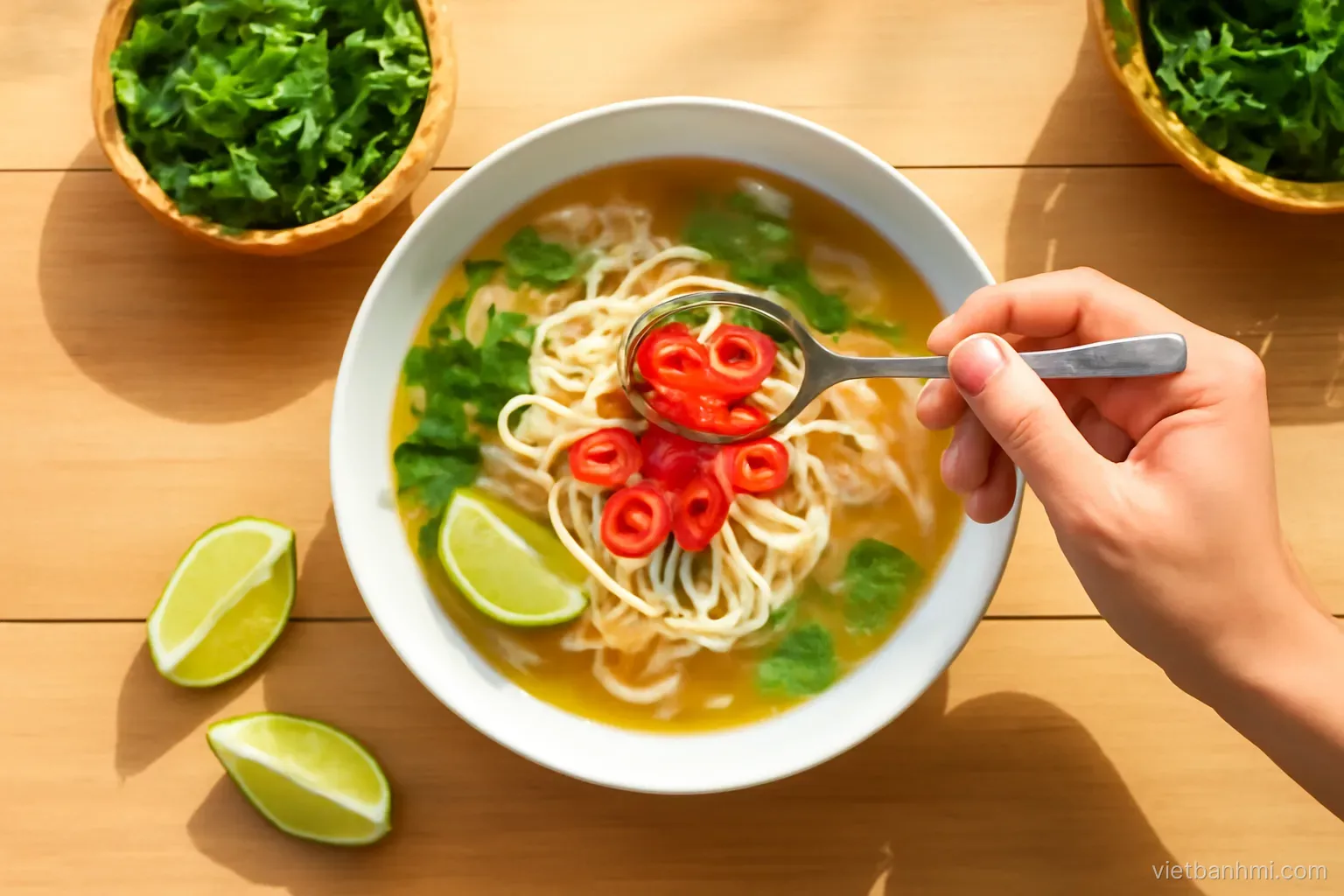
| Phở or bún noodle soup | 40,000–80,000 VND | $1.50–3.10 | Special cuts, extra toppings, famous shops |
| Cơm (rice plate) | 35,000–70,000 VND | $1.35–2.70 | Number of dishes, grilled items |
| Vegetarian rice plate (cơm chay) | 30,000–60,000 VND | $1.15–2.30 | Number of dishes |
| Sticky rice (xôi) | 10,000–30,000 VND | $0.40–1.15 | Toppings |
| Street coffee (cà phê đen / sữa đá) | 15,000–35,000 VND | $0.60–1.35 | Café seating, specialty beans |
| Sugarcane juice (nước mía) | 10,000–20,000 VND | $0.40–0.80 | Size, added kumquat |
| Sweet soup (chè) | 15,000–35,000 VND | $0.60–1.35 | Toppings |
| Bottled water (500 ml) | 5,000–15,000 VND | $0.20–0.60 | Tourist areas, hotels |
For banh mi in particular, the price gap between a basic cart and a premium shop reflects real differences: portion size, quality of the bread and fillings, hygiene systems and rent. Our Banh Mi Brands & Business section explains how premium chains are structured. As an example of a premium vegan chain, Bánh Mì XANH in Saigon prices its banh mi from 28,000 VND for the sweet bơ đường to 75,000 VND for the large Thượng Hạng Premium, with its mixed vegetable, tofu and mushroom banh mi at 59,000 VND.
Why the same dish costs different amounts
Three factors explain most price differences. Location is the biggest: a stall facing Bến Thành Market or the walking streets of Bùi Viện pays more rent and serves more visitors than one in a residential alley. Reputation is second: shops featured in guidebooks or on social media can charge more and still have queues. Portion and ingredients are third: a phở đặc biệt (special) with every topping costs more than a basic bowl, and dishes with seafood or grilled items cost more than plain ones.
Fixed-price signage is now common at street stalls, often written on a board or the cart itself, and menus with prices are standard at small restaurants. Haggling is not part of street-food culture; it belongs to markets for goods, not food. If no price is displayed and you are unsure, asking "Bao nhiêu tiền?" (How much?) before ordering is normal and not rude.
Cities, towns and holidays
Ho Chi Minh City and Hanoi are the most expensive places for everyday street food, and their central wards are the priciest parts of each. Da Nang, Hue and Can Tho tend to be a little cheaper for the same dishes, and small towns and rural markets cheaper still. Island and resort areas such as Phu Quoc are the exception, where food prices can match or exceed the big cities because ingredients are shipped in and many customers are tourists. Hoi An's old town follows the same pattern: charming, busy and noticeably dearer than the streets just outside it.
Time of year matters too. In the days before and after Lunar New Year (Tết, which falls on 6 February 2027), many small stalls close while their owners go home, and the ones that stay open often raise prices for the holiday period. A surcharge during Tết is a widely accepted custom rather than a trick aimed at visitors; locals pay it too. Prices also tend to tick up slightly during big public holidays and long weekends in tourist towns, when demand jumps. If you travel during these periods, budget a little extra and expect fewer choices, especially in residential areas.
Drinks are where budgets drift most. A glass of iced tea at a stall costs a few thousand dong or nothing at all, but a fresh coconut in a tourist zone can cost 30,000–60,000 VND, and a coffee at a stylish café with air conditioning can cost three times the street price. Neither is a rip-off; you are paying for setting and ingredients. Our Coffee & Drinks section covers what different coffees and teas should cost.
How to avoid overpaying, without being that tourist
- Look for prices first. Choose stalls with prices written up, especially in heavily touristed streets.
- Ask before you eat at stalls priced by plate or by weight, such as seafood and snail stalls, where totals can climb quickly.
- Walk one or two streets away from the main tourist strip; prices often drop noticeably.
- Count your change. Mistakes with similar-looking banknotes happen in both directions, especially with the 20,000 and 500,000 VND notes, which are both bluish.
- Know the extras. Opened wet towels and eaten table snacks are usually charged; they are small amounts, not scams.
- Do not obsess over small differences. Paying 10,000 VND more than a local, about 40 cents, is not worth souring a good meal.
A realistic daily food budget
Here is an example of a street-food day in Saigon or Hanoi, using mid-range figures. It is an example, not a rule; you can spend less in residential areas or much more at sit-down restaurants and specialty coffee shops.
- Breakfast: banh mi and a street coffee, about 45,000–70,000 VND.
- Lunch: noodle soup or rice plate with iced tea, about 50,000–80,000 VND.
- Afternoon: sugarcane juice or a sweet soup, about 15,000–35,000 VND.
- Dinner: two or three shared street dishes, about 80,000–150,000 VND per person.
- Water and snacks: about 20,000–40,000 VND.
That adds up to roughly 210,000–375,000 VND, or about $8–15 per person. Add more if you plan food tours, rooftop bars or specialty coffee, which can cost several times the street price.
Tipping and service charges
Tipping is not expected at street stalls or simple local eateries. Prices are fixed, and the standard way to show appreciation is a smile and a "cảm ơn". Rounding up small change is fine but unnecessary. Mid-range and upscale restaurants may add a service charge to the bill, and tips are more common for food tour guides, who often rely on them. For how to actually pay, including QR codes and cards, see our guide to paying for street food in Vietnam in the Street Food Know-How section.
Sources
- State Bank of Vietnam, banknote series information – sbv.gov.vn
- Local Vietnam, "Tipping in Vietnam" – localvietnam.com
- Vietnam National Authority of Tourism – vietnam.travel
Frequently asked questions
How much does a banh mi cost in Vietnam?
Around 15,000–35,000 VND at a typical cart or small shop in a big city, and roughly 40,000–80,000 VND at premium or specialty shops. Prices are higher near major tourist sights.
Is street food in Vietnam still cheap?
Yes, by international standards. A full day of street food in a big city often costs around 200,000–400,000 VND, about $8–15, although prices have risen in recent years.
Should I haggle at food stalls?
No. Food prices are generally fixed, and haggling over a bowl of noodles is unusual. If no price is shown, ask before ordering.
Do I need to tip street food vendors?
No tip is expected at street stalls. A thank-you and a smile are the norm; rounding up is optional.
Why are some banh mi much more expensive than others?
Location, portion size, ingredient quality, hygiene systems and rent all play a role. Premium shops in central locations charge more for bigger, more consistent sandwiches.
Know the price before you go
Bánh Mì XANH publishes its prices openly, from 28,000 VND for a sweet bơ đường to 75,000 VND for the large premium banh mi, all fully vegan. When you are in Saigon, its five central shops are open 24/7, and you can check the full menu before you walk in.
See the Bánh Mì XANH menu and prices · 24/7 hotline / Zalo +84 923 183 183