Short answer: Saigon's rainy season generally runs from May to November. Rain usually comes as a heavy afternoon or early-evening downpour lasting from half an hour to a couple of hours, rather than all-day drizzle, so a food trip works well if you eat and explore outdoors in the morning, plan an indoor break in mid-afternoon, and head back out once the rain stops. Pack a light poncho, quick-dry shoes and patience with traffic.
Many travellers avoid the wet season, and they miss out. The city is greener, hotel rates are often lower, and a bowl of noodle soup tastes better with rain drumming on a tin roof. The key is to understand the rhythm of the rain and plan meals around it rather than against it.
When it rains and what to expect
Southern Vietnam has two seasons: dry, roughly December to April, and rainy, roughly May to November. Saigon is hot year-round, with daytime temperatures commonly in the low to mid 30s °C. In the rainy months, mornings are often bright and humid; clouds build in the afternoon; and a short, intense storm breaks, often with thunder. Some days stay dry; occasional days bring longer rain, especially when tropical storms pass through central or southern Vietnam.
| Period | Typical pattern | Food trip implication |
|---|---|---|
| Dec–Apr | Dry, hot, especially March–April | Easiest for street food; plan heat breaks |
| May–Jun | Rains begin; afternoon storms become regular | Mornings for markets, afternoons flexible |
| Jul–Sep | Frequent downpours | Indoor backups each afternoon; carry a poncho |
| Oct–Nov | Rains taper; high tides can briefly flood low streets | Check routes after heavy rain; season ends |
These are general patterns, not forecasts. Check the National Centre for Hydro-Meteorological Forecasting or a reliable weather app daily, especially if a storm is forecast.
How rain changes street food
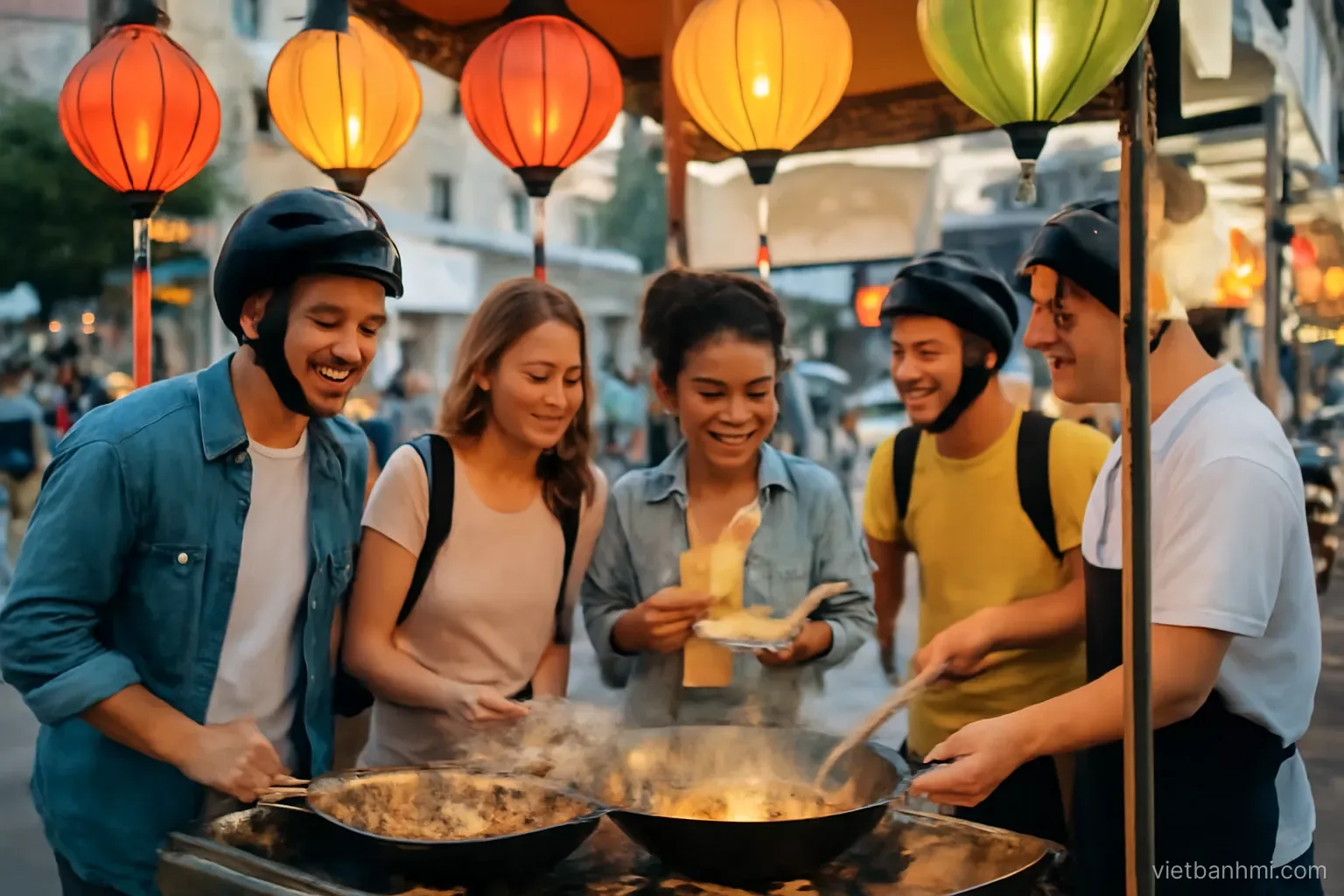
Street vendors are used to rain. Many stalls have tarpaulins or awnings and keep serving; others pack up when a storm arrives and reopen an hour later. Pavement tables empty, and customers crowd under shophouse roofs. Delivery riders keep working in ponchos, although apps may show longer waits and higher fees during heavy rain.
For you, that means three adjustments. First, choose places with a roof for lunch and late afternoon. Second, expect a lull: when the rain stops, everyone heads out at once, so the post-storm period is lively. Third, keep a backup within walking distance of your hotel, because getting a ride at the height of a downpour can take a while.
Dishes that suit a rainy day
- Noodle soups: phở, hủ tiếu or bún in hot broth feel right when the air cools after rain.
- Hot pot (lẩu): a shared simmering pot is a favourite rainy-evening meal for groups.
- Grilled snacks: grilled rice paper, skewers and sweet potatoes from street grills after the storm.
- Banh mi: portable and easy to carry back to your room when the sky looks threatening.
- Hot drinks: a hot coffee with condensed milk, ginger tea or soy milk on a cool, wet evening.
A tip for banh mi in wet weather: ask for the sandwich in a paper wrap and a plastic bag, and eat it soon. Humidity softens the crust fast, and the crackle of a fresh baguette is half the pleasure. If you are planning several meals, our Saigon food guide lists options by area.
Planning your day around the rain
- Morning (6:30–11:30): markets, walking, breakfast at street stalls; this is usually the driest window.
- Lunch (11:30–13:00): a sit-down place with a roof.
- Afternoon (13:00–17:00): museums, cafés, cooking classes, massages or a rest; watch the sky.
- Evening (after the rain): food streets, night markets and late snacks.
If you book a food tour in the rainy season, ask about the rain policy. Many walking and motorbike tours go ahead with ponchos; some reschedule in severe weather. Evening tours often start after the typical storm window.
Getting around
Ride-hailing prices often rise at the start of heavy rain, and fewer cars may be available. Book before the storm hits or wait it out with a drink. Motorbike taxis are not pleasant in a downpour, so choose a car. Some low-lying streets can flood briefly after very heavy rain, particularly late in the season when high tides coincide; water usually drains within hours. Avoid walking through floodwater, which can hide open drains and debris.
A sample rainy-season food day
Here is an example of how a wet-season day in central Saigon can flow. Start around 7:00 with a banh mi and iced coffee at a street stall while the sky is still clear. Spend the morning at Bến Thành Market or walking the older streets of Đa Kao, buying fruit as you go. Eat lunch around 11:30 at a covered noodle shop, ahead of the office rush. By 14:00, settle into a café, museum or cooking class, and keep an eye on the clouds; when the storm arrives, order a hot drink and wait. Once the rain eases, usually by late afternoon or early evening, the streets steam, the temperature drops a few degrees and vendors roll their carts back out. That is the moment for a street-food dinner, perhaps grilled snacks or a shared hot pot, followed by a late dessert. The one rule that matters: do not schedule anything important across town between roughly 15:00 and 18:00, when rain and rush hour often overlap.
What to pack
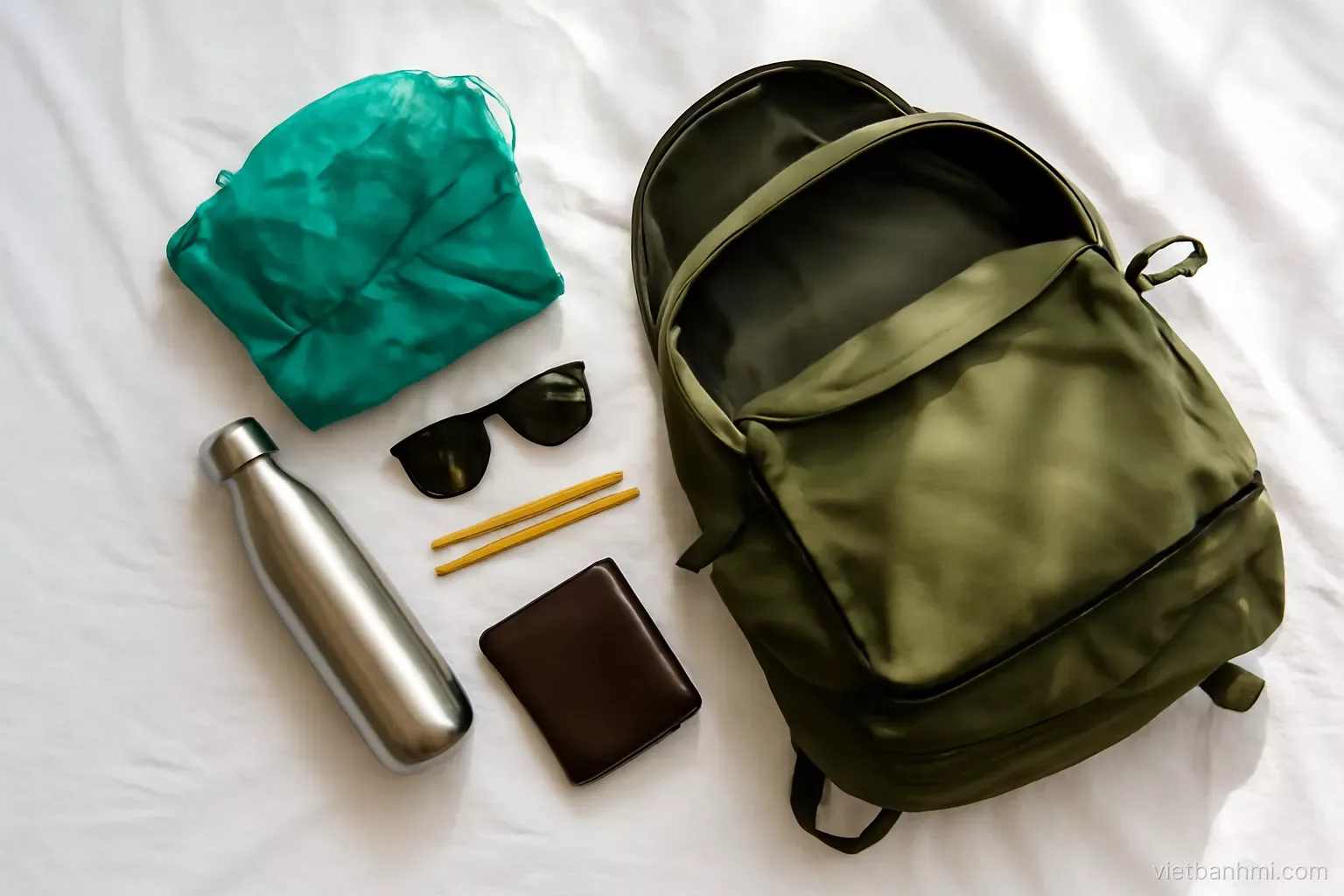
- A lightweight poncho or rain jacket; ponchos are also sold cheaply on the street.
- Quick-dry sandals or shoes rather than canvas trainers.
- A dry bag or zip bags for your phone, passport copy and cash.
- A small umbrella for short walks; it is less useful in wind.
- Insect repellent, since mosquitoes are more active in the wet season.
- A light layer for heavily air-conditioned cafés and malls.
Health and hygiene in the wet season
Dengue fever is present in southern Vietnam and is more common during the rainy season, according to health authorities including the World Health Organization. Use repellent, especially at dawn and dusk, and wear light long sleeves in the evening. For food, the usual rules apply: choose busy stalls with high turnover, eat hot food freshly cooked, and drink bottled or filtered water. If you have a sensitive stomach, skip raw herbs and ice for the first days. Our street food know-how section explains hygiene signals in more detail.
Is the rainy season a good time for a food trip?
For many travellers, yes. Hotel rates are often lower than in peak months, crowds at popular spots are thinner outside the summer holiday weeks, and the rhythm of morning exploring, afternoon rest and evening eating is pleasant once you adapt. Tropical fruits such as mangosteen, rambutan and durian are in season in the south in the early wet months. The main downside is reduced flexibility for day trips, especially to the Mekong Delta, where heavy rain can disrupt boat trips, and the risk of a storm cancelling a planned outing.
A 24/7 food option near your hotel also takes pressure off. Bánh Mì XANH, a fully vegan banh mi chain, keeps five central Saigon shops open around the clock and offers delivery ordered online, which is handy when an evening storm settles in.
Sources
- National Centre for Hydro-Meteorological Forecasting – nchmf.gov.vn (weather forecasts and warnings)
- World Health Organization – who.int (dengue and severe dengue fact sheet)
- Vietnam National Authority of Tourism – vietnam.travel (climate and best time to visit)
Frequently asked questions
When is the rainy season in Saigon?
Generally from May to November, with the heaviest and most frequent rain in the middle months. December to April is the dry season.
Does it rain all day in Saigon during the rainy season?
Usually not. Most days bring a heavy afternoon or early-evening storm lasting from half an hour to a couple of hours, with dry mornings. Longer rain happens occasionally, often linked to tropical storms.
Do street food stalls close when it rains?
Some pause during a heavy downpour and reopen afterwards, while many with awnings keep serving. The period right after the rain is often very lively.
Is Saigon flooding dangerous for tourists?
Street flooding after heavy rain is usually shallow and brief, mainly a nuisance for traffic. Avoid wading through water, which can hide open drains, and follow local warnings during storms.
What should I wear in Saigon in the rainy season?
Light, quick-dry clothing, sandals or quick-dry shoes, and a poncho or light rain jacket. Carry a light layer for air-conditioned places and use insect repellent.
Storm outside? Banh mi still arrives
When an afternoon downpour keeps you indoors in Saigon, Bánh Mì XANH has you covered: fully vegan banh mi, coffee and tea from five central shops open 24/7, with delivery ordered online and confirmed by phone. When the rain clears, walk over and eat it while the crust is still crisp.
Order Bánh Mì XANH delivery · 24/7 hotline / Zalo +84 923 183 183