Short answer: Before a food trip to Vietnam, check whether your passport qualifies for visa-free entry or apply for an e-visa on the official portal evisa.gov.vn (up to 90 days, about US$25 single entry or US$50 multiple entry, apply at least a week or more ahead). Bring a card for ATMs plus a plan for cash, set up an eSIM or local SIM and a ride-hailing app, get travel insurance, and save a few food phrases, especially for allergies or vegetarian eating.
The best food trips feel spontaneous, but the paperwork behind them should not be. A missed visa step or a dead phone can derail a day; a few minutes of preparation keeps you eating. This checklist is written for travellers coming to Vietnam mainly to eat, with Saigon as the example, and reflects rules as of October 2026. Always confirm entry rules with official sources before you fly, since they change.
1. Entry: visa-free or e-visa
Vietnam has two main routes for tourists. Citizens of certain countries can enter visa-free for a limited stay. For example, citizens of Germany, France, Italy, Spain, the UK, Russia, Denmark, Sweden, Norway, Finland, Japan and South Korea can stay up to 45 days without a visa: the stay was raised from 15 to 45 days in August 2023 (Resolution 128/NQ-CP), and Resolution 44/NQ-CP of March 2025 extended the exemption to March 2028. In August 2025, Resolution 229/NQ-CP added 12 more European countries (Belgium, Bulgaria, Croatia, the Czech Republic, Hungary, Luxembourg, the Netherlands, Poland, Romania, Slovakia, Slovenia and Switzerland) for 45-day tourist stays until August 2028. ASEAN citizens have their own shorter exemptions. The list changes, so check it on the Vietnam Immigration Department's site or with your nearest Vietnamese embassy.
Everyone else can apply for an electronic visa. Since 15 August 2023, the e-visa has been open to citizens of all countries and territories, valid for up to 90 days, with single or multiple entry.
| Item | E-visa detail (as of October 2026) |
|---|---|
| Official portal | evisa.gov.vn (beware of look-alike agency sites charging extra) |
| Eligibility | All nationalities since August 2023 |
| Length of stay | Up to 90 days |
| Government fee | About US$25 single entry, US$50 multiple entry, non-refundable |
| Processing | Officially about 3 working days; allow a week or more, longer at busy times |
| Passport | Generally valid at least 6 months beyond entry, with blank pages |
Print or save a copy of your approved e-visa and check every detail, especially your name, passport number and date of birth, since an error can mean being refused boarding. Apply well before peak periods such as Tết, which in 2027 falls on 6 February.
2. Money: cash, QR and cards
The currency is the Vietnamese dong (VND). Street food runs on cash and local bank QR codes; foreign cards work in hotels, malls, supermarkets, chains and many modern restaurants. Practical approach:
- Withdraw dong at bank ATMs; check your home bank's foreign transaction fees and choose to be charged in dong, not your home currency.
- Keep small notes (10,000đ, 20,000đ, 50,000đ) for stalls, coffee and parking.
- The blue 20,000đ and 500,000đ polymer notes are easy to mix up; check the zeros before paying.
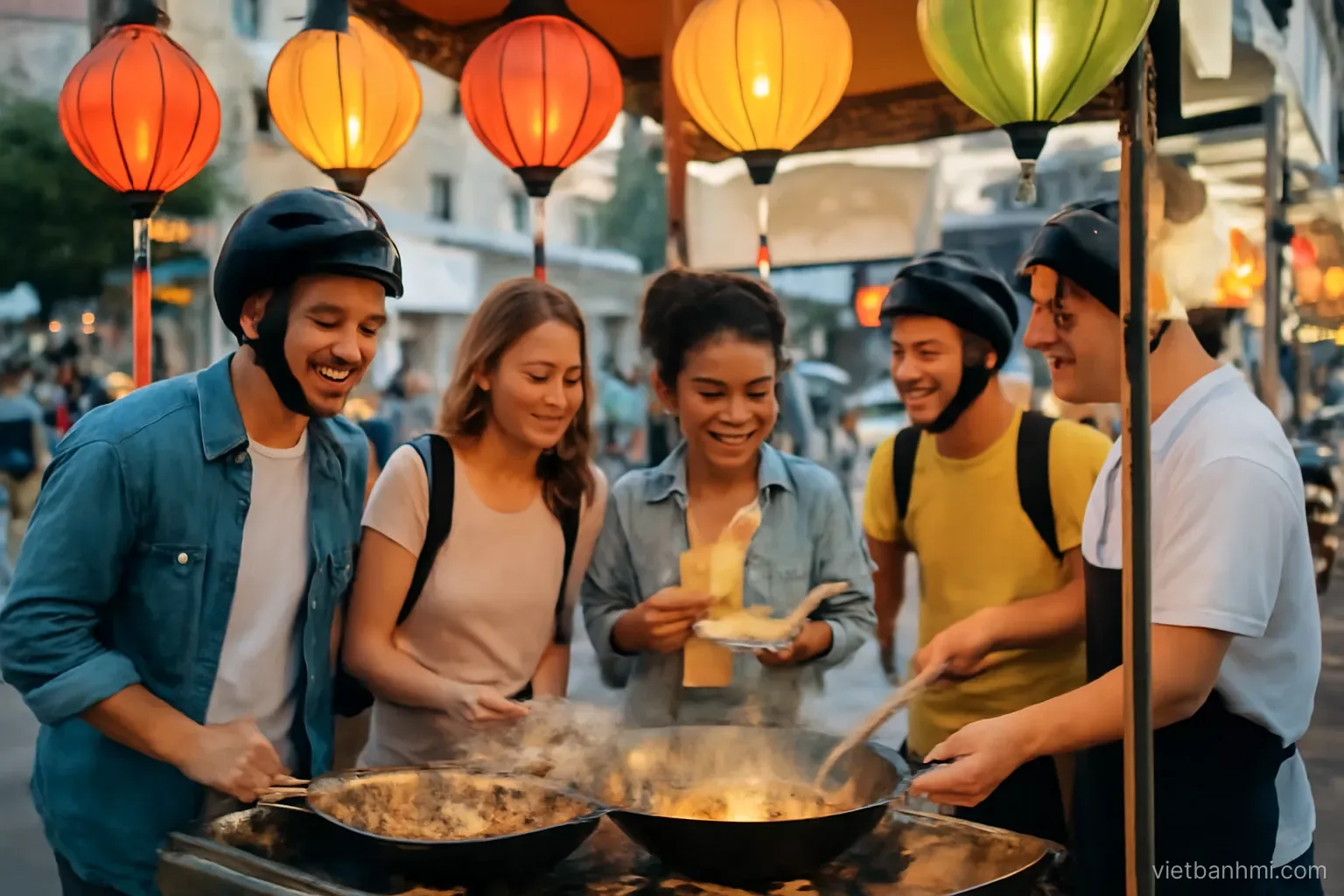
- Rough budget: a street banh mi often costs around 20,000–40,000đ, a bowl of noodles roughly 50,000–90,000đ, a street coffee around 15,000–30,000đ.
- Exchange rates move; check a live rate before your trip rather than relying on old figures.
Tipping is not expected at street stalls. In sit-down restaurants a small tip for good service is appreciated but optional; check whether a service charge is already on the bill.
3. Phone, data and apps
Data makes a food trip easy: maps, ride-hailing, translation and delivery. Buy a tourist SIM at the airport (bring your passport, as registration is required) or install an eSIM before departure if your phone supports it. Useful apps include:
- Ride-hailing: Grab and Xanh SM for cars and motorbikes, with fares shown upfront.
- Maps: Google Maps works well for walking and finding eateries; save your hotel address with its new ward name, since wards were redrawn in July 2025.
- Translation: an app with camera translation for menus.
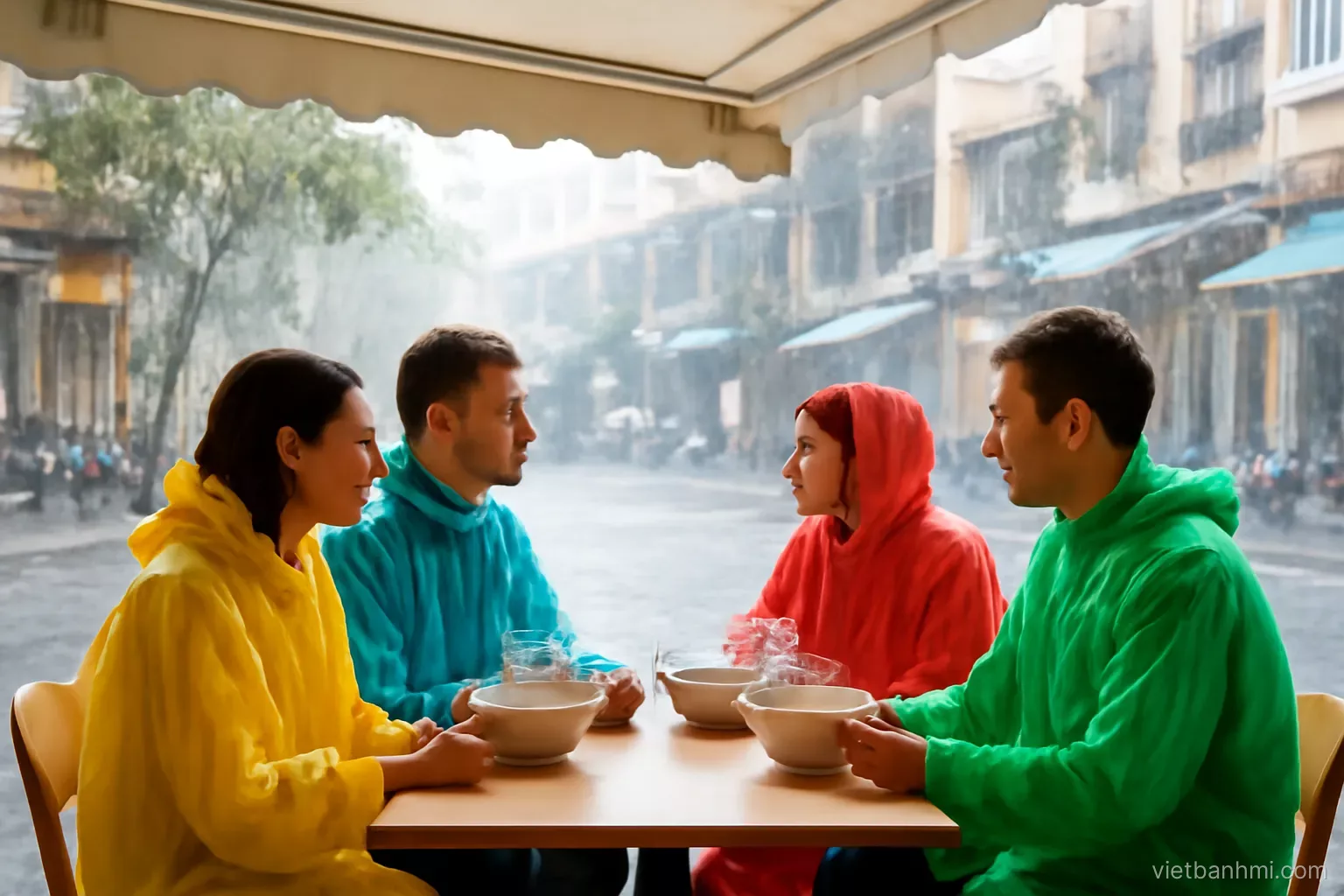
- Delivery: food delivery apps and shops' own online ordering, handy for late nights and rainy afternoons.
- Messaging: Zalo is the main Vietnamese messaging app; many shops and hotels use it for bookings.
4. Health and insurance
Buy travel insurance that covers medical care and evacuation. Check routine vaccinations with your doctor or a travel clinic well before you go. Drink bottled or filtered water; most locals do not drink tap water directly. For food safety, choose busy stalls with high turnover, prefer hot food cooked to order, and pace yourself with raw herbs and ice in the first few days if your stomach is sensitive. Use insect repellent, particularly in the rainy season from May to November. Pack a small kit with oral rehydration salts, any regular medicines and hand sanitiser.
5. Food phrases and dietary cards
Vietnamese is tonal, so showing written phrases on your phone is more reliable than pronunciation. Save these:
- Cái này bao nhiêu tiền? – How much is this?
- Không cay / ít cay – not spicy / a little spicy.
- Tôi ăn chay – I eat vegetarian.
- Không nước mắm, không trứng – no fish sauce, no egg.
- Tôi bị dị ứng đậu phộng – I am allergic to peanuts (swap the food: tôm shrimp, hải sản seafood).
- Tính tiền – the bill, please.
If you have a serious allergy, carry a printed allergy card in Vietnamese and English, and remember that peanuts, shrimp paste and fish sauce are common in Vietnamese cooking. Vegetarians should know that chay food is widespread thanks to Buddhist tradition, but fish sauce and egg can still appear; our eating vegan in Vietnam guides go deeper.
Reading a Vietnamese menu
A few words unlock most menus. Bánh mì is bread or the sandwich; cơm is rice; bún is round rice vermicelli; phở is flat rice noodles; hủ tiếu is a southern noodle soup; chay means vegetarian. Main ingredients follow: gà chicken, bò beef, heo pork (written lợn in the north), tôm shrimp, cá fish, đậu hũ tofu, nấm mushroom, rau vegetables. Cooking words help too: nướng grilled, chiên fried, xào stir-fried, luộc boiled, kho braised. With these you can decode a surprising amount of a street-stall menu, and camera translation fills the gaps.
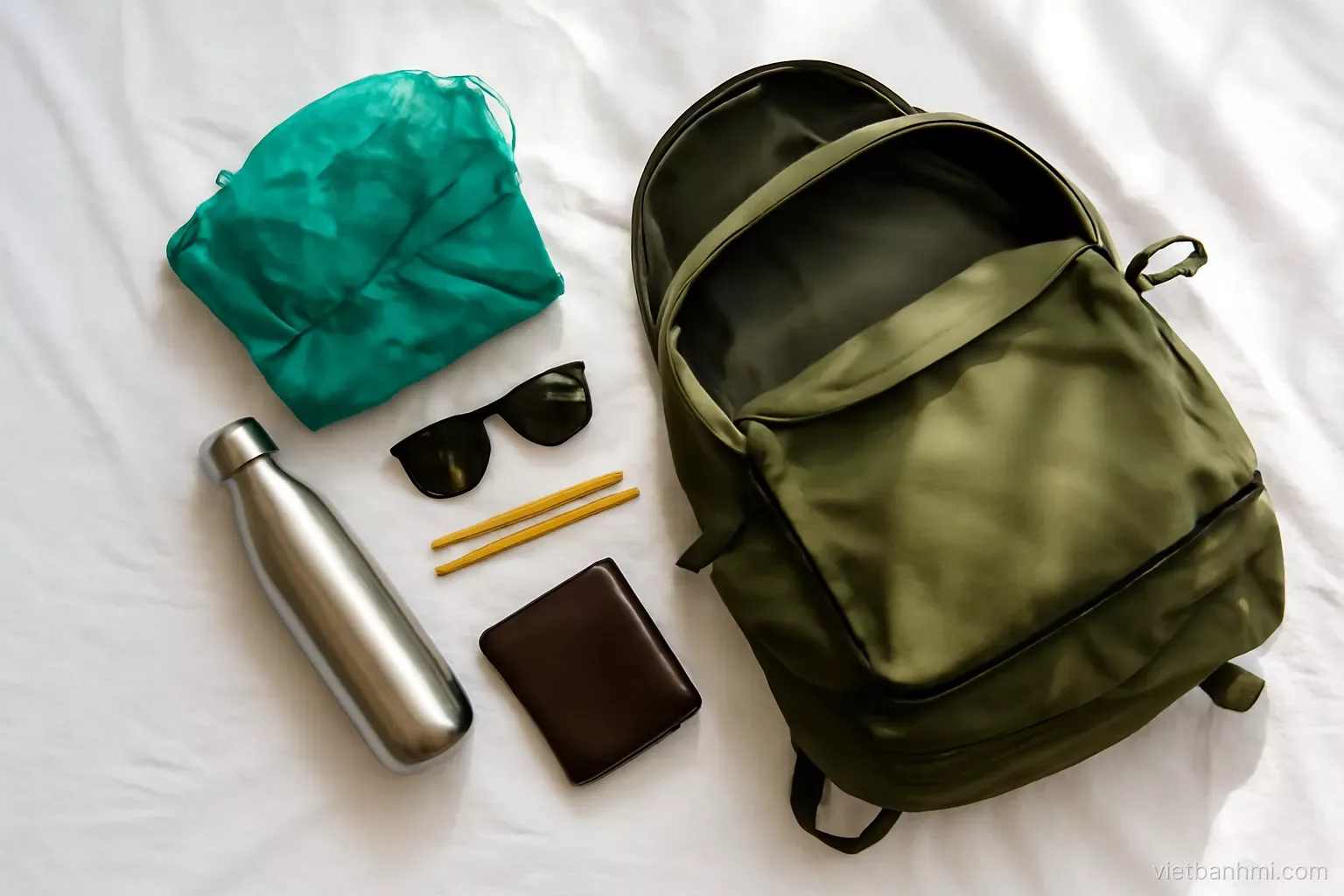
6. Packing for a food trip
- Light, breathable clothes and a layer for air conditioning.
- Comfortable walking sandals or quick-dry shoes.
- A poncho or compact rain jacket in the wet season.
- A reusable bottle, tissues or wet wipes (stalls do not always provide napkins).
- A small day bag with a zip; keep phones away from the kerb side when walking.
- Stomach remedies and any regular medication in original packaging.
Common pre-trip mistakes
- Using an unofficial visa website and paying several times the government fee.
- Typos on the e-visa. Check details against your passport before submitting.
- Arriving with only large notes. Break them at a supermarket or hotel early.
- No data on arrival. Set up an eSIM before you fly or buy a SIM at the airport.
- Overplanning meals. Leave gaps; the best food often comes from stalls you stumble on.
Once the logistics are sorted, the fun part begins: our food trip planning section has one- and three-day eating itineraries for Saigon.
Sources
- Vietnam Immigration Department e-visa portal – evisa.gov.vn
- Vietnam National Authority of Tourism – vietnam.travel (entry and practical information)
- World Health Organization – who.int (travel health and dengue information)
Frequently asked questions
How much does a Vietnam e-visa cost?
The government fee is about US$25 for single entry and US$50 for multiple entry, paid online and non-refundable. Agency websites charge more, so use the official portal evisa.gov.vn.
How long can I stay in Vietnam on an e-visa?
Up to 90 days, with single or multiple entry, depending on what you apply for. It has been available to all nationalities since August 2023.
How early should I apply for the e-visa?
Processing is officially about three working days, but allow at least a week, and more around holidays such as Tết. Embassies advise applying well before travel.
Should I bring cash or use cards in Vietnam?
Both. Use cards in hotels, malls and chains, and cash or local QR payments at stalls. Withdraw dong from bank ATMs and keep small notes handy.
Do I need to speak Vietnamese to order food?
No. Pointing, smiling and showing written phrases on your phone go a long way, and many central Saigon vendors know basic English. Phrases help most with allergies and vegetarian requests.
Checklist done? Plan your first banh mi
With the visa approved and your apps installed, put one easy stop on the list: Bánh Mì XANH, a fully vegan banh mi chain with five central Saigon shops open 24/7 and delivery ordered online. It is a simple first meal for arrival day and a reliable late-night fallback through the rest of your trip.
Discover Bánh Mì XANH · 24/7 hotline / Zalo +84 923 183 183