Short answer: Saigon banh mi is generous and layered — pâté, homemade mayonnaise, several pork fillings, lots of pickles, cucumber, cilantro and chili. Hanoi banh mi is leaner and more focused, often built around pâté and one or two cold cuts with few vegetables, and bread in Hanoi is also commonly eaten with stews such as bò sốt vang (beef in wine sauce). Both use the same light baguette; the difference is philosophy.
Two cities, two temperaments
Vietnamese people love comparing north and south, and food is the favourite battlefield. The stereotype — northern cooking is restrained and balanced, southern cooking is sweeter, more abundant and herb-heavy — is a simplification, but banh mi is one dish where it largely holds. The modern loaded sandwich took shape in Saigon in the 1950s, in a city of migrants, traders and Chinese-Vietnamese cooks with access to the Mekong Delta's vegetables. Hanoi, where bread had been eaten since the colonial era, kept closer to the earlier pâté-and-bread idea and developed its own bread-and-stew habits.
This matters for travellers because a sandwich that disappoints in one city may be exactly right in the other. If you arrive in Hanoi expecting a Saigon-style "special", a pâté banh mi can look sparse. If you start in Saigon after eating Hanoi's version, the southern one can seem overwhelming. Neither is the "real" banh mi.
Side-by-side comparison
| Element | Saigon (south) | Hanoi (north) |
|---|---|---|
| Overall style | Loaded, many layers | Lean, one or two main flavours |
| Spread | Pâté plus homemade egg mayonnaise (bơ) | Pâté is the star; butter or mayo used more lightly |
| Fillings | Pork roll, ham, barbecued pork, roast pork, meatballs, often combined | Pâté with a little cold cut, or a single filling such as egg |
| Vegetables | Pickled carrot and daikon, cucumber, cilantro, spring onion, chili | Fewer; sometimes only cucumber and herbs, or none |
| Seasoning | Soy or seasoning sauce, chili sauce, sometimes pork juices | Chili sauce, sometimes soy; flavour comes mostly from pâté |
| Bread as a side | Bò kho (beef stew), curries, breakfast pans | Bò sốt vang (beef in wine sauce), breakfast pans |
| Typical cart price | Around 20,000–40,000đ | Around 15,000–35,000đ |
Prices are orientation ranges for late 2026; tourist-area institutions charge more in both cities.
Climate nudges the two styles apart as well. Hanoi has a genuinely cool winter, roughly December to February, when a warm loaf with pâté or a bowl of beef stew with bread is exactly what you want on a grey morning. Saigon is hot all year, and the southern sandwich's pickles, cucumber and herbs keep it tasting fresh in the heat. If you visit Hanoi in winter and Saigon in the dry season, you will taste each style in the conditions it suits best.
The Saigon sandwich in detail
The classic southern order is bánh mì thịt or bánh mì đặc biệt: the loaf is warmed, both faces are spread with pâté and mayonnaise, and then come slices of chả lụa (pork roll), ham and often red barbecued pork, sometimes a few strands of pork floss. A generous handful of đồ chua (pickled carrot and daikon), a cucumber spear, cilantro, spring onion and chili follow, and a splash of soy or seasoning sauce finishes it. The goal is contrast in every bite: rich, salty, tangy, crunchy, fresh and hot all at once.
Saigon also has the deepest bench of specialist carts. Some sell only roast pork with crackling, some only grilled pork, others only meatballs in tomato sauce or shredded pork skin. The city's long-running shops are part of the attraction: Bánh Mì Hòa Mã, opened in 1958 and credited with shaping the modern sandwich, now known for pan-served breakfasts; Bánh Mì Bảy Hổ, which local press trace back to 1930; and Bánh Mì Huỳnh Hoa on Lê Thị Riêng street, famous for very thick sandwiches and prices far above an ordinary cart. Expect queues at the famous names, especially in the late afternoon.
Saigon is also where vegetarian and vegan banh mi is easiest to find, from Buddhist bánh mì chay stalls near pagodas to fully vegan modern shops in the city centre. For more on where to eat by neighbourhood and time of day, see our Saigon Food Guide.
The Hanoi sandwich in detail
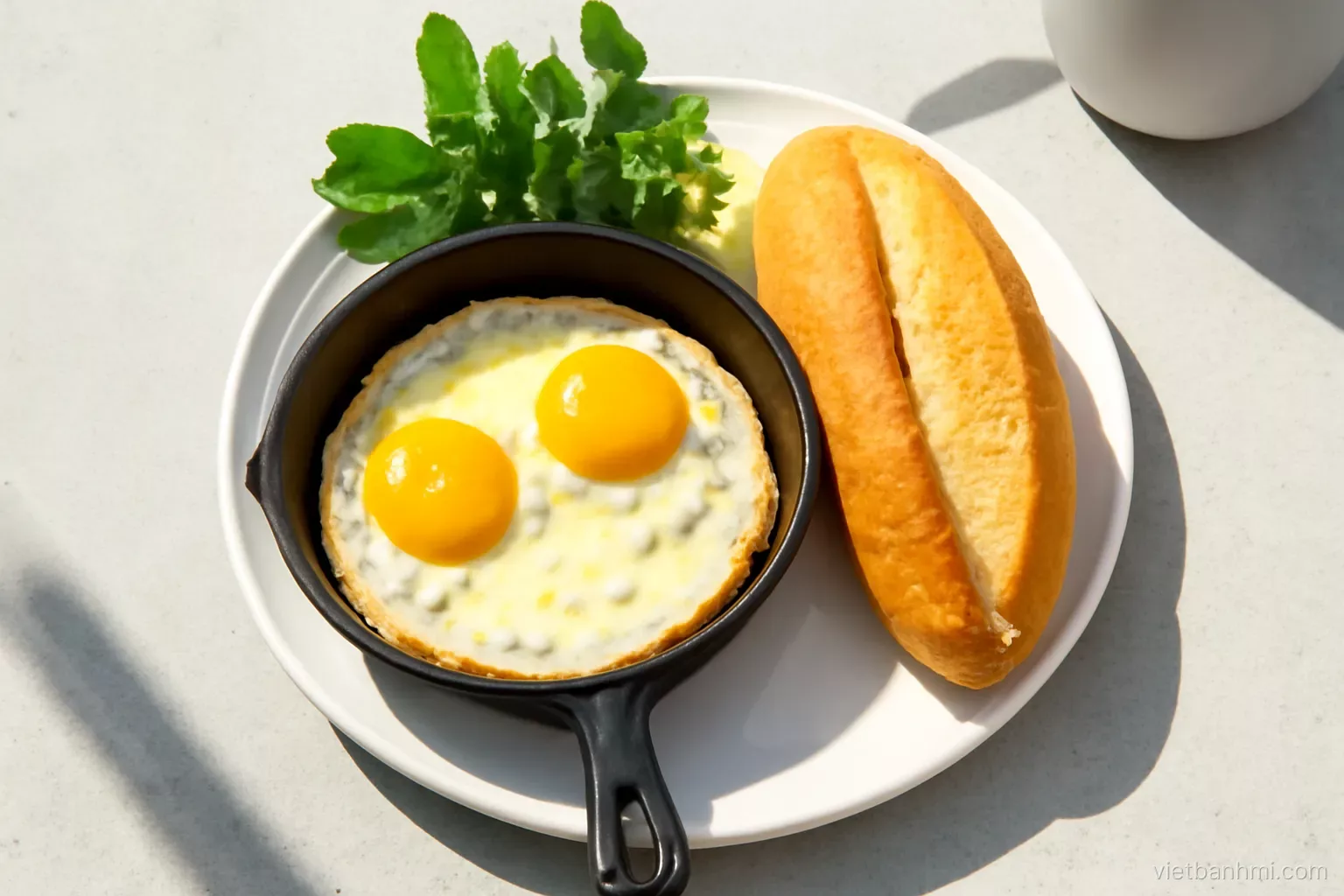
In Hanoi the simplest and most typical order is bánh mì pa tê: a warm loaf with a thick smear of pork liver pâté, maybe a few slices of cold cut or pork roll, a little chili sauce and sometimes cucumber or herbs. The pâté is the point, and Hanoians judge vendors on it — smooth or coarse, how rich, how peppery. Egg banh mi, with fried eggs cooked to order, is another northern staple at breakfast.
Bread in Hanoi also plays a supporting role at the table. Bò sốt vang, beef slowly cooked in a red-wine-and-tomato sauce, is eaten with a loaf for tearing and dipping. Breakfast pans with egg, pâté and sausage, served with bread on the side, are popular too. And carts selling banh mi filled with Turkish-style doner kebab meat became a familiar street sight in Hanoi, a reminder that the northern sandwich adapts as well.
Many Hanoi visitors base themselves in the Old Quarter (Hoàn Kiếm ward), where banh mi stalls cluster around busy streets and the morning markets. The stall at 25 Hàng Cá is one that many travel guides recommend; like everywhere, the stalls with high turnover tend to have the freshest bread.
Which one should you choose?
There is no wrong answer, but your preferences point one way or the other:
- You love strong contrasts, herbs and pickles: start in Saigon with a loaded "special".
- You love rich, savoury spreads and good bread: try a Hanoi pâté banh mi early in the morning.
- You want a sit-down breakfast: look for a breakfast pan or a bowl of stew with bread in either city.
- You are vegetarian or vegan: Saigon has far more dedicated options, including round-the-clock vegan shops.
- You are short on time: eat both in the same trip — the contrast is the lesson.
Hanoi and Saigon are not the only poles. Hội An, Hải Phòng, Đà Lạt and the Mekong Delta each have their own takes, and our regional styles section covers them one by one.
Eating vegetarian in each city
A northern pâté banh mi is, by definition, not vegetarian, and many smaller Hanoi carts do not sell a meat-free version at all; you will find vegetarian food at Buddhist restaurants and modern vegan cafés instead. Egg banh mi is a common fallback for vegetarians who eat eggs, though the pan and butter may be shared with meat. In Saigon, bánh mì chay is more common on the street, especially on the 1st and 15th of each lunar month when many Buddhists eat vegetarian. For strict vegans, a dedicated shop removes the guesswork. Phrases and tips for both cities are in our Eating Vegan in Vietnam section.
Common mistakes when comparing
Travellers often compare a famous, expensive Saigon institution with an ordinary Hanoi cart, or the other way round, and conclude one city is "better". Compare like with like: a busy neighbourhood cart in each city at breakfast time. Remember too that both cities have every style — you can find loaded sandwiches in Hanoi and simple pâté loaves in Saigon. The regional difference is about what is typical, not what is possible.
Sources
- Saigoneer – saigoneer.com ("The Saga of the Bánh Mì"; "Three of Saigon's Oldest Banh Mi Shops")
- Tuoi Tre News – tuoitrenews.vn (report on Bánh Mì Bảy Hổ, 2020)
- Vietcetera – vietcetera.com (feature on Bánh Mì Huỳnh Hoa)
Frequently asked questions
Is Hanoi or Saigon banh mi better?
Neither; they aim for different things. Saigon's is loaded and contrasting, Hanoi's is lean and pâté-focused. Try a busy local cart in each city at breakfast and decide for yourself.
Why does Hanoi banh mi have fewer vegetables?
The northern version stayed closer to the earlier pâté-and-bread snack, while the loaded, pickle-heavy style developed in Saigon from the 1950s. Northern cooks tend to let one main flavour lead.
What is bò sốt vang?
It is a Hanoi beef stew cooked in a red-wine-and-tomato sauce, eaten with bread for dipping or sometimes with noodles. It shows how bread in the north is often a side rather than a sandwich.
Is banh mi cheaper in Hanoi than in Saigon?
Ordinary carts in Hanoi are often slightly cheaper, partly because the sandwich is simpler. Famous shops in tourist areas of both cities charge noticeably more than neighbourhood carts.
Where can vegans eat banh mi in Vietnam?
Saigon has the widest choice, including Buddhist vegetarian stalls and fully vegan shops open around the clock. In Hanoi, look for vegetarian restaurants and vegan cafés rather than street carts.
Saigon style, fully vegan, any hour
If the loaded Saigon sandwich is your style but pork is not, Bánh Mì XANH keeps the generous southern format in fully vegan form, with fillings such as tofu, mushrooms and a grain-based vegan cold cut. Its five central Saigon shops, including one by Bến Thành Market, are open 24/7. The Thượng Hạng Premium is the big one if you are hungry.
Visit the Lê Thị Riêng shop near Bến Thành · 24/7 hotline / Zalo +84 923 183 183