Short answer: The essential herb in a banh mi is ngò rí (cilantro), usually a few whole sprigs, often joined by cucumber spears and sometimes scallions or scallion oil. Some vendors add Thai basil or other herbs, but cilantro is the classic. The herbs give the fresh, cooling top note that balances rich spreads and savory fillings. If you dislike cilantro, say "không ngò" (no cilantro) before the sandwich is built.
Why herbs matter so much
A banh mi is a study in contrast. The bread is crisp and warm, the spread rich, the main filling savory, the pickles sweet and sour, the chili hot. Herbs are what make the whole thing taste alive rather than heavy. Take them out and the sandwich still works, but it loses its lift, the way a bowl of phở feels incomplete without its plate of greens.
Vietnamese cooking in general leans on raw herbs far more than most cuisines, and banh mi carries that habit into a sandwich. Where a Western deli might add lettuce for crunch, a banh mi vendor adds cilantro for aroma. The aroma reaches you before the first bite, which is part of why the sandwich smells so good on a Saigon morning. For the bigger picture of how each layer fits together, see Banh Mi 101.
The herbs and greens you will meet
| Vietnamese name | English | How often in banh mi | What it adds |
|---|---|---|---|
| ngò rí (also rau mùi in the north) | Cilantro, fresh coriander leaves | Almost always | Bright, citrusy, slightly peppery aroma |
| dưa leo (dưa chuột in the north) | Cucumber | Very common | Cool crunch and water, softens heat |
| hành lá | Scallion, spring onion | Common, raw or as scallion oil | Mild onion sharpness, green color |
| húng quế | Thai basil | Occasional | Anise-like sweetness |
| rau răm | Vietnamese coriander | Rare in banh mi | Hot, peppery, lemony punch |
| xà lách | Lettuce | Some shops and regions | Crunch and volume |
Regional styles vary. Saigon sandwiches tend to be generous with greens; Hanoi versions are often simpler, sometimes with no herbs at all; Hội An styles may add lettuce and herbs alongside a sauce. Our Regional Styles section compares them city by city.
Cilantro: the signature, and the controversy
Ngò rí is the herb most people associate with banh mi. Vendors usually tuck in whole sprigs, stems included, rather than chopped leaves. The stems are tender and carry plenty of flavor, and whole sprigs stay fresher in a warm sandwich than finely chopped leaves, which bruise and darken quickly.
Cilantro is also famously divisive. For some people it tastes fresh and citrusy; for others it tastes like soap. Research has linked part of that difference to genetics, including variation near an olfactory receptor gene called OR6A2, which responds to aldehydes found in cilantro leaves. If you are in the soap camp, you are not being fussy. Simply ask for "không ngò" (no cilantro) or "không rau" (no herbs) and point to the bunch. Vendors hear this request every day.
Nutritionally, cilantro is a garnish rather than a vegetable serving, but it is not empty: USDA FoodData Central lists raw coriander leaves at about 23 kcal per 100 g, with notable vitamin K. In a banh mi you are eating a few grams, so think of it as flavor, not nutrition.
Cucumber and scallions: the supporting cast
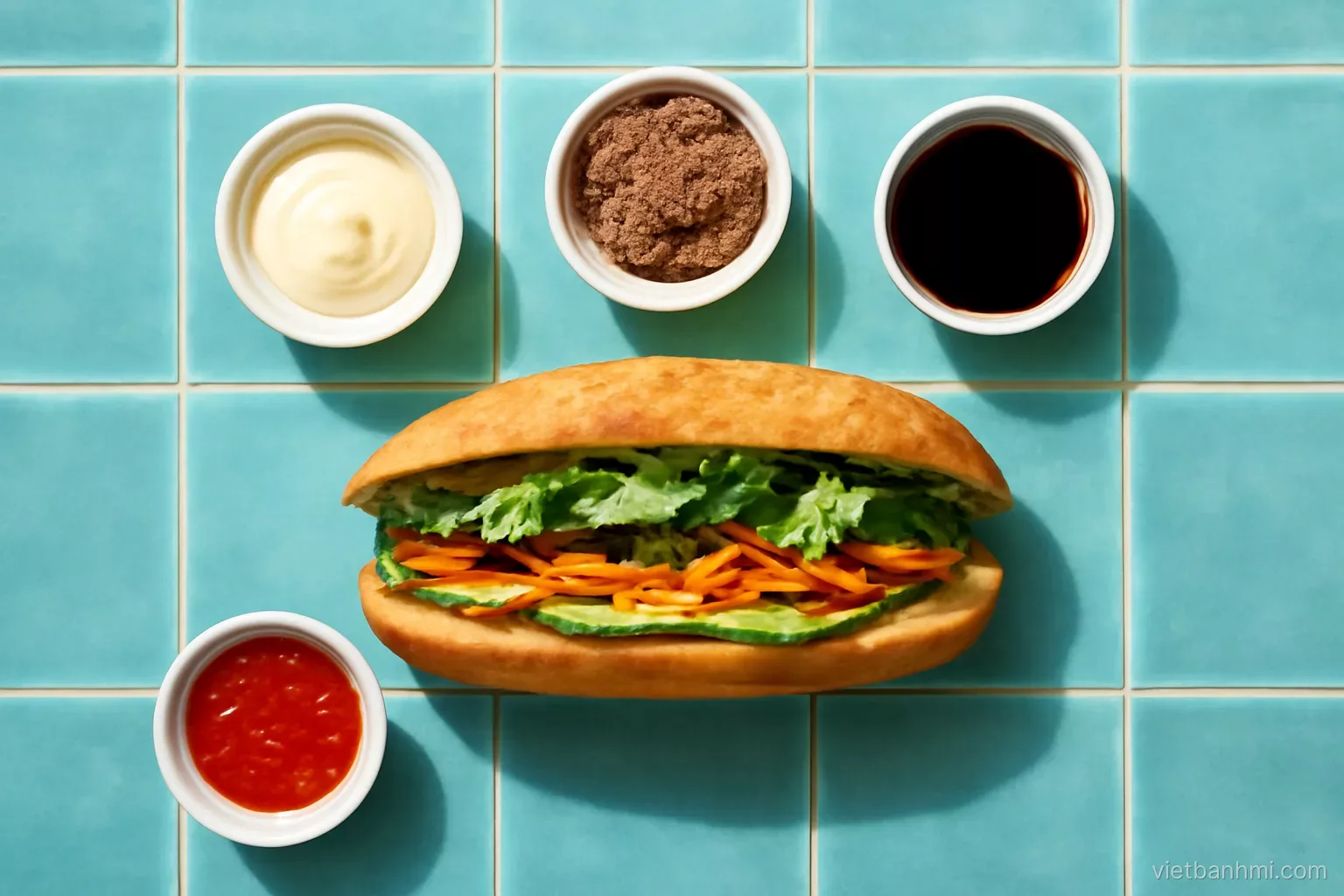
Cucumber is technically not an herb, but in a banh mi it works with the herbs as the fresh layer. Vendors cut long spears or thin slices, usually unpeeled, and lay them along the filling. Cucumber adds water and coolness, which matters when chili is involved, and gives a clean crunch that contrasts with the softer filling. USDA lists raw cucumber with peel at about 15 kcal per 100 g, which tells you how much of it is water.
Scallions appear two ways. Raw, thinly sliced, they bring sharpness. Cooked into mỡ hành (scallion oil), they bring a gentle, savory sweetness. Traditionally, mỡ hành is made with pork fat, so vegetarians should ask; vegan and vegetarian kitchens make it with vegetable oil instead. To make a vegan version at home, pour 60 ml of hot neutral oil (about 150–160 °C) over 30 g of thinly sliced scallion greens with a pinch of salt, stir, and let it cool. It keeps in the fridge for a few days.
How vendors keep herbs fresh in tropical heat
Saigon's heat is hard on herbs. Cilantro left in the sun wilts within an hour. Good vendors handle this in a few simple ways, and you can copy them at home.
- Buy often. Many stalls buy herbs daily from the market, sometimes twice a day.
- Wash and dry well. Herbs are washed in clean water, then shaken or spun dry. Wet leaves rot faster.
- Keep a small amount out. Most of the herbs stay cool and covered; only a small bunch sits on the counter at a time.
- Store upright or wrapped. At home, stand cilantro stems in a glass with 2–3 cm of water, cover loosely with a bag and refrigerate; or wrap in a slightly damp paper towel inside a container. Expect around 5–7 days.
- Add herbs last. In the build, herbs go on after warm fillings, so they do not cook and go limp.
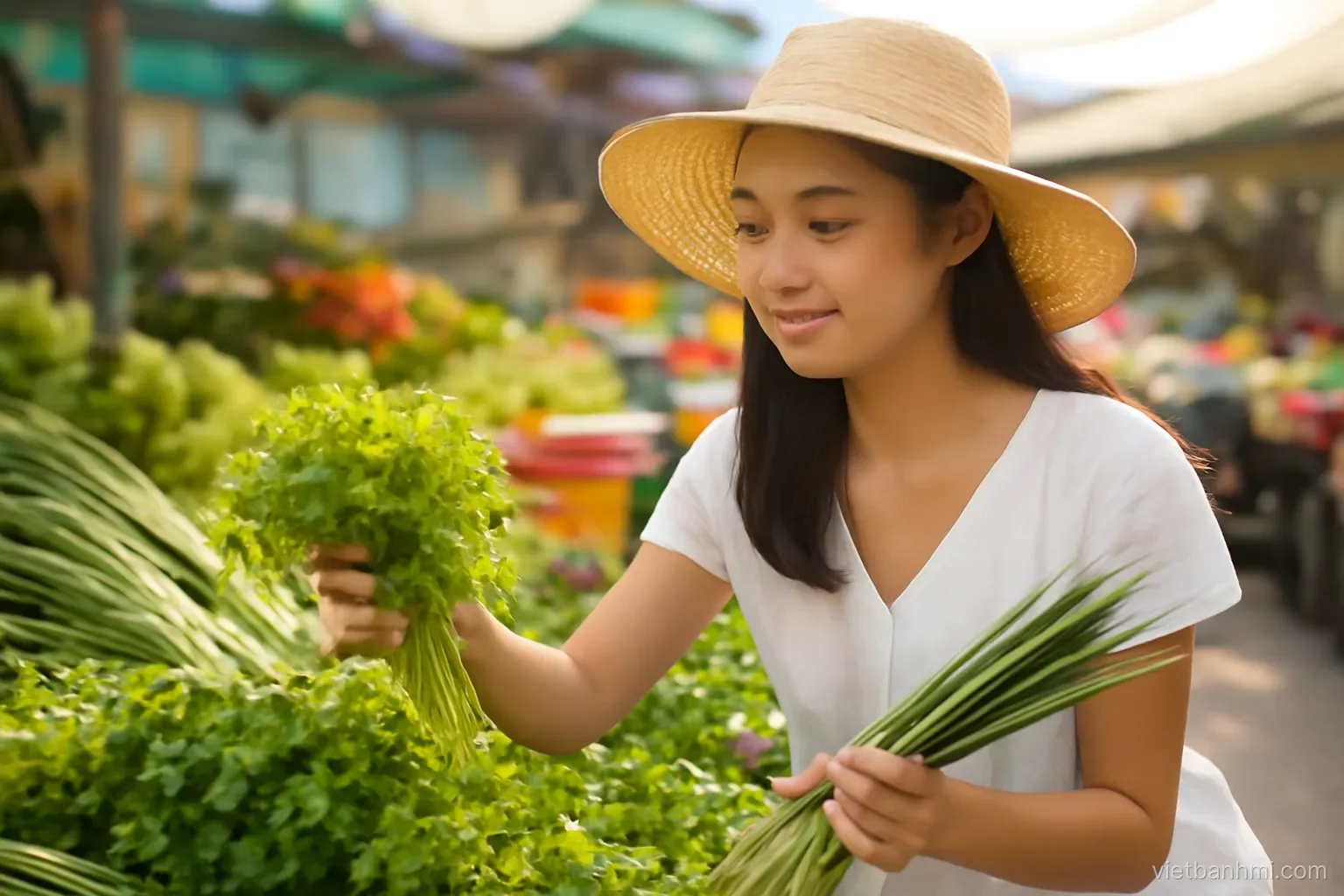
Buying herbs yourself is cheap: a bunch of cilantro at a Saigon wet market usually costs only a few thousand dong, often around 5,000–10,000đ (US$0.20–0.40) depending on season and size. Prices rise after heavy rain or around Tết, when greens are scarcer. If you are cooking in an apartment rental, a morning market visit is the best way to get them fresh. When you are choosing a stall, the herbs are an easy quality signal. Perky, bright green sprigs mean fresh stock and good turnover. Dark, slimy leaves mean the opposite.
Herbs in vegan banh mi
In a plant-based sandwich, herbs carry even more weight. Without pâté or cured meats, the overall flavor depends on balancing savory tofu, mushrooms or plant-based cold cuts with acid and freshness. Cilantro and cucumber stop a tofu filling from tasting flat, and a little scallion oil adds the richness that animal fat would otherwise provide. A good vegan banh mi often uses herbs generously for exactly this reason.
At Bánh Mì XANH, a fully vegan banh mi chain in Saigon, the Thập Cẩm sandwich combines vegetables, tofu and mushrooms, which is a good example of how vegetables and savory plant fillings play off each other. If you want to recreate that balance at home, the herb guide on our sister site vegetarianbanhmi.com walks through prep, amounts and swaps.
Common mistakes with banh mi herbs
- Chopping cilantro finely. It bruises and darkens. Use whole sprigs or rough pieces.
- Using wet herbs. Water soaks into the bread and makes it soggy. Dry them thoroughly.
- Adding herbs under hot fillings. They wilt. Put them on top.
- Overloading strong herbs. A handful of Thai basil or rau răm can overpower everything else. Start with a few leaves.
- Forgetting acid. Herbs shine when there is something sour nearby; that is why pickles and herbs always appear together.
Sources
- USDA FoodData Central, coriander leaves and cucumber, raw – fdc.nal.usda.gov
- Eriksson et al., "A genetic variant near olfactory receptor genes influences cilantro preference", Flavour journal (2012) – flavourjournal.biomedcentral.com
- Vietnam National Authority of Tourism – vietnam.travel
Frequently asked questions
What herbs are in a banh mi?
Cilantro, called ngò rí, is the classic herb, usually as whole sprigs. Cucumber is almost always included, and many vendors add scallions or scallion oil. Some add Thai basil or lettuce depending on region and shop.
How do I order banh mi without cilantro?
Say "không ngò" (no cilantro) or "không rau" (no herbs) before the vendor starts building, and point to the herbs if needed. It is a very common request and no one will mind.
Why does cilantro taste like soap to some people?
Part of the reason is genetic. Studies have linked cilantro aversion to variation near an olfactory receptor gene, OR6A2, which detects aldehydes present in cilantro leaves. People with that sensitivity notice a soapy note others do not.
Is scallion oil in banh mi vegetarian?
Not always. Traditional mỡ hành is made with pork fat. Vegetarian and vegan shops use vegetable oil instead, so ask if you are unsure.
How long do fresh herbs last for banh mi at home?
Stored upright in a little water and loosely covered in the fridge, or wrapped in a damp paper towel in a container, cilantro usually lasts about 5 to 7 days. Wash and dry it just before using.
Fresh herbs, savory plants, any hour
Herbs are what keep a banh mi bright, and they matter most in a plant-based sandwich. When you are in Saigon, taste the balance at Bánh Mì XANH: fully vegan banh mi with tofu, mushrooms and vegetables, at five central shops open 24/7, with online delivery too.
See the Bánh Mì XANH menu · 24/7 hotline / Zalo +84 923 183 183